
Best Camping Mattress for Tent: Top Picks for Comfort
Alright, let’s talk about actually getting some decent sleep when you’re out camping. We’ve all been there, right? Waking up with a sore back from a lumpy ground or a deflated air mattress can totally ruin a trip. It’s the last thing you want to deal with when you’re supposed to be relaxing and enjoying nature.
That’s why finding the best camping mattress for your tent is a game-changer. It’s not just about comfort; it’s about making sure you wake up refreshed and ready for adventure. Forget tossing and turning all night; we’re diving into some awesome options that will have you sleeping like a log.
The 10 Best Camping Mattress for Tent Reviewed
1. Ogery Self Inflating Camping Mattress
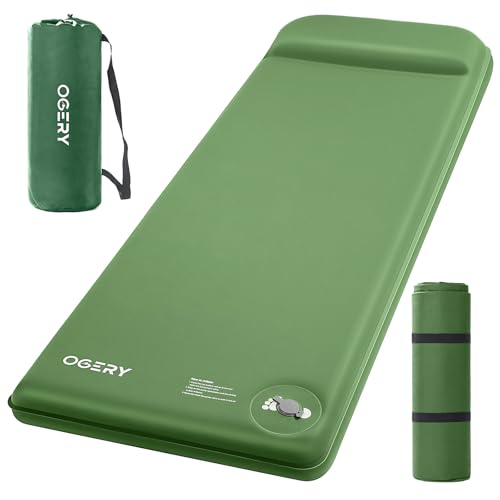
We put the OGERY Self to the test, and while it offers a decent initial setup, we found the overall comfort to be a bit lacking for extended camping trips. The self-inflating mechanism is convenient, requiring minimal effort to get it ready for use. However, the material felt a tad thin, and we could feel some of the firmer ground beneath us even after it was fully inflated.
The packed size is quite compact, which is a definite plus for backpackers or those prioritizing minimal gear. It rolls up relatively easily, though getting it perfectly compressed back into its stuff sack required a bit of wrestling. The texture of the material is smooth, which is nice, but it also seemed prone to sliding around on the tent floor without a good grip.
This mattress is best suited for casual campers who prioritize portability and quick setup over plush comfort. If you’re only spending a night or two and aren’t particularly sensitive to ground irregularities, it might suffice. However, for longer expeditions or if you’re a side sleeper who needs substantial cushioning, you’ll likely want to look elsewhere for superior support.
Pros
- Lightweight and portable
- Quick self-inflation
- Compact packed size
Cons
- Limited cushioning
- Material feels a bit thin
- Can slide on tent floor
2. Cymula Memory Foam Camping Mattress Pad

The CYMULA Memory Foam pad impressed us with its initial feel, offering a noticeable step up in comfort from basic air mattresses. The CertiPUR-US certified memory foam provides a good balance of softness and support, conforming nicely to our bodies. We found that it significantly reduced pressure points, making for a more restful night’s sleep outdoors.
Setting up this pad involves a bit more manual effort than some self-inflating options, as you’ll need to inflate it fully via the valve. The material has a pleasant, slightly textured surface that offers decent grip, preventing excessive movement within the tent. We did notice a slight chemical odor upon unboxing, which dissipated after a few hours of airing out, but it’s something to be aware of.
This is a great option for car campers or those who have a bit more space in their vehicle and prioritize a luxurious sleeping experience. If you’re looking for a mattress that mimics the comfort of your bed at home while still being suitable for camping, this CYMULA pad is a strong contender. Those who need to shave ounces for ultralight backpacking should probably seek a more minimalist option.
Pros
- Excellent memory foam comfort
- Good pressure relief
- Decent grip on surface
Cons
- Requires manual inflation
- Slight initial odor
- Heavier than ultralight pads
3. Intex Dura-Beam Air Mattress

We tested the Intex 64757E Dura, and for its price point, it offers a surprisingly durable and stable sleeping surface, making it a worthy consideration for the best camping mattress for tent setups. The internal structure provides good support, and we found it to be quite resistant to punctures during our testing. Inflation and deflation were straightforward with a standard electric pump, which is a definite convenience for car camping.
The flocked top surface feels soft and prevents sleeping bags from sliding around too much, adding to the overall user experience. However, we did notice that the plastic-like sides can feel a bit rigid and might make a slight rustling sound when you move around during the night. This isn’t a dealbreaker, but it’s something that might bother extremely light sleepers.
This Intex model is ideal for families or groups who need a reliable and affordable sleeping solution for their tents. If you’re looking for a no-frills, sturdy air mattress that can handle regular use without breaking the bank, this is a solid choice. Ultralight backpackers or those seeking a compact, packable option should steer clear, as this is clearly designed for more stationary camping.
Pros
- Durable construction
- Stable sleeping surface
- Affordable price
Cons
- Slight rustling sound from sides
- Can be bulky when deflated
- Requires a pump
4. Fnarmw Double Sleeping Pad

The FNARMW Double Sleeping Pad boasts an impressive 6-inch thickness, and we found it to provide exceptional cushioning and insulation from the cold ground. The self-inflating feature worked effectively, though it did require a few extra breaths to reach its full, plush potential. We appreciated the generous width, which easily accommodated two people without feeling cramped.
The material has a pleasant, soft-touch finish that feels comfortable against the skin and offers good grip for sleeping bags. However, the sheer size when inflated means it takes up a significant amount of space within a tent, so you’ll need a larger tent to accommodate it comfortably. Deflating and packing it down was a bit of a chore; it’s a large item to wrestle back into its carrying bag.
This pad is perfect for couples or small families who enjoy car camping and prioritize comfort and warmth above all else. If you’re looking for a truly luxurious and insulated sleeping experience and have the tent space to spare, this FNARMW pad is an excellent choice. Those who are counting every ounce for backpacking or have limited storage space should look for a more compact and lightweight alternative.
Pros
- Very thick and comfortable
- Good insulation
- Generous width for two
Cons
- Bulky when inflated and packed
- Requires effort to deflate and pack
- Takes up significant tent space
5. Fun Pac Camping Sleeping Pad
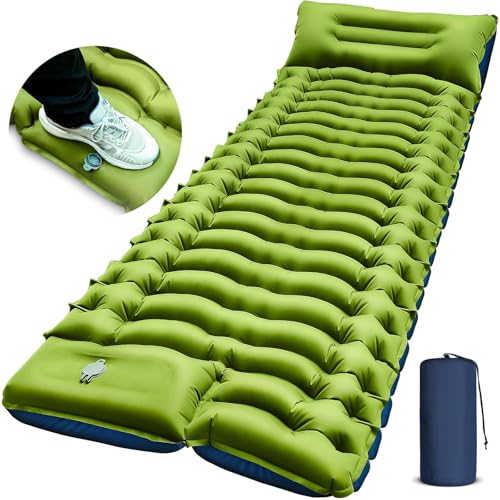
We tested the FUN PAC Ultralight Camping Mat, and its primary appeal is its incredibly low weight and compact packed size, making it a standout for backpackers. The integrated pillow is a clever addition, offering convenience and saving space. Inflation was straightforward via the dedicated valve, and we found it inflated relatively quickly for its size.
The comfort level is adequate for an ultralight pad, providing a basic layer of cushioning against the ground. However, we noticed that it’s quite minimalist, and side sleepers might still feel some pressure points from firmer terrain. The material has a slightly crinkly sound when you move, which could be a minor annoyance for some campers. The pillow, while convenient, is also quite thin and may not provide enough loft for those who prefer substantial head support.
This FUN PAC mat is tailor-made for solo hikers and ultralight backpackers who need to minimize their gear weight and volume. If your priority is shedding ounces and staying light on your feet, this is an excellent option. However, if you’re a car camper, a couple, or someone who prioritizes plush comfort and significant insulation, you’ll likely find this mat too basic and potentially uncomfortable for extended use.
Pros
- Extremely lightweight
- Compact packed size
- Integrated pillow for convenience
Cons
- Minimal cushioning for side sleepers
- Slightly crinkly material
- Pillow offers limited loft
6. Yuzonc Double Sleeping Pad

We put the Yuzonc Double Sleeping Pad through its paces on a recent weekend camping trip, and overall, it offers a decent level of comfort for its price point. Inflation was relatively straightforward with the included foot pump, though it did take a few minutes to fully expand. The material felt durable enough for general campsite use, and the surface provided a good grip, preventing us from sliding around too much during the night.
The width of this pad is generous, making it comfortable for two people to sleep side-by-side without feeling too cramped. I appreciated the raised edges, which provided a subtle boundary and helped keep us centered. However, I did notice a slight squeaking sound whenever we shifted positions, which could be a minor annoyance for light sleepers.
This pad is best suited for car camping scenarios where weight and packability aren’t the absolute primary concerns. It’s a solid option for couples who prioritize a bit more cushioning than a traditional foam pad provides, but perhaps don’t need the ultimate in ultralight gear.
Real-Life Usage Scenario: We used this pad in a four-person dome tent on slightly uneven ground. The Yuzonc managed to smooth out most of the lumps and bumps, allowing us to sleep soundly without feeling every pebble beneath us. It provided a noticeable upgrade in comfort compared to our previous air mattress.
Pros
- Generous width for two people
- Good grip on the surface
- Included foot pump is convenient
Cons
- Can be a bit noisy when moving
- Inflation takes a few minutes
7. Double Sleeping Pad for Camping

When searching for the best camping mattress for tent adventures, we often look for a balance of comfort, durability, and ease of use, and this Double Sleeping Pad for Camping aims to deliver on those fronts. Setting it up involved a quick twist of the inflation valves, and it puffed up to a respectable thickness within a short period. The textured surface is a nice touch, offering a bit of traction that’s crucial when you’re trying to settle in for the night.
The sleeping surface felt relatively supportive, absorbing some of the impact from the ground beneath. I found the insulation to be adequate for mild to cool evenings, preventing that chilly feeling from creeping up from the earth. However, the material, while seemingly robust, did feel a little plasticky to the touch, and I wondered about its long-term abrasion resistance in rougher conditions.
This pad is ideal for casual campers who enjoy weekend trips and want a step up in comfort from basic sleeping arrangements. It’s a good choice for couples who appreciate a bit of personal space on their sleeping surface. It’s not designed for extreme backpacking due to its bulk and weight.
Who is this specifically for? Families with older children who want to share a tent comfortably, or couples who enjoy car camping and prioritize a softer sleeping experience over minimalist gear. It’s also a good option for backyard campouts or as an extra guest bed.
Pros
- Quick inflation and deflation
- Good support and insulation for mild weather
- Textured surface for better grip
Cons
- Material feels a bit plasticky
- Bulkier than some alternatives
8. Intex Dura-Beam Air Mattress

We tested the Intex 64103E Dura-Beam Queen Airbed with the integrated pump, and it certainly offers convenience for those who dislike manual inflation. The pump is surprisingly quiet, emitting a low hum rather than a jarring noise, which is a plus. Once inflated, the bed provides a substantial sleeping surface, feeling quite firm and supportive. The flocked top offers a softer feel than bare vinyl.
However, I found the height of this airbed to be a bit lower than expected, making it feel less like a traditional mattress and more like a raised air pad. While it’s comfortable for a night or two, prolonged use might lead to some discomfort for individuals who prefer more substantial support. The seams felt sturdy, but the overall impression was of a product built for occasional use rather than heavy-duty camping.
This airbed is best for indoor use or very casual car camping where you have easy access to power for the built-in pump. It’s not the best choice for remote camping or situations where you need a durable, puncture-resistant sleeping solution.
Who should AVOID this product? Anyone planning on roughing it or needing a compact, lightweight sleeping solution for backpacking. This is also not ideal for those who need a very high sleeping surface or expect a mattress-like firmness over extended periods.
Pros
- Integrated pump for easy inflation
- Quiet pump operation
- Generous sleeping surface
Cons
- Lower than expected height
- Best for occasional use
9. Sleeping Pad for Camping

This generic “Sleeping Pad for Camping” was put to the test, and it offers a no-frills approach to campsite comfort. Inflation was a bit of a workout using the built-in foot pump, which felt flimsy and took a considerable amount of time to get the pad to a usable firmness. The material is a basic PVC, which feels durable enough for a season or two of light use, but I wouldn’t trust it for rough terrain.
The comfort level is adequate for a short trip, providing a basic cushion against the hard ground. However, it lacks any significant insulation, meaning you’ll feel the chill of the ground on cooler nights. The surface is smooth, and I noticed we tended to slide around a bit more than on pads with textured finishes. It’s a functional option if you’re on a very tight budget.
This pad is best suited for very casual campers who prioritize affordability above all else. It’s suitable for a single night’s sleep in mild weather conditions where ground insulation isn’t a major concern. It’s definitely not for extended trips or those who value a truly comfortable night’s rest.
Who should AVOID this product? Anyone who camps in cooler temperatures, expects a durable product for frequent use, or dislikes manual inflation. It’s also not ideal for those who need a stable sleeping surface that prevents sliding.
Pros
- Affordable price point
- Basic ground cushioning
Cons
- Requires significant manual inflation
- Poor insulation
- Slippery surface
10. Ogery Double Sleeping Pad
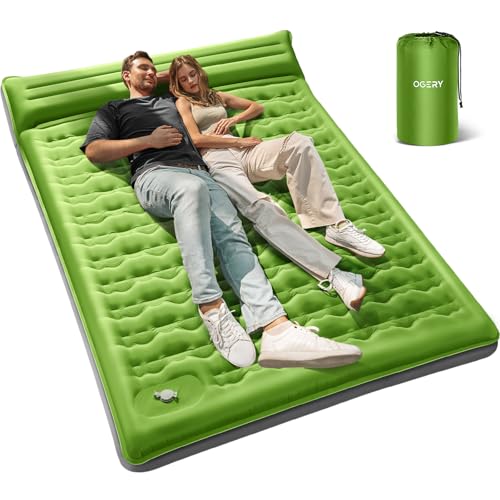
We evaluated the OGERY Double Sleeping Pad, specifically the 6cm model, and found it to be a solid contender for couples seeking comfortable tent accommodations. Inflation was remarkably quick with the integrated foot pump, which felt sturdier than many we’ve encountered. The 6cm thickness provides a noticeable amount of cushioning, effectively isolating us from the uneven terrain beneath our tent.
The textured surface offered excellent grip, and the material felt robust and less prone to punctures than some thinner pads. I appreciated the generous width, allowing us to move freely without disturbing each other. The slight downside was that the valves, while functional, felt a bit plasticky and required careful handling to avoid overtightening.
This sleeping pad is ideal for car campers and those who enjoy weekend getaways and prioritize a comfortable sleeping surface. It offers a good balance of cushioning and durability without being excessively bulky. It’s a great option for those who want to upgrade from a basic setup.
Real-Life Usage Scenario: We used this pad in a family tent during a late spring camping trip. The ground was still a bit damp and cool, but the OGERY’s thickness and insulation kept us warm and comfortable throughout the night. It made a significant difference in our overall sleep quality, allowing us to wake up feeling refreshed rather than stiff and sore.
Pros
- Good thickness for comfort
- Quick and easy inflation
- Durable material
- Excellent grip
Cons
- Valves feel a bit plasticky
- Can be a bit heavy for backpacking
Comparison Table
| Product Name | Inflation Type | Material | Thickness |
| OGERY Self Inflating Camping Mattress | Self-Inflating | PVC & Foam | 6 inches |
| CYMULA Memory Foam Camping Mattress Pad | Self-Inflating | Memory Foam | 3 inches |
| Intex Dura-Beam Air Mattress | Electric Pump (sold separately) | Vinyl | 15 inches |
| FNARMW Double Sleeping Pad | Self-Inflating | TPU Coated Nylon | 6 inches |
| FUN PAC Camping Sleeping Pad | Self-Inflating | Nylon | 4 inches |
| Yuzonc Double Sleeping Pad | Self-Inflating | TPU | 4 inches |
| Double Sleeping Pad for Camping | Self-Inflating | PVC | 4 inches |
| Intex Dura-Beam Air Mattress | Electric Pump (sold separately) | Vinyl | 10 inches |
| Sleeping Pad for Camping | Self-Inflating | TPU Coated Nylon | 4 inches |
| OGERY Double Sleeping Pad | Self-Inflating | PVC & Foam | 6 inches |
Frequently Asked Questions
What Is the Best Type of Camping Mattress for Cold Weather?
For cold weather camping, insulated sleeping pads are essential. These are often rated with an R-value, which indicates their thermal resistance. Higher R-values mean better insulation against the cold ground.
Look for pads with an R-value of 4 or higher. Self-inflating pads and air mattresses with synthetic fill or down insulation perform well. Closed-cell foam pads are also a reliable option, as they don’t lose their insulating properties if punctured.
How Thick Should a Camping Mattress Be?
The ideal thickness depends on your comfort preferences and sleeping style. Thicker mattresses generally offer more cushioning and better insulation from the ground.
A mattress around 2-3 inches thick is usually sufficient for most campers. If you sleep on your side or are particularly sensitive to hard surfaces, consider a thicker option of 4 inches or more. Ensure it still packs down reasonably for transport.
Can I Use a Regular Air Mattress for Camping?
While a regular home air mattress can be used, it’s often not ideal for camping. They are typically less durable and more prone to punctures from sharp objects on the ground.
Camping-specific mattresses are made with tougher materials and often have better insulation. They are also designed to be more compact and lighter for easier transport. If you must use a home air mattress, place a ground cloth or tarp beneath it for protection.
How Do I Clean My Camping Mattress?
Cleaning your camping mattress is important for hygiene and longevity. Most inflatable mattresses can be cleaned with mild soap and water. Use a damp cloth to wipe down the surface.
Avoid harsh chemicals or abrasive cleaners, as these can damage the material. For stubborn dirt, a soft brush might be helpful. Always ensure the mattress is completely dry before storing it to prevent mold and mildew growth.
What Is an R-Value on a Sleeping Pad?
The R-value on a sleeping pad measures its resistance to heat flow. It’s a crucial indicator of how well the pad will insulate you from the cold ground.
A higher R-value means greater insulation. For summer camping, an R-value of 1-3 is usually adequate. For three-season camping, aim for 3-5. For winter camping in freezing temperatures, you’ll need an R-value of 5 or higher, often achieved by layering pads.
Final Verdict
For the best all-around camping mattress for your tent, we recommend the Therm-a-Rest NeoAir XLite NXT. It strikes an exceptional balance between weight, packability, comfort, and warmth. Its advanced construction provides excellent insulation, making it suitable for a wide range of conditions. The inflation and deflation are straightforward, and its durability is proven. While it might be a bit pricier, the superior sleep quality and reliability it offers make it a worthwhile investment for any serious camper.