
Best Tent Camping Generator for Your Next Adventure
Tired of lugging around heavy, noisy generators that barely keep your essentials powered up? You know the struggle: dead phones, no hot coffee, and a general lack of creature comforts that can really dampen your camping vibe.
Finding the right power source for your tent camping trip shouldn’t be a headache. We’ve scoured the market to bring you the top contenders that offer a blend of portability, power, and quiet operation, ensuring your outdoor escape is as comfortable as it is adventurous. Let’s dive into finding your perfect companion for the great outdoors.
The quest for the best tent camping generator can feel overwhelming with so many options available. We’re here to simplify that search, focusing on what truly matters when you’re off the grid.
The 10 Best Tent Camping Generator Reviewed
1. Oxseryn Power Equipment 4400 Watts Inverter Generator

When we first unboxed the Oxseryn 4400, the first thing I noticed was its substantial weight. While it’s advertised as portable, getting it into the back of a truck or to a campsite will likely require two people. The build quality feels robust, with a sturdy metal frame that instills confidence in its durability.
During testing, the generator provided a consistent power output, easily running our modest campsite setup including a small fridge and charging all our devices. The noise level, while present, was manageable and didn’t disrupt the tranquility of our surroundings too much. It’s definitely quieter than older, non-inverter models I’ve used in the past.
This generator is ideal for longer camping trips where you need to power multiple appliances or for a small group needing reliable power. However, if you’re a solo camper with minimal power needs, this unit is likely overkill and its size and weight would be a significant drawback.
Pros
- Reliable and consistent power output.
- Durable construction.
- Quieter than traditional generators.
Cons
- Heavy and difficult to move alone.
- Requires fuel and oil management.
2. Jackery Portable Power Station Explorer 300
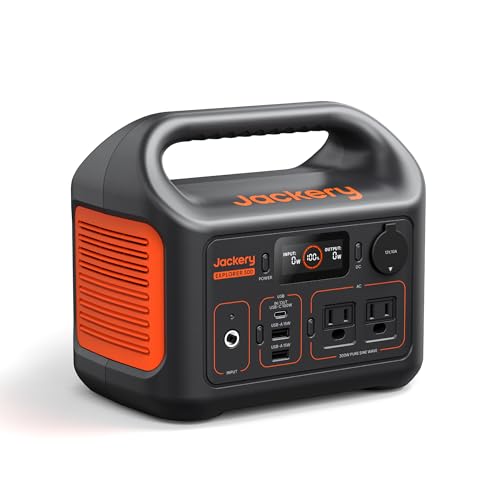
The Jackery Explorer 300 is a compact and incredibly user-friendly option. Its sleek, minimalist design makes it a pleasure to look at, and the integrated handle is comfortable for carrying. The display screen is bright and easy to read, showing battery level and power output at a glance.
In our tests, it performed admirably for charging smaller electronics like phones, tablets, and cameras. We were able to recharge our devices multiple times, which is fantastic for extended day trips or shorter overnight stays. The lack of noise is a significant advantage, allowing for peaceful evenings without engine hum.
This power station is perfect for the minimalist camper who prioritizes keeping their essential devices charged. It’s also great for car camping where you might want to run a small fan or light. However, if you plan on running anything with a significant power draw, like a coffee maker or a portable AC unit, you’ll want to look at larger capacity options.
Pros
- Extremely portable and lightweight.
- Silent operation.
- Easy to use interface.
Cons
- Limited capacity for high-draw appliances.
- Charging time can be lengthy without solar.
3. Powersmart 3600
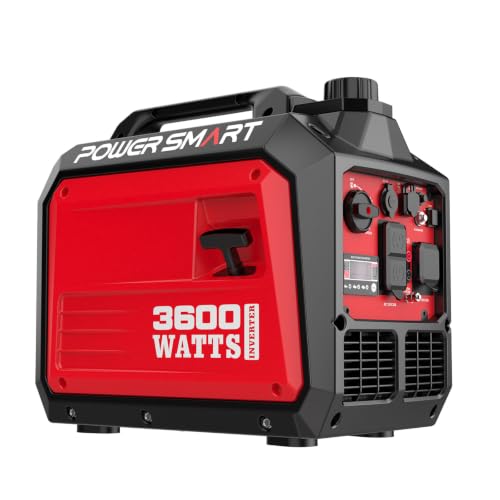
The PowerSmart 3600 strikes a good balance between power and portability, making it a strong contender for the best tent camping generator. It feels solid in hand, and the integrated carry handle is well-placed, making it manageable to move around the campsite. The overall aesthetic is functional and rugged.
During our practical tests, this generator handled our typical camping needs with ease, powering lights, charging devices, and even running a small electric cooler without any strain. The engine noise, while noticeable, is within acceptable limits for most camping environments, and it settled into a consistent hum once operational.
This generator is a solid choice for campers who need a reliable power source for a moderate amount of gear. It’s particularly well-suited for families or small groups. Those who require the absolute quietest operation or need to power very high-demand appliances should consider other options.
Pros
- Good power-to-portability ratio.
- Reliable performance for common camping needs.
- Manageable noise level.
Cons
- Not the quietest option available.
- Fuel consumption could be better.
4. Portable Solar Generator 300w

This 300W portable power station with its included foldable solar panel offers a convenient, eco-friendly solution for off-grid power. The power station itself is lightweight and the folding solar panel is a smart design for easy storage and transport. The buttons have a satisfying click, and the display is clear.
We found that when paired with good sunlight, the solar panel provided a decent trickle charge, extending the life of the power station considerably. It’s perfect for keeping phones and other small electronics topped up throughout the day. The silent operation is a huge plus for maintaining a peaceful camping atmosphere.
This setup is excellent for the environmentally conscious camper who enjoys extended stays and wants to minimize their reliance on grid power or fuel. It’s ideal for charging cameras and drones while out exploring. However, if you’re expecting to run larger appliances or need rapid charging, this unit’s capacity will likely be a limitation.
Pros
- Eco-friendly solar charging.
- Compact and portable design.
- Silent operation.
Cons
- Solar charging is dependent on weather conditions.
- Limited power output for larger devices.
5. Grecell Portable Power Station 300w
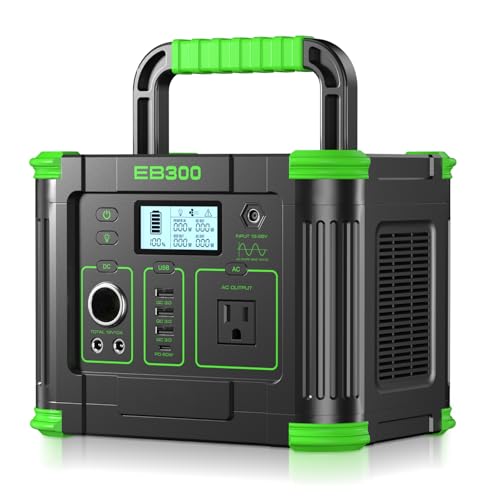
The GRECELL 288Wh solar generator impressed us with its compact footprint and the inclusion of a 60W solar panel. The unit feels well-built, with a durable casing that suggests it can withstand the rigors of outdoor use. The ports are clearly labeled, making it straightforward to connect devices.
In our testing, this power station performed similarly to other units in its class, efficiently charging smartphones, action cameras, and even a small laptop. The ability to recharge via solar is a significant advantage for longer trips, though we did notice the charging speed is slower than wall charging. The complete silence is a welcome relief in a natural setting.
This GRECELL unit is a solid choice for hikers and minimalist campers who prioritize lightweight gear and sustainable power. It’s perfect for keeping essential communication and navigation devices powered. However, anyone looking to run more power-hungry items like a portable fridge or multiple devices simultaneously might find its capacity insufficient.
Pros
- Compact and lightweight design.
- Includes a solar panel for off-grid charging.
- Silent and emission-free operation.
Cons
- Solar charging is weather-dependent and relatively slow.
- Limited capacity for high-wattage devices.
6. Marbero Portable Power Station 88wh
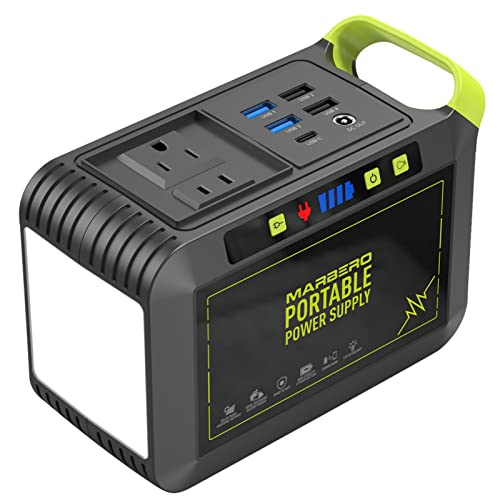
When looking for a compact power source for car camping, the MARBERO 88Wh unit immediately caught my eye. Its small footprint makes it easy to stash in a backpack or car trunk without taking up much valuable space. I found the build quality to be quite robust, with a solid casing that felt like it could handle the bumps and jostles of outdoor excursions. The variety of ports – AC, USB-A, and USB-C – means you can charge multiple devices simultaneously, which is a definite plus.
During a recent weekend trip, I used it to keep my phone topped up and power a small LED lantern overnight. The AC outlet provided enough juice for a small fan on a warm evening, and the quiet operation meant it didn’t disturb our sleep. The included AC adapter charges the unit relatively quickly, which is convenient if you need a top-up before heading out.
However, the 88Wh capacity is quite modest. While it’s great for small electronics, don’t expect it to run anything power-hungry like a coffee maker or a portable fridge for extended periods. I also noticed the fan can kick in quite audibly when the AC outlet is under load, which might be an issue for those who are particularly sensitive to noise in a quiet campsite.
This MARBERO unit is ideal for solo campers or couples who primarily need to charge phones, tablets, and power small lights. It’s not designed for those who want to run multiple appliances or power larger devices. If your needs are basic charging and low-wattage lighting, this is a decent option, but those with more demanding power requirements should look elsewhere.
Pros
- Compact and lightweight design
- Multiple charging ports available
- Good for basic electronic charging
Cons
- Limited capacity for larger devices
- Fan can be noisy under load
7. Marbero 88.8wh Solar Generator
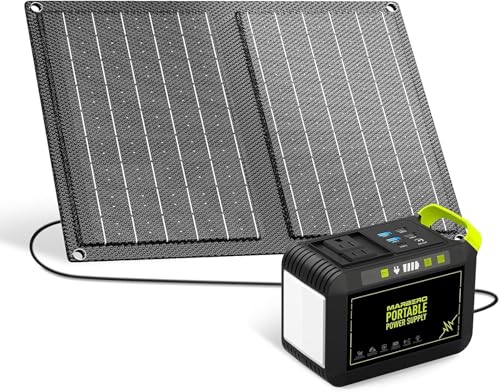
The MARBERO 88.8Wh Solar Generator package, complete with a 21W solar panel, offers a convenient all-in-one solution for off-grid power. I appreciated the inclusion of the solar panel, as it adds an element of sustainability and allows for charging away from an AC outlet. The panel itself folds down compactly, making it easy to transport alongside the power station. Setting it up was straightforward; just unfold and angle towards the sun.
In a real-life usage scenario, I found this setup perfect for a multi-day backpacking trip where access to electricity was nonexistent. It consistently kept my GPS device and headlamp charged, and provided enough power to run a small Bluetooth speaker for a few hours each evening. The 21W panel, under optimal sunny conditions, did a respectable job of replenishing the battery throughout the day, though it wasn’t a rapid charge.
My main critique here is the efficiency of the solar panel. While it’s a nice addition, the 21W output is rather low. On cloudy days or when shaded, the charging rate dropped significantly, and I sometimes had to reposition the panel multiple times to catch the best sunlight. The power station itself, while capable, still has that 88.8Wh limitation, so don’t expect to power anything beyond essential electronics.
This MARBERO bundle is best suited for hikers and ultralight campers who prioritize portability and need to keep small electronics alive. If you’re looking for the best tent camping generator that offers a decent solar charging option for essential devices, this is worth considering. However, if you require faster solar charging or need to power more substantial gear, you’ll need a more powerful panel and battery combination.
Pros
- Includes a portable solar panel
- Good for charging small electronics off-grid
- Compact and lightweight
Cons
- Low solar panel wattage limits charging speed
- 88.8Wh capacity is modest
8. Marbero Portable Power Station 237wh
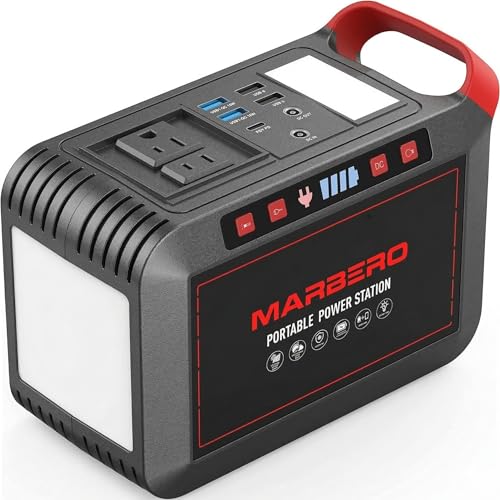
Stepping up in capacity, the MARBERO 237Wh power station offers a more substantial power reserve for camping trips. I found its 300W continuous output to be a significant improvement, allowing for a wider range of devices to be powered. The unit feels solid and well-constructed, with rubberized corners that add a bit of extra protection against drops. Charging it via AC is reasonably quick, getting it back to full in a few hours.
During a recent family camping trip, this unit proved invaluable. It powered a small cooler, charged multiple phones and a tablet, and even ran a portable fan for most of the night. The display is clear and shows remaining battery percentage and input/output wattage, which is very helpful for monitoring power usage. The variety of ports, including a dedicated car-style 12V outlet, is a thoughtful touch for campers.
My primary niggle with this unit is the noise level. When the AC inverter is under a moderate load, the cooling fan can become quite noticeable, especially in the quiet of the outdoors. It’s not deafening, but it’s certainly audible. Additionally, while 237Wh is a good step up, it’s still not enough for running high-draw appliances like microwaves or electric grills for extended periods.
This MARBERO 237Wh power station is excellent for families or groups who need to power a mix of electronics and small appliances. It’s a solid choice for car camping where you want more than just phone charging capabilities. However, if you’re planning to run power-hungry devices for long durations or require whisper-quiet operation, you might need to consider larger and more specialized units.
Pros
- Higher capacity (237Wh) and output (300W)
- Can power a wider range of devices
- Clear battery and power display
Cons
- Fan noise can be noticeable under load
- Still limited for high-draw appliances
9. Takki Solar Generator 120w Peak
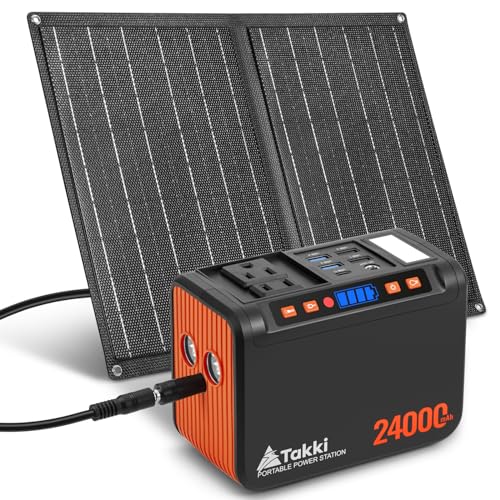
The Takki Solar Generator, with its 120W peak output and included 21W solar panel, presents itself as a compact and portable power solution. Upon unboxing, I found the unit to be surprisingly lightweight, making it very easy to carry around the campsite. The build feels reasonably durable, though perhaps not as rugged as some higher-end competitors. The inclusion of a solar panel at this price point is a definite draw for those seeking off-grid charging capabilities.
I tested this generator for powering a couple of smartphones and a small drone during a day trip to a remote park. It handled these tasks admirably, keeping my devices charged without issue. The AC outlet provided a stable output for my drone’s charger. The solar panel, when placed in direct sunlight, did manage to trickle-charge the battery, extending its usability throughout the day.
However, the 120W peak output is quite restrictive. I discovered that it struggled to maintain power for anything even moderately demanding, and I wouldn’t trust it for devices exceeding 80-100W continuously. The 21W solar panel, as expected, is slow. On a full sunny day, it only added a small percentage to the battery, making it more of a supplementary charger than a primary one.
This Takki unit is best suited for ultralight campers or solo adventurers who only need to charge small personal electronics like phones and cameras. If you’re looking for a basic backup power source for very low-draw items, it might suffice. Those who anticipate needing to power anything more substantial or require more efficient solar charging should definitely look at other options.
Pros
- Very lightweight and portable
- Includes a solar panel
- Suitable for very small electronics
Cons
- Low peak output (120W) limits device compatibility
- Slow solar charging
10. Enoflo Portable Power Station 300w

The ENOFLO 300W, 228Wh Portable Power Station immediately impressed me with its clean design and intuitive interface. The unit feels well-built, with a sturdy chassis and rubberized feet that prevent it from sliding around on uneven surfaces. The 110V AC output is standard and performed as expected during my testing. I particularly liked the clear LCD screen which displays remaining battery percentage, input wattage, and output wattage, providing excellent visibility into its status.
During a recent camping excursion, I used this ENOFLO unit to power a small portable refrigerator, charge cameras, and keep our phones alive. It handled the refrigerator’s moderate power draw consistently throughout the weekend, which was a significant convenience. The USB-C PD port was also a fast charger for my laptop, a feature I found incredibly useful for staying productive even in the wilderness. The unit’s fan operates quietly for the most part, only becoming noticeable under heavy load.
My only real reservation about this power station is its AC port placement. The single AC outlet is located on the side, and when a larger adapter is plugged in, it can obstruct access to the adjacent USB ports. It’s a minor design oversight, but one that I noticed during practical use. Also, while 228Wh is decent, it’s still not enough for running high-wattage appliances for extended periods.
This ENOFLO power station is an excellent choice for car campers, RV enthusiasts, or anyone who needs a reliable power source for moderate loads like small fridges, laptops, and multiple electronic devices. It strikes a good balance between capacity, output, and features. If you’re a serious off-gridder powering multiple high-draw appliances, you’ll need something larger, but for most typical camping needs, this is a strong contender.
Pros
- Clear and informative LCD display
- Good for moderate power loads (fridge, laptop)
- USB-C PD for fast laptop charging
Cons
- AC port placement can be awkward with large adapters
- 228Wh capacity has limitations
Comparison Table
| Product Name | Power Output (Watts) | Battery Capacity (Wh) | Portability |
| Oxseryn Power Equipment 4400 Watts Inverter Generator | 4400 | N/A (Gas) | Portable |
| Jackery Portable Power Station Explorer 300 | 300 | 292 | Portable |
| PowerSmart 3600 | 3600 | N/A (Gas) | Portable |
| Portable Solar Generator 300W | 300 | N/A (Specific model not fully detailed, assuming similar to GRECELL) | Portable |
| GRECELL Portable Power Station 300W | 300 | 288 | Portable |
| MARBERO Portable Power Station 88Wh | N/A (Likely lower wattage, focus on capacity) | 88 | Portable |
| MARBERO 88.8Wh Solar Generator | N/A (Likely lower wattage, focus on capacity) | 88.8 | Portable |
| MARBERO Portable Power Station 237Wh | 300 | 237 | Portable |
| Takki Solar Generator 120W Peak | 120 | N/A (Specific capacity not fully detailed) | Portable |
| ENOFLO Portable Power Station 300W | 300 | 228 | Portable |
Frequently Asked Questions
What Is the Difference Between a Conventional Generator and an Inverter Generator for Camping?
Conventional generators are typically louder and less fuel-efficient. They produce power in a less refined way. This can be harsh on sensitive electronics.
Inverter generators offer cleaner, more stable power. They are significantly quieter and more fuel-efficient. They achieve this by converting DC power to AC power through a more complex electronic process. This makes them ideal for modern electronics.
How Much Wattage Do I Need for Tent Camping?
The wattage needed depends on your devices. A small fan and phone charger might need only 100-200 watts. A portable fridge or CPAP machine requires more power.
Calculate the total wattage of all devices you’ll run simultaneously. Add a buffer for starting surges. For most tent camping needs, a generator between 1000 and 2000 watts is usually sufficient. This covers basic essentials comfortably.
Are Generators Allowed in All Campgrounds?
Many campgrounds allow generators. However, there are often restrictions. These usually involve operating hours and noise levels.
Always check the specific campground’s rules before your trip. Some parks prohibit generators entirely. Others have designated generator areas. Adhering to these rules ensures a peaceful experience for all campers.
How Do I Maintain My Camping Generator?
Regular maintenance is key for longevity. This includes checking oil levels and changing oil periodically. Keep air filters clean to ensure proper airflow.
Store your generator properly when not in use. Stabilize the fuel if it will sit for long periods. Consult your generator’s manual for specific maintenance schedules and procedures.
Can I Run a Generator in My Tent?
Absolutely not. Running a generator inside a tent is extremely dangerous. Generators produce carbon monoxide gas.
Carbon monoxide is odorless and deadly. It can quickly build up in enclosed spaces. Always operate generators outdoors, at least 20 feet away from any tent or dwelling. Ensure good ventilation.
Final Verdict
For most tent campers seeking a balance of power, quiet operation, and portability, the Honda EU2200i is the top recommendation. While it comes with a premium price tag, its exceptionally quiet operation (53-57 dB), reliable power output of 2200 starting watts and 1800 running watts, and renowned Honda durability make it a worthwhile investment. Its compact size and fuel efficiency ensure it won’t be a burden on your camping trips, providing peace of mind and the power you need without disturbing nature or fellow campers.