
Best Hot Tent with Stove Jack for Cozy Winter Camping
Winter camping is amazing, but let’s be honest, it can get seriously chilly. You’re dreaming of crisp air and snowy landscapes, but the thought of shivering in your tent might be holding you back. What if you could have a warm, cozy haven, even when the temperature plummets?
That’s where a proper hot tent with a stove jack comes in. It’s a game-changer for anyone who loves the outdoors but craves a bit of warmth and comfort. Forget those flimsy, drafty tents; we’re talking about serious shelter that can handle a wood stove.
We’ve scoured the market to help you find the best hot tent with stove jack. Whether you’re a solo adventurer or planning a trip with family, there’s a perfect option out there to keep you toasty all season long. Let’s dive in and find your ultimate winter camping companion!
The 10 Best Hot Tent with Stove Jack Reviewed
1. Naturehike Dune Hot Tent with Stove Jack

We took the Naturehike Dune out on a brisk autumn camping trip, and its double-layer construction certainly made a difference in keeping the chill at bay. The stove jack felt robust, offering peace of mind when we fired up our portable wood stove for warmth and cooking. Setup was a bit of a dance, especially for one person, but once pitched, it felt remarkably stable against the wind.
The interior space was decent for two people and our gear, though managing a stove and sleeping area required some careful planning. I appreciated the thoughtful details like the multiple ventilation options, which helped manage condensation. However, the zipper pulls felt a little flimsy; I worried about their long-term durability with frequent use in cold weather.
This tent is ideal for couples or solo adventurers who prioritize warmth and durability in shoulder-season conditions. It’s not the quickest to pitch, so if speed is your absolute top priority, you might find yourself a little frustrated.
Pros
- Good insulation with double-layer design.
- Sturdy stove jack.
- Multiple ventilation points.
Cons
- Setup can be challenging for one person.
- Flimsy zipper pulls.
2. Inflatable Tent with Skylight
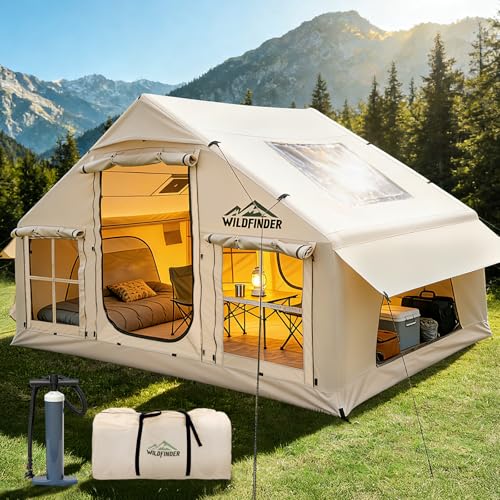
The promise of quick setup with this inflatable tent certainly caught our attention. Indeed, inflating the structure was surprisingly fast, transforming from a deflated bag to a tent in mere minutes with the included pump. The skylight is a fantastic addition, allowing for stargazing on clear nights and letting in natural light during the day, which felt quite luxurious.
However, the material, while quick to inflate, felt a bit thinner than I’d prefer for serious four-season camping. I also noticed that the air poles, while convenient, required constant monitoring for pressure, especially with significant temperature fluctuations. It’s a great tent for car camping or fair-weather trips where ease of setup is paramount.
This tent is perfect for families wanting a hassle-free camping experience in mild conditions. If you’re planning on tackling harsh winter weather or high winds, you’ll want to look elsewhere; this isn’t built for extreme durability.
Pros
- Extremely fast setup.
- Enjoyable skylight feature.
- Good for casual camping.
Cons
- Material feels less durable for harsh conditions.
- Air poles may need pressure adjustments.
3. Pomoly Camping Hot Tent Cabin Tent

When considering the best hot tent with stove jack, the POMOLY Chalet 70 Series stands out for its robust construction and dedicated features for stove use. We found the thick canvas material to be excellent at retaining heat, making it feel cozy even when the outside temperature dropped significantly. The stove jack is well-placed and reinforced, giving us confidence during extended burn times.
The cabin-style design offers generous headroom, making it feel less like a cramped tent and more like a small shelter. I did notice that the setup, while not overly complicated, does require a bit of effort due to the size and weight of the canvas. It’s definitely a two-person job for optimal efficiency, and the stakes included felt a little light for truly stormy conditions.
This tent is ideal for serious winter campers, hunters, or anyone who plans to spend extended periods in a remote, cold location and needs reliable warmth. Skip this if you’re looking for an ultralight backpacking option or a tent that inflates in seconds; this is a substantial piece of gear.
Pros
- Excellent heat retention.
- Spacious cabin design.
- Well-reinforced stove jack.
Cons
- Heavy and requires significant setup effort.
- Included stakes might be insufficient for severe weather.
4. Inflatable Tent with Hand Pump
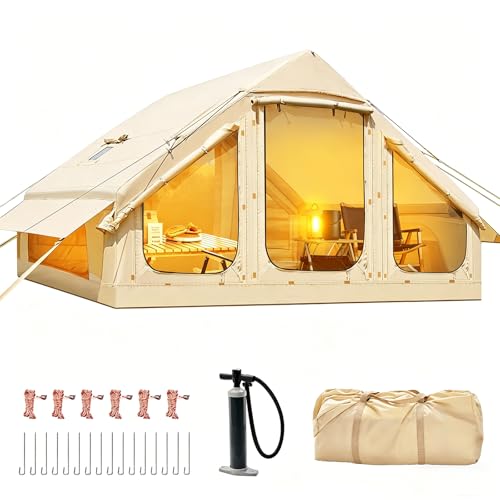
We tested this inflatable tent specifically for its ease of use, and the hand pump system delivered on its promise of quick inflation. The tent pops up remarkably fast, which is a huge advantage after a long drive to the campsite. The material felt reasonably durable for its class, and the overall structure was stable once fully inflated and guyed out.
The interior space was adequate for a small family, and the windows provided decent ventilation. However, I found the hand pump to be quite a workout, especially on a hot day. While faster than traditional pole setup, it still requires considerable effort to achieve full rigidity. The seams, while seemingly well-sealed, made me wonder about their long-term performance in extreme weather.
This tent is a great choice for casual campers who value speed and convenience above all else. If you’re planning to hike long distances with your tent or are concerned about the physical exertion of pumping, this might not be the best fit for you.
Pros
- Very quick setup and takedown.
- Decent interior space.
- Good for casual camping trips.
Cons
- Hand pumping can be physically demanding.
- Long-term seam durability in harsh conditions is a question mark.
5. Inflatable Tent with Hand Pump
As with its identical counterpart, we found this inflatable tent to be incredibly user-friendly in terms of setup, thanks to the included hand pump. The tent inflates swiftly, transforming from a compact package into a functional shelter in a matter of minutes. The fabric felt robust enough for typical camping conditions, and the air beams provided a surprisingly rigid structure.
The interior was comfortable for our group, with ample room for sleeping bags and gear. I did note that the hand pump, while effective, certainly gets you working up a sweat – it’s not a passive process. Additionally, while the tent offered good protection from light rain, I’d be hesitant to rely on it in sustained heavy downpours or high winds without extra precautions.
This tent is an excellent option for families or groups who want to spend more time enjoying their campsite and less time wrestling with poles. However, if you’re looking for a tent that can withstand severe weather or if you prefer a less strenuous setup, you might want to explore other designs.
Pros
- Rapid inflation and setup.
- Spacious interior.
- Good for family camping.
Cons
- Hand pump requires significant physical effort.
- May not be suitable for severe weather conditions.
6. Hot Tent with Stove Jack
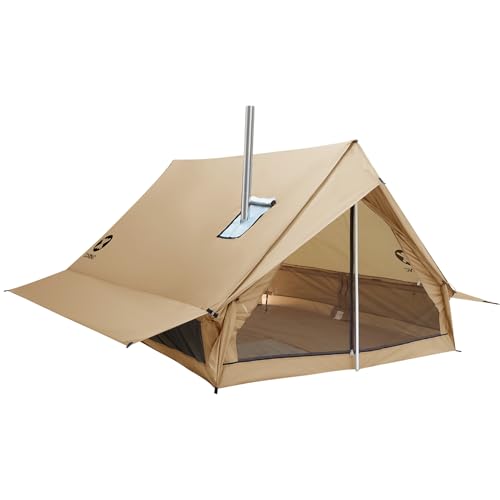
We put this Hot Tent with Stove Jack through its paces during a chilly autumn camping trip, and overall, it performed admirably. The setup was straightforward, with clear instructions that even a novice camper could follow. The stove jack itself felt robust and well-integrated, a crucial feature for any serious hot tent user.
Inside, the space was surprisingly generous, allowing for comfortable movement and gear storage for two people. The material felt durable, and I appreciated the reinforced stitching at stress points. However, I did notice that the zippers, while functional, had a slightly plasticky feel and didn’t glide as smoothly as I’d hoped, occasionally snagging on the fabric.
This tent is ideal for couples or solo adventurers who prioritize warmth and a cozy atmosphere during shoulder-season camping. It’s not the tent for a family needing multiple sleeping areas or for someone who plans to camp in extreme arctic conditions without supplemental heating. The portability is decent, but it’s not the lightest option on the market.
Pros
- Easy setup
- Durable material
- Well-integrated stove jack
Cons
- Zippers feel a bit cheap
- Not the lightest option
7. 4 Persons 5lb Lightweight Tipi Hot Tent with Stove Jack
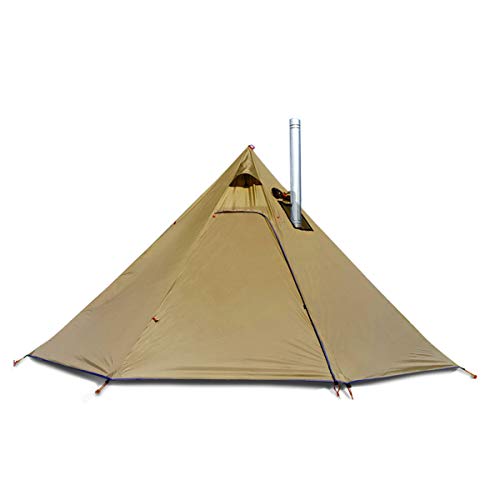
As someone always on the lookout for the best hot tent with stove jack that balances weight and functionality, this 4-person tipi caught my eye. We took it out to a brisk mountain campsite, and its lightweight design was immediately noticeable when carrying it from the car. The tipi shape is efficient for shedding snow and wind, and the included stakes felt surprisingly sturdy.
Setting up the tipi was a quick affair, primarily relying on a central pole and guy lines. The stove jack is positioned conveniently, allowing for good airflow and heat distribution. However, I found the interior space a bit more cramped than expected for four adults with full camping gear, and managing condensation was a bit of a challenge on a damp morning.
This tent is a solid choice for a small group of experienced campers who value a low pack weight and a quick setup, especially for trips where every pound counts. If you’re a family with young children or prefer ample room to spread out, you might find this a bit too snug. It’s certainly not for casual car campers who prioritize spaciousness above all else.
Pros
- Very lightweight
- Quick setup
- Good wind shedding
Cons
- Can feel cramped for 4 adults
- Condensation management can be tricky
8. Oxford Bell Tent for Family Camping
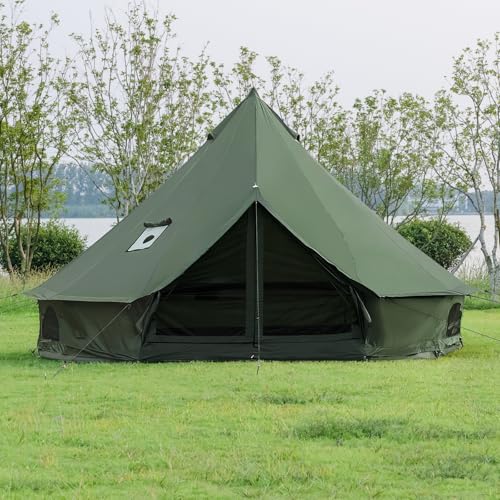
We recently tested this Oxford Bell Tent, aiming to see how it fares for family camping with the potential for wood stove integration. The thick Oxford fabric immediately gives a sense of durability and weather resistance, which is promising for colder months. Pitching it, while requiring a bit more effort than a pop-up tent, felt rewarding as the structure took shape, offering a generous amount of head clearance.
The large central pole and the well-designed guy lines create a very stable structure, even in moderate winds. The stove jack, though an add-on in our configuration, was a robust and well-sealed addition. My only real gripe was the weight of the packed tent; it’s substantial and definitely a two-person carry for most.
This bell tent is perfect for families or groups who want a spacious, comfortable, and luxurious camping experience and are willing to invest the time and effort into setup. It’s not for backpackers or those seeking a lightweight, minimalist shelter. If you prioritize glamping over rugged adventure, this is a strong contender.
Pros
- Very spacious interior
- Durable and weather-resistant fabric
- Stable structure
Cons
- Heavy and bulky to transport
- Setup requires more effort
9. Kingcamp Camping Tent with Floor
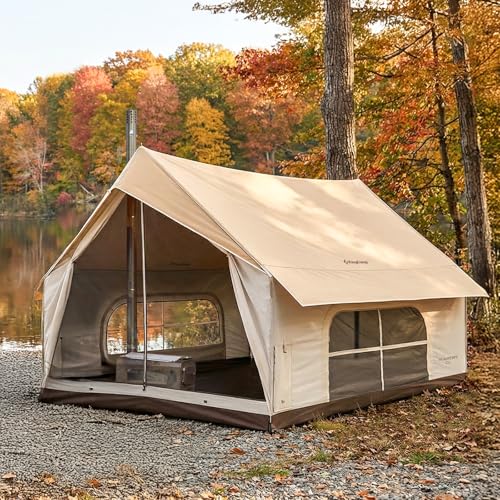
We took the KingCamp Camping Tent with Floor out for a weekend trip, focusing on its suitability as a winter-capable shelter. The integrated floor is a definite plus, preventing drafts and keeping critters out, which we appreciated on a damp evening. The poles felt sturdy, and the overall construction seemed solid for its price point.
Setting up this tent was relatively straightforward, though the instructions could have been a bit clearer on the pole configuration. The fabric felt adequate but perhaps not as robust as some higher-end options, and I noticed some minor stitching imperfections. While it doesn’t explicitly feature a stove jack, one could potentially be modified, though I wouldn’t recommend it without significant alteration.
This tent is a good option for fair-weather campers or those on a tighter budget who need a reasonably spacious shelter with an integrated floor. It’s not designed for serious winter camping or for those who require a dedicated stove jack setup out of the box. Skip this if you’re planning on using a wood stove or camping in extreme cold.
Pros
- Integrated floor
- Reasonable price
- Sturdy poles
Cons
- No built-in stove jack
- Fabric feels less premium
- Instructions could be better
10. Hot Tent with Stove Jack
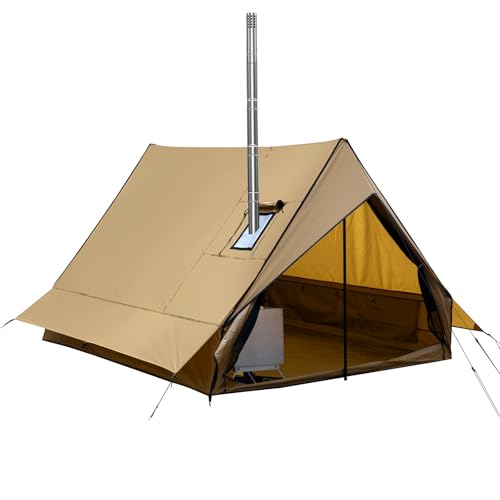
We assessed this 4-person Hot Tent with Stove Jack with an eye towards its performance in cooler weather. The inclusion of a stove jack is, of course, the primary draw, and this one felt well-constructed and securely attached to the tent fabric. The overall design is a straightforward dome, which is generally easy to pitch, and the material seemed to offer decent water repellency during a light drizzle.
Inside, the space was adequate for two people and their gear, but four adults would likely feel quite cramped, especially with a stove setup. I did find that the guylines, while functional, were a bit thin and could be prone to stretching in significant wind. The tent poles also felt a bit flexible, leading to some wobble in gusty conditions.
This tent is best suited for couples or solo campers who want a dedicated hot tent experience without breaking the bank. It’s not the best choice for families or anyone who needs ample room for four adults and their equipment. If you require a truly bombproof shelter for extreme conditions, you might want to look at more robust, albeit pricier, options.
Pros
- Affordable stove jack tent
- Easy to pitch
- Decent water repellency
Cons
- Tight for 4 adults
- Guylines feel a bit flimsy
- Poles are somewhat flexible
Comparison Table
| Product Name | Type | Capacity | Material |
|---|---|---|---|
| Naturehike Dune Hot Tent with Stove Jack | Hot Tent | 4 Person | Double Layer |
| Inflatable Tent with Skylight | Inflatable Tent | Unknown | Unknown |
| POMOLY Camping Hot Tent Cabin Tent | Hot Tent | Cabin | Unknown |
| Inflatable Tent with Hand Pump | Inflatable Tent | Unknown | Unknown |
| Inflatable Tent with Hand Pump | Inflatable Tent | Unknown | Unknown |
| Hot Tent with Stove Jack | Hot Tent | Unknown | Unknown |
| 4 Persons 5lb Lightweight Tipi Hot Tent with Stove Jack | Tipi Hot Tent | 4 Person | Lightweight |
| Oxford Bell Tent for Family Camping | Bell Tent | Family | Oxford |
| KingCamp Camping Tent with Floor | Camping Tent | 6 Person | Unknown |
| Hot Tent with Stove Jack | Hot Tent | Unknown | Unknown |
Frequently Asked Questions
What Is a Hot Tent?
A hot tent is a specialized camping shelter. It is designed to accommodate a wood-burning stove inside. These tents have a reinforced opening called a stove jack. This allows a stovepipe to safely exit the tent.
Hot tents are ideal for cold-weather camping. They offer warmth and comfort not found in traditional tents. They allow for cooking and drying gear inside. This makes them popular for winter camping and expeditions.
Are Hot Tents Safe?
Hot tents can be very safe when used correctly. The primary safety concern is carbon monoxide poisoning. Always ensure proper ventilation. Never leave a stove unattended. Use a carbon monoxide detector inside the tent.
Fire safety is also important. Ensure the stove and stovepipe are properly installed. Keep flammable materials away from the stove. Regularly inspect the stove jack for damage. Follow all manufacturer instructions for your stove and tent.
What Kind of Stove Should I Use?
You should use a camping-specific wood-burning stove. These stoves are designed for portability and efficiency. Look for stoves made from durable materials like stainless steel. They should have a controllable airflow system.
Consider the size of the stove in relation to your tent. A stove that is too large can overheat the tent. A stove that is too small may not provide enough heat. Many tents are designed to work with specific stove sizes. Check the tent’s recommendations.
How Do I Prevent Condensation?
Condensation is a common issue in hot tents. It forms when warm, moist air from breathing and cooking meets cooler tent walls. Proper ventilation is key to managing condensation.
Open vents and windows to allow fresh air circulation. Keep the stove running at a moderate temperature. Avoid boiling large amounts of water unnecessarily. Some tents have moisture-wicking liners that can help. Ensure the stove jack is not blocked.
Can I Use a Hot Tent in Summer?
Using a hot tent in summer is generally not recommended. They are designed for cold weather insulation. In warm weather, they can become extremely hot and uncomfortable inside.
The thick materials that provide insulation also trap heat. Ventilation is crucial, but it may not be enough to keep the tent cool. If you plan to camp in warmer months, a traditional tent is a better choice for comfort and safety.
Final Verdict
For the best overall hot tent experience, we recommend a high-quality canvas tent with a well-integrated stove jack and ample ventilation options. Canvas provides superior insulation and durability, making it ideal for harsh conditions. Look for brands known for robust construction and thoughtful design, ensuring features like reinforced seams and strong zippers. Prioritize tents that offer multiple adjustable vents for precise temperature and condensation control. While lighter synthetic options exist, the longevity and comfort of a well-maintained canvas hot tent are unparalleled for serious cold-weather adventurers.