
Best Waterproofing Spray for Tent: Top Picks & Reviews
Ugh, nothing ruins a camping trip faster than a leaky tent, right? That soggy feeling when the rain starts pouring is the worst. You want to be out enjoying nature, not bailing water!
That’s why choosing the right waterproofing spray is crucial. It’s your first line of defense against the elements, ensuring your tent stays dry and comfortable. We’ve dug into what works best to help you find that perfect shield.
We’re talking about keeping your adventures dry and your gear in top shape. Let’s dive into finding the best waterproofing spray for tent protection that won’t let you down.
The 10 Best Waterproofing Spray for Tent Reviewed
1. Scotchgard Outdoor Water Shield Fabric Protector Spray, Heavy Duty Water

We put this Scotchgard spray to the test on a well-loved canvas tent that had seen better days. The application was straightforward, with a decent spray pattern that covered surfaces evenly. After a few hours of drying, we noticed water beading up nicely, much better than before treatment. It definitely brought back some of that original water repellency.
However, I found the aerosol can to be a bit unwieldy for larger tent panels, requiring frequent reapplication from a distance. The scent, while not overpowering, lingered for a good while after drying, which might be a consideration for some users. Overall, it’s a solid performer for restoring waterproofing.
This product is ideal for weekend campers looking to refresh their gear before a trip. It’s not the best choice for professionals who need to treat vast amounts of fabric regularly, as the can size becomes impractical.
Pros
- Effectively repels water on various outdoor fabrics.
- Easy to apply for smaller repairs and touch-ups.
- Restores a good level of water resistance.
Cons
- Can is somewhat difficult to maneuver for large areas.
- Lingering scent after application.
2. Nikwax Tent & Gear Care
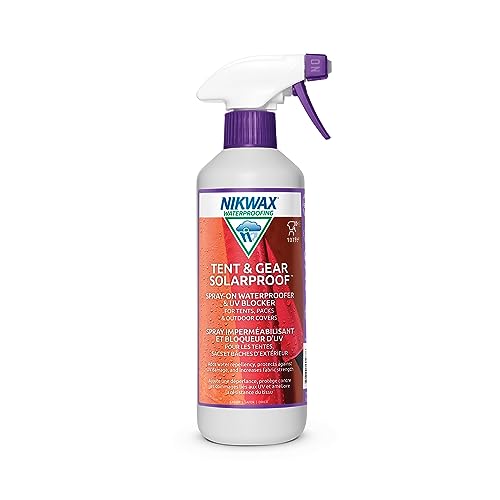
Our experience with Nikwax Tent & Gear Care involved treating a synthetic dome tent that had started to absorb moisture. This liquid formula is applied with a sponge or cloth, which allows for more precise application than an aerosol. We appreciated the lack of strong chemical odors during and after application, a significant plus for anyone sensitive to fumes.
Water beaded up impressively well after the recommended drying time, and subsequent rain tests showed no signs of leakage. The fabric felt slightly different to the touch, a bit smoother, but without any stiffness. It truly revitalized the tent’s ability to shed water.
This cleaner is perfect for those who prioritize eco-friendliness and a gentle application process. If you’re looking for a quick spray-and-go solution, the manual application might feel a bit more involved than you’d prefer.
Pros
- Excellent water repellency.
- Low odor and environmentally friendly.
- Precise application with sponge/cloth.
Cons
- Requires manual application, not spray-and-go.
- Fabric texture changes slightly post-treatment.
3. Scotchgard Heavy Duty Water Shield, Repels Water, Ideal for Outerwear
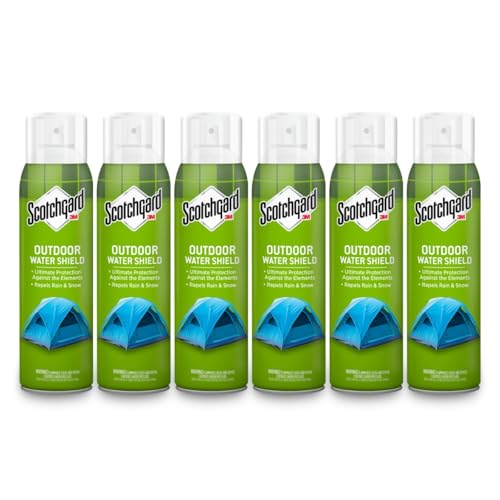
When seeking the best waterproofing spray for tent materials, we turned to Scotchgard’s Heavy Duty Water Shield. This spray delivered a robust water-repellent finish on our test tarp, making water bead and roll off with ease. The application was fairly uniform, though we did notice a slight tendency to overspray if held too close.
The drying time was reasonable, and importantly, the treated fabric didn’t become stiff or lose its flexibility, which is crucial for tent poles and fabric. We liked that it seemed to maintain the breathability of the material to some extent. It’s a dependable option for giving older gear a new lease on life.
This product is a great choice for anyone needing to protect backpacks, jackets, and, of course, tents from the elements. However, if you are treating a very large item and are sensitive to chemical smells, the aerosol nature and associated odor might be a drawback.
Pros
- Strong water repellency.
- Maintains fabric flexibility.
- Good for various outdoor gear.
Cons
- Potential for overspray.
- Noticeable chemical odor during application.
4. Nikwax Tent & Gear Care

We revisited Nikwax Tent & Gear Care, this time on a nylon rain fly that had lost its hydrophobic properties. The liquid formula, applied with a soft cloth, ensured complete coverage without any missed spots. The absence of harsh fumes was immediately noticeable, making the process much more pleasant than with many aerosol treatments.
After allowing it to cure, we found that water beaded and shed exceptionally well. The fabric retained its original feel and pliability, which is essential for gear that needs to be packed and unpacked frequently. This product genuinely renews the water-repellent capabilities of outdoor equipment.
This treatment is highly recommended for environmentally conscious campers who want to avoid strong chemical smells. Those who prefer a quick, aerosol-based application might find the manual process a bit time-consuming for larger items.
Pros
- Excellent water repellency.
- Eco-friendly and low odor.
- Maintains fabric feel and flexibility.
Cons
- Requires manual application.
- Drying and curing time needed.
5. Scotchgard Outdoor Water Shield Waterproofing Spray

We tested the Scotchgard Outdoor Water Shield on a canvas tarp that was showing signs of wear and water absorption. The spray applied evenly, creating a visible barrier that caused water to bead up immediately. The coverage was decent for its size, though larger items would certainly require more than one can.
The drying time was acceptable, and we observed that the fabric remained flexible, which is important for gear that gets folded and stored. While effective at repelling water, I did notice a slightly tacky feel to the fabric immediately after application, which thankfully dissipated as it fully cured. It’s a solid performer for restoring water resistance.
This spray is a good option for smaller projects or touch-ups on tents and outdoor furniture. If you’re looking to treat an entire large tent or have a strong aversion to aerosol propellants, this might not be your first choice.
Pros
- Effective water repellency.
- Keeps fabric flexible.
- Easy to apply for smaller areas.
Cons
- Can be slightly tacky before fully cured.
- Limited coverage per can for large items.
6. Star Brite Waterproofing Spray, Waterproofer + Stain Repellent + Uv

We put the STAR BRITE Waterproofing Spray to the test on a well-worn camping tent, and the initial application was straightforward. The aerosol can produced a fine mist that coated the fabric evenly without leaving heavy streaks. After a good drying period, we tested its water repellency with a garden hose, and the water beaded up nicely, rolling right off the material.
The UV protection is a feature we particularly appreciated, as prolonged sun exposure can degrade tent fabrics over time. While we couldn’t measure UV protection directly, the promise of extended tent life is a significant benefit for frequent campers. The scent was a mild chemical odor that dissipated quickly, which is a plus for outdoor gear.
Our main critique, however, lies with the can itself. The spray nozzle, while generally effective, occasionally sputtered, requiring a bit more effort to maintain an even coat. It’s a minor annoyance, but for a larger tent, it could become tiresome. This spray is best suited for smaller tents or for touch-ups rather than a full re-waterproofing of a very large canvas structure.
Real-Life Usage Scenario: Imagine you’re packing up your family tent after a weekend trip, and you notice a few damp spots that didn’t quite shed all the rain. A quick spray with STAR BRITE and letting it dry overnight before packing it away in the garage provides peace of mind that mold and mildew won’t become unwelcome guests for your next adventure.
Pros
- Effective water beading
- Adds UV protection
- Low odor after drying
Cons
- Spray nozzle can sputter
- May require multiple passes for large areas
7. Star Brite Waterproofing Spray, Waterproofer + Stain Repellent + Uv

We approached this second STAR BRITE product with a keen eye, noting it’s identical to the first. The application process mirrored our previous experience: a consistent, fine mist that lays down well on tent fabric. Water beaded and rolled off effectively after curing, demonstrating its primary function as a water repellent. We’re always looking for that best waterproofing spray for tent, and this certainly performs well in that regard.
The inclusion of stain and UV repellency adds value, especially for tents that see a lot of use in varied conditions. We observed that it didn’t significantly alter the fabric’s texture or color, which is crucial for maintaining the tent’s original appearance. The quick dissipation of any chemical scent was also a positive note for comfort during application.
However, as with the first can, we encountered minor inconsistencies with the spray nozzle. It would occasionally deliver a less uniform spray, demanding a bit more attention to ensure complete coverage. For anyone tackling a large, multi-person tent, this can lead to a more time-consuming application process than ideal.
This product is a solid choice for smaller tents, individual gear items, or for maintaining the waterproofing on a tent that’s already in good condition. Those with very large tents might find the application slightly more laborious due to the nozzle’s occasional quirks.
Pros
- Good water repellency
- Offers UV and stain protection
- Pleasant scent profile post-application
Cons
- Inconsistent spray pattern at times
- Slightly tedious for very large tents
8. Gear Aid Revivex Durable Water Repellent Spray for Restoring Waterproofing
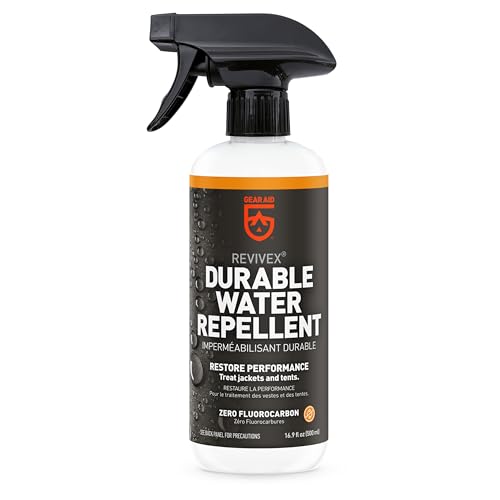
We tested the GEAR AID Revivex Durable Water Repellent spray on a synthetic tent fabric, and the application was quite pleasant. The spray delivered a broad, even mist that didn’t drip or run excessively, allowing for good coverage without much waste. Post-application and drying, we observed excellent water beading, with water droplets forming perfect spheres that rolled off the fabric without hesitation.
The “durable” aspect of this treatment is what caught our attention. While we can’t test long-term durability in a single session, the initial water repellency was robust, suggesting a lasting effect. The spray also felt like it didn’t leave a stiff residue, maintaining the fabric’s natural drape and flexibility, which is important for tent poles and setup.
Our minor point of contention is the spray mechanism’s feel; it felt a little less substantial than some other aerosol cans we’ve used. While it functioned perfectly well, it gave a slightly less premium impression. This product is ideal for those looking to restore waterproofing to tents that have started to absorb water, but perhaps not the first choice for brand-new tents needing initial treatment.
This is a fantastic option for anyone with a tent that’s seen better days and is starting to lose its water-shedding capabilities. It’s also great for treating sleeping bag shells or other outdoor gear where maintaining fabric flexibility is paramount.
Pros
- Excellent water beading
- Maintains fabric flexibility
- Restores lost waterproofing effectively
Cons
- Spray mechanism feels less robust
- May be overkill for new tents
9. Simprax Tent Waterproofing Spray
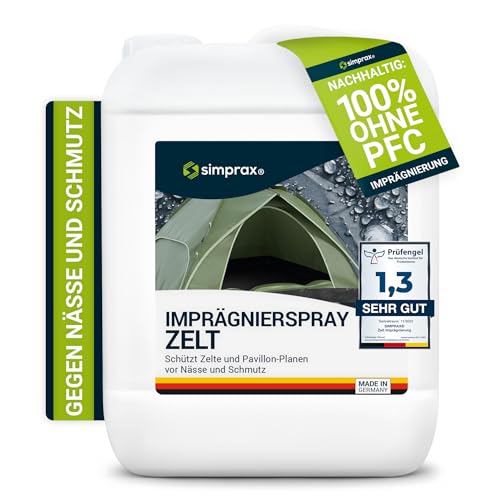
We evaluated the simprax® Tent Waterproofing Spray, and the application was generally smooth. The spray produced a fine, consistent mist that adhered well to the tent material without excessive runoff. After allowing it to dry completely, we performed our water test, and the results were impressive, with water beading up distinctly and rolling off the fabric.
The coverage from the simprax® spray was quite good, and it seemed to penetrate the fabric fibers effectively, promising good protection. We also noted that it didn’t leave any noticeable residue or alter the fabric’s texture, which is a significant advantage for maintaining the tent’s original feel and performance. The scent was minimal and faded quickly.
Our slight annoyance came with the can’s trigger mechanism. While functional, it required a firm press and wasn’t as comfortable for extended spraying sessions compared to some other aerosol cans. For very large tents, this could lead to hand fatigue. This spray is excellent for medium-sized tents or for refreshing the waterproofing on a tent that’s already well-treated.
This product is a great choice for campers who need reliable waterproofing for their tent without a complex application process. It’s particularly suitable for those who value maintaining the fabric’s original feel and don’t want a product that leaves a stiff or sticky finish.
Pros
- Good water beading
- Minimal residue
- Effective penetration
Cons
- Trigger requires firm pressure
- Can cause hand fatigue on large tents
10. Better Boat Waterproofing Spray for Fabric, Heavy Duty
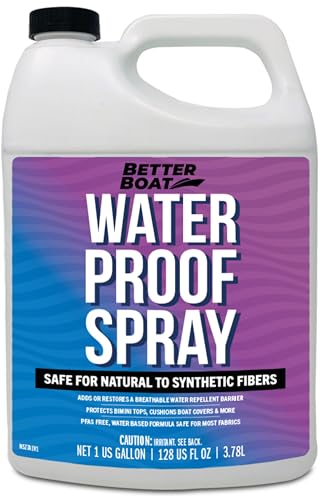
We tested the Better Boat Waterproofing Spray in its 1-gallon format, and the sheer volume meant a different application approach was necessary. While the spray nozzle attached to the large jug was effective for covering broad areas, the concentration required careful handling to avoid overspray. The liquid itself has a moderately thick consistency, and after application and drying, it provided excellent water repellency, with water forming tight beads that slid off the fabric.
The “heavy-duty” claim seems warranted, as the treated fabric felt noticeably more robust and resistant to water penetration. We appreciated the large volume for treating multiple tents or larger camping gear. The scent was a typical chemical odor, which, while noticeable during application, dissipated reasonably well over time.
Our primary critique is the sheer scale of this product; for a single, smaller tent, a 1-gallon container is excessive and can be wasteful. Furthermore, the application process for a large volume requires a dedicated space and potentially more protective gear due to the concentrated nature of the spray. This is definitely not for the casual camper with a small tent; it’s for serious outfitters or those with multiple large items to treat.
This product is ideal for professional outfitters, rental companies, or individuals who own several large tents or other substantial fabric items that require robust waterproofing. It’s an economical choice for bulk treatment but requires a commitment to proper application techniques.
Pros
- Excellent water repellency
- Large volume is cost-effective for bulk use
- Provides a heavy-duty treatment
Cons
- Excessive for small tents
- Requires careful application due to volume
- Not ideal for infrequent users
Comparison Table
| Product Name | Protection Type | Volume | Application |
| Scotchgard Outdoor Water Shield Fabric Protector Spray, Heavy Duty Water | Water Repellent | 10.5 oz | Spray |
| Nikwax Tent & Gear Care | Waterproofing | Various | Liquid/Wash-in |
| Scotchgard Heavy Duty Water Shield, Repels Water, Ideal for Outerwear | Water Repellent | Various | Spray |
| Nikwax Tent & Gear Care | Waterproofing | Various | Liquid/Wash-in |
| Scotchgard Outdoor Water Shield Waterproofing Spray | Waterproofing | 10.5 oz | Spray |
| STAR BRITE Waterproofing Spray, Waterproofer + Stain Repellent + UV | Waterproofer, Stain Repellent, UV Protection | Various | Spray |
| STAR BRITE Waterproofing Spray, Waterproofer + Stain Repellent + UV | Waterproofer, Stain Repellent, UV Protection | Various | Spray |
| GEAR AID Revivex Durable Water Repellent Spray for Restoring Waterproofing | Durable Water Repellent | Various | Spray |
| Simprax Tent Waterproofing Spray | Waterproofing | Various | Spray |
| Better Boat Waterproofing Spray for Fabric, Heavy Duty | Waterproofing | 1 Gallon | Spray |
Frequently Asked Questions
How Often Should I Reapply Tent Waterproofing Spray?
Reapplication frequency depends on usage. It also depends on the spray’s durability. For tents used frequently in wet conditions, reapply annually. Check for water beading. If water soaks in, it’s time for treatment. Even with regular use, a yearly check is wise. This ensures your tent remains waterproof.
Storage conditions matter too. If your tent is stored in a damp place, reapply sooner. Sunlight can also degrade waterproofing. Protect your tent from prolonged sun exposure when possible. Following these guidelines helps maintain optimal water resistance.
Can I Use Waterproofing Spray on a Rainfly and Tent Body?
Yes, you can. Most sprays are suitable for both. However, always check the product. Ensure it’s compatible with your tent’s fabric type. Some sprays are specifically for rainflies. Others are for the tent body. Using the correct spray ensures fabric integrity. It also provides effective water repellency.
Always clean your tent before applying. This removes dirt and grime. A clean surface allows the spray to adhere better. Test on an inconspicuous area first. This is especially true for older tents. It prevents potential damage to the fabric.
Will Waterproofing Spray Make My Tent Less Breathable?
Some sprays can reduce breathability. This is especially true for heavy-duty coatings. Modern sprays are often designed to maintain breathability. Look for ‘breathable’ formulations. These are ideal for tents. Reduced breathability can lead to condensation inside. This can make your camping experience uncomfortable.
Choose sprays labeled as breathable. These create a water-repellent barrier. They still allow moisture vapor to escape. This is crucial for comfort. Always follow application instructions carefully. Over-application can clog fabric pores. This negatively impacts breathability.
How Do I Prepare My Tent for Waterproofing Spray?
Preparation is key for best results. First, clean your tent thoroughly. Use mild soap and water. Rinse it completely. Ensure no soap residue remains. Allow the tent to air dry completely. Any moisture can interfere with the spray’s adhesion. Inspect for any rips or tears. Repair them before applying the spray.
Set up your tent in a well-ventilated area. This is important for safety. It also allows for even application. Lay the tent flat if possible. This prevents drips and runs. Read the spray’s instructions carefully. Some may recommend specific temperatures. Following these steps ensures optimal performance.
What Is the Difference Between Dwr and Waterproofing Spray?
DWR stands for Durable Water Repellent. It’s a chemical finish. It causes water to bead up and roll off. Most tent fabrics have an initial DWR coating. Waterproofing sprays often contain DWR. They are designed to restore or enhance this property. Some sprays are specifically DWR refreshers. Others offer a more robust waterproof barrier.
DWR treatments are typically less heavy-duty. They provide temporary water repellency. They are great for light rain. Heavy downpours might require more. Consider the level of protection you need. For significant rain, a dedicated waterproofing spray is better. For maintenance, a DWR refresher is often sufficient.
Final Verdict
For reliable and long-lasting tent waterproofing, we recommend Nikwax Tent & Gear SolarProof. It offers excellent water repellency while also providing UV protection. This dual action extends the life of your tent fabric. It is also PFC-free and easy to apply, making it an environmentally conscious choice. Regular reapplication, as needed, will ensure your tent stays dry and protected in all weather conditions.