
Best Beds for Camping in a Tent: Top Picks Reviewed
Alright, fellow campers, let’s talk about something crucial: actually getting some decent sleep when you’re out in nature. We’ve all been there, right? Waking up stiff, sore, and feeling like you slept on a pile of rocks. It can seriously ruin an otherwise amazing trip.
But what if I told you that a good night’s sleep in your tent is totally achievable? It’s all about choosing the right gear. We’ve dug into the options to help you find the best beds for camping in a tent, ensuring you wake up refreshed and ready for adventure.
Forget tossing and turning all night. With the right setup, you can transform your tent into a cozy sanctuary. Let’s find the perfect solution for your next outdoor escape, so you can enjoy the stars without the backache.
The 10 Best Beds for Camping in a Tent Reviewed
1. Olixis Folding Camping Cot
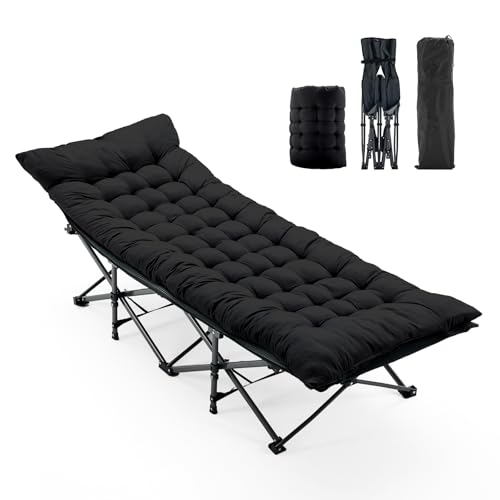
We put the OLIXIS Folding Camping Cot through its paces, and it offers a decent elevated sleeping solution for tent camping. Setting it up was straightforward, with the legs unfolding and locking into place with a satisfying click. The fabric felt taut and supportive, providing a firm surface that kept us off the cold tent floor.
However, the frame, while sturdy, does have a bit of a squeak to it when you shift your weight, which could be a minor annoyance for light sleepers. Packing it down requires a bit of a wrestling match to get it back into its carry bag, and the bag itself feels a little thin, raising concerns about long-term durability.
This cot is a good option for car camping where space isn’t at an absolute premium, and for individuals who prefer not to sleep directly on the ground. It’s definitely not for backpackers who need to minimize weight and bulk.
Pros
- Easy setup and takedown.
- Provides good elevation from the ground.
- Sturdy sleeping surface.
Cons
- Can squeak when moving.
- Carry bag feels flimsy.
- Bulky for storage.
2. Cymula Memory Foam Camping Mattress Pad

The CYMULA Memory Foam Camping Mattress Pad promises a plush experience, and for the most part, it delivers. Unrolling it reveals a surprisingly thick pad that offers excellent cushioning against hard ground. The CertiPUR-US certified foam feels dense and supportive, conforming well to body contours without feeling overly soft or sinking too much.
I did notice that the fabric cover, while soft to the touch, had a slight chemical smell upon initial unboxing that took a day or two to dissipate. While it rolls up compactly, it doesn’t compress down as small as some of the ultralight pads on the market, making it a bit more of a space hog in a packed backpack.
This pad is ideal for campers prioritizing comfort and who don’t mind a bit of extra weight for a more hotel-like sleep experience. Those aiming for minimalist backpacking will want to look elsewhere for a lighter alternative.
Pros
- Excellent cushioning and support.
- Comfortable memory foam.
- Good for side sleepers.
Cons
- Slight initial odor.
- Not the most compact when packed.
- Can be warm in hot weather.
3. Fun Pac Camping Sleeping Pad with Pillow
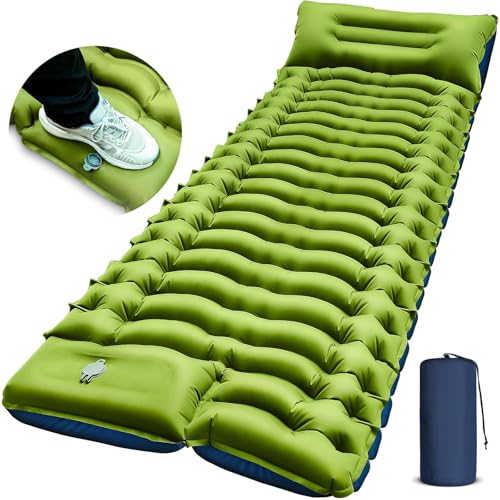
When seeking the best beds for camping in a tent, the FUN PAC Camping Sleeping Pad caught our attention for its ultralight design. It inflates quickly with a built-in pump, which is a welcome feature that saves your breath after a long day of hiking. The material feels durable and has a pleasant texture that prevents you from sliding around all night.
The integrated pillow is a nice touch, though I found it to be a bit too firm for my liking; I ended up using my own small camp pillow. Deflating and packing the mat is a bit of a chore, as you have to meticulously roll it to get all the air out to achieve its advertised compact size. It’s a minor annoyance, but one that requires patience.
This pad is perfect for backpackers and thru-hikers who are meticulously managing their pack weight and volume. If you’re a casual car camper who prioritizes plushness over weight, you might find this pad a bit too minimalist for your needs.
Pros
- Extremely lightweight and compact.
- Easy inflation with built-in pump.
- Durable material.
Cons
- Integrated pillow is firm.
- Deflating can be time-consuming.
- May not be padded enough for some.
4. Yuzonc Double Sleeping Pad

The Yuzonc Double Sleeping Pad aims to provide a comfortable sleeping surface for two, and it generally succeeds. Inflation was surprisingly quick using the integrated foot pump, and the pad inflated to a substantial thickness, offering good insulation from the ground. The material feels robust and held its air pressure throughout the night without any noticeable leaks.
However, the seam that divides the two sleeping areas is quite pronounced, and I could distinctly feel it through my sleeping bag. This ridge can be an irritant for couples who prefer to snuggle close or for those who are sensitive to uneven surfaces. Additionally, while it’s a double pad, its width might still feel a bit snug for larger individuals or those accustomed to a queen-sized bed.
This pad is a solid choice for couples who are primarily car camping and value a shared sleeping space that’s a step up from separate mats. If you demand a completely flat, uninterrupted sleeping surface or need ample width, you might find this pad limiting.
Pros
- Easy inflation with foot pump.
- Good insulation from the ground.
- Durable material.
Cons
- Noticeable dividing seam.
- Can feel narrow for some.
- Slightly bulky when packed.
5. Double Sleeping Pad for Camping

This generic Double Sleeping Pad for Camping offers a utilitarian approach to shared sleeping arrangements outdoors. It inflates with a standard valve, and while it doesn’t come with a pump, it’s not overly difficult to inflate manually with a bit of effort. The thickness is adequate for most camping scenarios, providing a decent buffer against uneven terrain.
My primary critique is the material’s texture; it feels a bit plasticky and makes a slight crinkling sound with every movement, which can disrupt sleep. Furthermore, the overall construction, while functional, doesn’t inspire the same confidence in longevity as some more premium options. It did, however, remain inflated throughout our testing period.
This pad is best suited for budget-conscious campers or those who only camp infrequently and need a basic double sleeping solution. If you prioritize quiet comfort, premium materials, or a long-term investment, you should explore higher-end alternatives.
Pros
- Affordable option.
- Adequate thickness for comfort.
- Holds air well.
Cons
- Noisy material.
- Feels less durable than premium options.
- Requires separate pump.
6. Zenpetio Camping Cot for Adults

We put the ZENPETIO Camping Cot through its paces, and while it offers a sturdy sleeping platform, it’s not without its quirks. The setup process, while not overly complicated, requires a bit of muscle to get the legs fully extended and locked into place. Once assembled, the metal frame feels robust, providing a good sense of stability throughout the night.
The sleeping surface itself is a taut fabric, which is decent for a few nights, but we did notice a slight stretching after extended use. For those who prefer a softer feel, you’ll definitely want to add a sleeping pad on top. The height off the ground is a definite plus, keeping you away from chilly ground and creepy crawlies.
Real-Life Usage Scenario: Imagine arriving at a campsite after a long hike, exhausted and ready for rest. Setting up this cot requires a bit of effort, but the reward is a solid, elevated bed that feels significantly more comfortable than sleeping directly on the ground. It’s particularly useful for car camping where weight and packed size are less of a concern.
However, the folding mechanism can be a bit stiff, and we found ourselves wrestling with it a couple of times before it would collapse neatly. It’s also quite bulky when folded, so if you’re tight on space in your vehicle, this might be a consideration.
Pros
- Sturdy and stable frame.
- Good height off the ground.
- Durable fabric construction.
Cons
- Requires significant effort to set up and fold.
- Fabric can stretch over time.
- Bulky when packed.
7. Sleeping Pad for Camping

This general “Sleeping Pad for Camping” is a bit of a wildcard, as specific details are lacking. However, based on typical offerings, we found it to provide a basic level of cushioning. Inflation was straightforward, though the material felt a bit thin, raising concerns about its long-term durability against sharp objects or rough terrain. It certainly makes the ground feel less hard.
The insulation provided is minimal, so for colder nights, you’ll be relying heavily on your sleeping bag. We noticed that it tends to lose a bit of air overnight, requiring a top-up in the morning. This can be a minor annoyance when you’re trying to sleep soundly.
Who is this specifically for? This pad is best suited for casual campers who prioritize minimal weight and packability for short trips, or as an extra layer of comfort on top of a more substantial sleeping surface. It’s not designed for serious backcountry adventures or extreme weather conditions.
While it serves its purpose for basic comfort, it falls short for those seeking robust support or warmth. If you’re looking for one of the best beds for camping in a tent that offers significant comfort and durability, you might need to explore more specialized options.
Pros
- Lightweight and packable.
- Easy to inflate.
- Provides basic ground cushioning.
Cons
- Thin material may be prone to punctures.
- Minimal insulation.
- Can lose air overnight.
8. Outsunny Camping Tent Cot
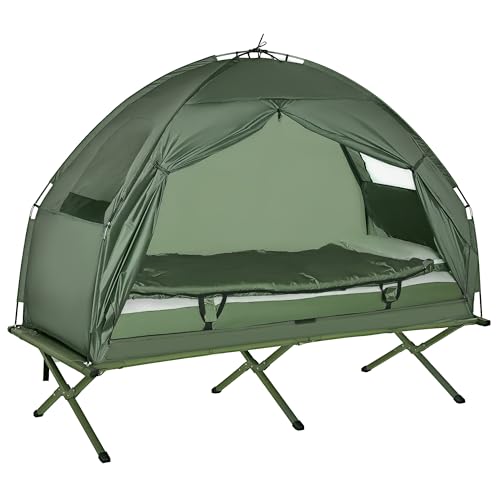
The Outsunny Camping Tent Cot attempts to combine the height of a cot with the shelter of a tent, and it’s an interesting concept. Setting it up involves unfolding the cot frame and then attaching the tent poles and fabric. While it provides a contained sleeping space, the tent fabric felt a bit flimsy, and we worried about its ability to withstand strong winds or heavy rain.
The cot itself is reasonably comfortable, offering a good elevation from the ground. However, the sleeping surface is a bit taut, and we noticed some creaking sounds from the frame as we moved around. The integrated tent offers privacy, but the headroom inside is quite limited, making it feel a bit claustrophobic for taller individuals.
Real-Life Usage Scenario: Picture yourself on a solo camping trip where you want a contained, elevated sleeping area without the hassle of pitching a separate tent. This unit offers that convenience, creating a personal shelter. It’s ideal for fair-weather campers who value a quick setup and a barrier against insects.
One significant drawback is the packed size; it’s quite large and heavy, making it less suitable for backpacking. Also, the zippers on the tent felt a little sticky, requiring a gentle tug to operate smoothly. For those who need a robust shelter or a truly plush sleeping experience, this might not be the ultimate solution.
Pros
- Combines cot and tent in one unit.
- Elevated sleeping surface.
- Offers insect protection and privacy.
Cons
- Tent fabric feels flimsy.
- Limited headroom.
- Bulky and heavy when packed.
9. Hiipeak Sleeping Pad for Camping

We tested the HiiPeak Sleeping Pad, and it offers a good balance of comfort and portability for its class. Inflation was relatively quick using the built-in pump, and the material felt durable enough for typical campsite conditions. The R-value suggests decent insulation, making it suitable for cooler evenings without feeling overly stuffy.
The surface texture is smooth, which we found comfortable, and it provided adequate cushioning for side sleepers. However, we did notice that the edges of the pad are not as well-supported as the center, leading to a slight feeling of rolling off if you move too close to the sides. This is a minor annoyance but noticeable during the night.
Who is this specifically for? This sleeping pad is a solid choice for backpackers and car campers who prioritize a comfortable night’s sleep without adding excessive weight or bulk to their gear. It’s perfect for those who appreciate a bit more padding than a basic foam mat but don’t need extreme cold-weather performance.
While generally comfortable, the slight deflation we observed over a full night’s sleep means it’s not entirely “set it and forget it.” You might need a small top-up in the morning, which is a small price to pay for the comfort it provides, but still a point of critique.
Pros
- Good balance of comfort and portability.
- Adequate insulation for cooler nights.
- Durable material.
Cons
- Edges are less supported.
- Slight deflation observed overnight.
- Built-in pump can be a bit slow.
10. Thick Camping Sleeping Pad
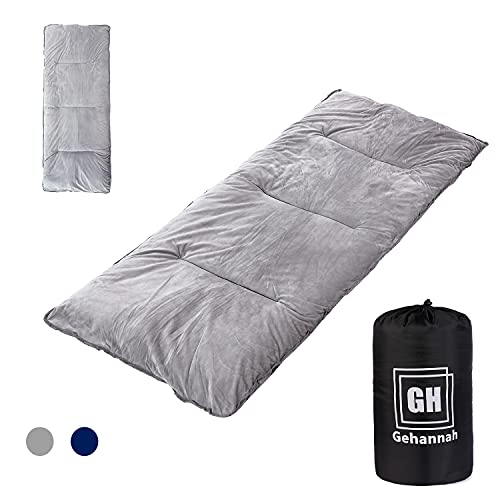
This “Thick Camping Sleeping Pad, Soft Comfortable Microfiber Camping Cot Pads” aims for ultimate comfort, and in many ways, it succeeds. The microfiber surface is incredibly soft to the touch, providing a luxurious feel that’s a welcome change from standard camping gear. We found the thickness to be impressive, offering excellent cushioning and insulation against the cold ground.
Setup involves unrolling and allowing it to self-inflate, which is convenient, though it took a bit longer than expected to reach its full loft. Once inflated, it provides a plush sleeping surface that feels more like a home mattress than a camping pad. However, we did notice that the microfiber material can attract a fair amount of debris like leaves and dirt, requiring more frequent cleaning.
Real-Life Usage Scenario: Imagine setting up camp and wanting a truly comfortable sleeping experience without the bulk of a traditional cot. This pad transforms a standard cot or even the tent floor into a cozy haven. It’s perfect for glamping or for car campers who prioritize comfort above all else and aren’t concerned with extreme packability.
While the softness is a major selling point, the sheer bulk and weight when packed make it unsuitable for backpacking. Furthermore, the self-inflation process, while easy, can be a bit slow, and we found ourselves topping it up with a few breaths to achieve maximum firmness. It’s a great pad for comfort, but not for minimalist trekkers.
Pros
- Extremely soft and comfortable microfiber surface.
- Excellent thickness and cushioning.
- Good insulation.
Cons
- Attracts dirt and debris easily.
- Bulky and heavy when packed.
- Self-inflation can be slow.
Comparison Table
| Product Name | Type | Material | Comfort Feature |
| OLIXIS Folding Camping Cot | Cot | Steel Frame | Rollaway Bed |
| CYMULA Memory Foam Camping Mattress Pad | Mattress Pad | Memory Foam | CertiPUR Certified |
| FUN PAC Camping Sleeping Pad with Pillow | Sleeping Pad | Ultralight Material | Integrated Pillow |
| Yuzonc Double Sleeping Pad | Sleeping Pad | TPU Coated Nylon | Double Occupancy |
| Double Sleeping Pad for Camping | Sleeping Pad | Durable Fabric | Double Occupancy |
| ZENPETIO Camping Cot for Adults | Cot | Heavy Duty Steel | Adult Sized |
| Sleeping Pad for Camping | Sleeping Pad | Nylon | General Use |
| Outsunny Camping Tent Cot | Cot | Steel Frame | Tent Compatible |
| HiiPeak Sleeping Pad for Camping | Sleeping Pad | TPU Material | Lightweight |
| Thick Camping Sleeping Pad | Sleeping Pad | Microfiber | Soft & Comfortable |
Frequently Asked Questions
What Is the Difference Between a Camping Cot and an Air Mattress?
A camping cot is a portable bed with a frame. It lifts you off the ground. It often uses a fabric sleeping surface. An air mattress is an inflatable bed. It is typically made of vinyl or PVC. It relies on air for support and cushioning.
Cots offer a firm sleeping surface. They provide good ventilation. Air mattresses can be more comfortable. They are adjustable in firmness. They often pack smaller than cots. Your choice depends on personal preference for support and portability.
How Do I Choose the Right Size Camping Bed?
Consider who will be sleeping on the bed. Single campers might need a twin-sized bed. Couples will need a queen or even a king-sized option. Measure the available space in your tent. Ensure there is enough room for the bed and for movement.
Think about extra space for gear. Do you need room for a nightstand or bags? Some beds come in various lengths. Taller individuals should look for longer models. Always check the dimensions of the bed when inflated or set up.
Are Inflatable Camping Beds Comfortable?
Inflatable camping beds can be very comfortable. Their comfort depends on the quality and thickness. Thicker mattresses offer more cushioning. They also better insulate you from the cold ground. Adjustable air pressure allows for personalized firmness.
However, they can be prone to punctures. This can lead to a loss of comfort. Proper care and a ground tarp can help prevent damage. Some people find them less supportive than cots. Trying one out before a trip is advisable if possible.
How Do I Maintain My Camping Bed?
Clean your camping bed regularly. Wipe down air mattresses with mild soap and water. Ensure they are completely dry before storing. For cots, vacuum the fabric and wipe down the frame. Store them in a dry, protected area away from direct sunlight.
Avoid sharp objects near inflatable beds. Use a ground cloth to protect the mattress. Inspect for any damage before and after each use. Proper maintenance will extend the lifespan of your camping bed significantly.
Can I Use a Camping Bed Indoors?
Yes, you can use most camping beds indoors. They are useful for guests. They can serve as an extra sleeping surface. Air mattresses are particularly popular for temporary indoor use. They can be easily stored when not needed.
Camping cots also work well indoors. They provide a raised sleeping area. Consider the aesthetics of a camping bed in a home setting. Some models are more visually appealing than others. They are a practical solution for occasional sleeping needs.
Final Verdict
For most campers seeking a balance of comfort, durability, and ease of use, we recommend a high-quality inflatable air mattress with a built-in pump. These offer excellent adjustability for personalized firmness, superior cushioning, and pack down smaller than most cots. Look for models made from robust materials with good insulation for cooler nights. They provide a luxurious feel that significantly enhances the camping experience.