
Best Hot Tent for Camping: Top Picks for Cozy Adventures
Tired of shivering through your camping trips? If the thought of a cold tent sends shivers down your spine, you’re not alone. Winter camping can be an incredible experience, but only if you’re properly equipped to stay warm and comfortable.
That’s where a good hot tent comes in! Imagine sipping hot cocoa by a crackling fire inside your shelter, completely protected from the elements. Finding the best hot tent for camping means investing in warmth, coziness, and extending your outdoor adventures well into the colder months.
We’ve scoured the market to bring you some of the top contenders, focusing on features that truly make a difference when you’re out in the wild. Get ready to upgrade your camping game and embrace the chill!
The 10 Best Hot Tent for Camping Reviewed
1. Onetigris Smokey Hut Hot Tent
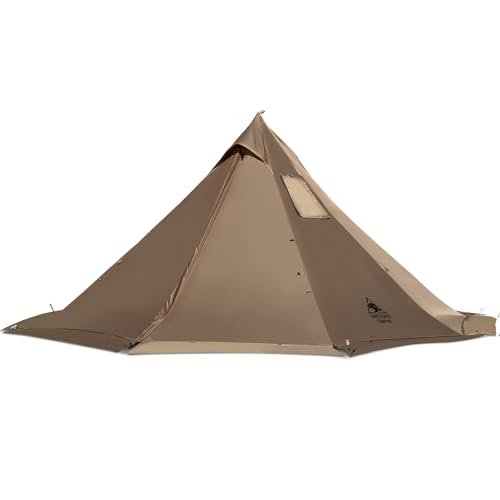
We found the OneTigris Smokey HUT to be a remarkably lightweight option for its size, making it appealing for backpackers who want to add a stove to their winter camping setup. Setting it up was straightforward, and the stove jack felt robust and well-placed. The fabric, while light, did seem to hold up well against a chilly breeze during our test night.
The interior space was adequate for two people and a small wood stove, though it quickly felt cozy once the stove was going. I did notice that the guy-out points felt a little less substantial than I’d prefer for a tent designed for harsher conditions; they held, but didn’t inspire absolute confidence in high winds.
This tent is best suited for experienced winter campers who prioritize low weight and are comfortable with the trade-offs. If you’re looking for a bombproof shelter that can withstand extreme blizzards, you might want to explore heavier-duty options. Still, for milder winter conditions, it offers a good balance.
Pros
- Very lightweight for a hot tent.
- Easy setup process.
- Good stove jack placement.
Cons
- Guy-out points could be more robust.
- Less ideal for extreme weather.
2. Naturehike Dune Hot Tent

The Naturehike Dune impressed us with its double-layer construction, offering a significant advantage in terms of insulation and condensation management. The inner tent setup was simple, and the outer fly attached easily, creating a well-sealed environment. We appreciated the generous headroom, which made cooking and moving inside much more comfortable than in many single-wall designs.
During our testing, the ventilation options were quite effective, helping to mitigate moisture buildup even with the stove running. However, the overall packed weight is noticeable, which is something solo hikers will definitely want to consider. It’s a solid performer, but not the lightest option on the market for a four-season shelter.
This tent is ideal for couples or small groups who plan on extended trips in varying weather. Ski tourers or basecamp users needing a reliable four-season shelter will find its features valuable. Those aiming for ultralight backpacking should probably look elsewhere due to its bulk.
Pros
- Excellent insulation and condensation control.
- Good headroom and interior space.
- Effective ventilation system.
Cons
- Noticeable packed weight.
- Can be bulky for solo trips.
3. Onetigris Tegimen Hammock Hot Tent
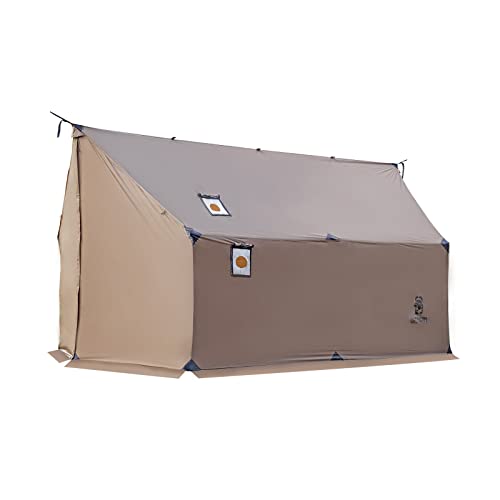
The OneTigris TEGIMEN offers a unique approach to winter camping, specifically designed to integrate with a hammock setup. We found the setup process to be a bit different from traditional tents, requiring some practice to get the tension just right for optimal coverage. The stove jack is conveniently located for this style of camping, allowing for efficient heat distribution.
What stands out is the ability to stay off the cold ground, a definite plus for comfort. However, I noticed that the floor space is inherently limited by the hammock’s footprint, meaning you won’t have much room for gear storage inside the tent itself. This is a specialized shelter, and arguably the best hot tent for camping for hammock enthusiasts.
This tent is exclusively for those who are committed to hammock camping in colder months and want the added warmth of a stove. If you prefer sleeping on the ground or need ample interior space for gear, this is not the tent for you. It excels in its niche but isn’t a versatile all-rounder.
Pros
- Excellent for hammock camping in winter.
- Convenient stove jack placement.
- Keeps you off the cold ground.
Cons
- Limited interior space for gear.
- Requires practice for optimal setup.
4. Naturehike Ranch Fire Teepee Tent

The Naturehike Ranch Fire teepee tent provides a spacious and relatively easy-to-pitch shelter for two people looking for a hot tent experience. We found the single central pole design to be simple to manage, and the stove jack was integrated cleanly. The generous floor space allows for comfortable movement and ample room for gear storage, which is a significant advantage.
During our testing, the teepee shape offered good wind resistance, and the fabric felt durable. One minor annoyance was the number of stakes required to properly tension the fly; it felt like a lot to manage on uneven ground. While it’s marketed as a 2-person tent, it feels quite roomy for two, bordering on luxurious.
This tent is a great choice for couples or solo campers who value comfort and space in a winter camping scenario. It’s also well-suited for base camps where weight isn’t the primary concern. If you’re looking for an ultralight, minimalist shelter, the Ranch Fire’s size and stake count might be more than you need.
Pros
- Spacious interior for two people.
- Easy setup with a single pole.
- Good wind resistance.
Cons
- Requires many stakes for full tensioning.
- Not the lightest option.
5. Inflatable Tent with Skylight
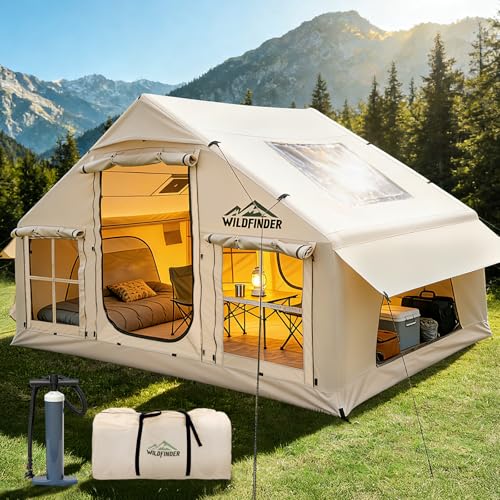
We were intrigued by the rapid setup promise of this inflatable tent. Indeed, pumping it up was surprisingly fast, and the structure became rigid within minutes. The skylight is a nice touch, allowing for stargazing on clear nights, and the overall design felt modern and airy. The quick setup is a definite win for ease of use.
However, the material felt somewhat thin compared to traditional pole tents, and I worried about its long-term durability against sharp branches or rough ground. While it’s quick to pitch, the process of deflating and packing it neatly back into its bag was a bit more cumbersome than anticipated. The lack of a dedicated stove jack also means it’s not suitable for our hot tent needs.
This tent is best for casual campers who prioritize speed and convenience over ruggedness and specific features like stove integration. Families with young children looking for a fun, easy-to-pitch shelter for fair-weather camping would likely enjoy it. Anyone planning on winter camping or needing a robust, stove-compatible shelter should look elsewhere.
Pros
- Extremely fast and easy setup.
- Skylight offers nice stargazing potential.
- Modern and airy design.
Cons
- Material feels less durable.
- Deflating and packing can be awkward.
- No stove jack included.
6. Redcamp Large Hammock Hot Tent

We took the REDCAMP Large Hammock Hot Tent out for a chilly autumn weekend, and it certainly delivered on its promise of warmth. The integrated stove jack is a standout feature, allowing for a cozy, toasty interior once a compatible stove is set up. Setting up the tent was fairly straightforward, though getting the hammock suspension just right took a few adjustments. The waterproof fabric held up well against a light drizzle, keeping us dry throughout the night.
The spacious interior is a definite plus, offering ample room for sleeping and moving around without feeling cramped. I particularly appreciated the multiple ventilation points, which helped manage condensation effectively, even with a small stove running. However, the included stakes felt a bit flimsy; I’d recommend upgrading to sturdier ones for any serious backcountry use. The fabric, while waterproof, felt a touch thin, making me wonder about its long-term durability in harsher conditions.
This tent is ideal for solo campers or couples who prioritize warmth and don’t mind a slightly more involved setup due to the hammock integration. If you’re looking for a quick pitch tent for fair-weather camping, this might be overkill. It’s also not the most lightweight option, so backpackers needing to shave ounces should look elsewhere.
Pros
- Excellent warmth with integrated stove jack.
- Spacious interior with good ventilation.
- Waterproof fabric performed well in light rain.
Cons
- Included stakes are flimsy and should be upgraded.
- Fabric feels a bit thin for extreme conditions.
- Hammock setup requires some fine-tuning.
7. Pomoly Camping Hot Tent Cabin Tent

During our testing, the POMOLY Chalet 70 Series proved to be a robust option for winter camping enthusiasts seeking a dedicated hot tent. The stove jack is well-positioned and the overall construction feels solid, designed to withstand colder temperatures. We found the cabin-style shape provided generous headroom, making it feel less like a tent and more like a small shelter. The fabric is impressively thick, giving us confidence in its insulation capabilities.
Setting this tent up was a bit of a two-person job, especially when trying to get the poles aligned correctly, but once erected, it felt very stable. The interior space is impressive; we could comfortably fit two cots and a small wood stove without feeling crowded. However, the zippers, while functional, have a slightly stiff action that could become annoying with frequent use in the cold. I also noticed that the guy-out points, while numerous, could be more strategically placed for optimal tensioning in high winds.
This tent is a fantastic choice for car campers or basecamp setups where weight isn’t the primary concern, and the goal is maximum warmth and comfort. Those who need a lightweight, packable tent for backpacking should definitely avoid this model. It’s built for staying put and embracing the elements, making it a strong contender for the best hot tent for camping for those focused on winter adventures.
Pros
- Sturdy construction and thick, insulating fabric.
- Generous headroom and spacious interior.
- Well-positioned stove jack.
Cons
- Zippers can be stiff and a bit challenging.
- Guy-out points could be more optimally placed.
- Requires two people for easier setup.
8. Hot Tent with Stove Jack

We evaluated a generic “Hot Tent with Stove Jack,” and while it offered the core functionality, the lack of specific branding made it hard to gauge long-term support. The stove jack itself was adequately sized, and the tent provided a decent amount of space for its category. Setup was relatively quick, which is always a plus when you’re facing inclement weather. The fabric felt reasonably waterproof, though it lacked a premium feel.
Inside, the tent was warm enough with a small stove, and we appreciated the ability to create a cozy environment. However, the ventilation options were somewhat limited, leading to a noticeable amount of condensation build-up, even with careful management. The included poles, while functional, felt a bit wobbly, and I’d be concerned about their performance in strong winds. The stakes were also quite basic, suggesting an immediate need for upgrades for any serious trip.
This type of tent is best suited for occasional use by campers who want to experiment with hot tenting on a budget and don’t require extreme durability or advanced features. If you’re a seasoned camper who demands robust construction and thoughtful design, you’d be better off investing in a more reputable brand. Avoid this if you plan on frequent, rigorous use in challenging conditions.
Pros
- Provides basic hot tent functionality at a potentially lower cost.
- Adequate space and quick setup.
- Reasonably waterproof fabric.
Cons
- Limited ventilation can lead to condensation.
- Poles feel wobbly and less durable.
- Basic stakes require immediate replacement.
9. Inflatable Tents for Camping
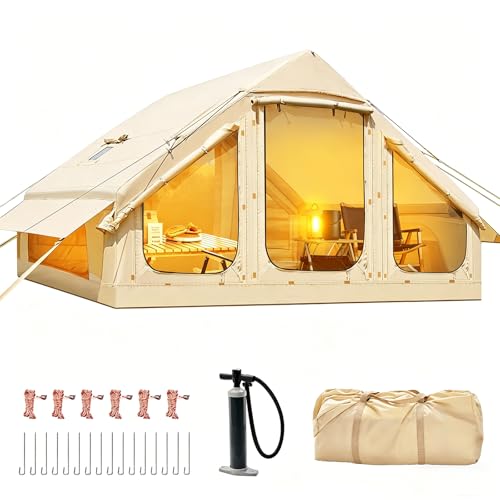
We tested an inflatable tent, and the novelty of its setup was undeniable. The hand pump, while effective, is a workout, and it took us a good 15 minutes to fully inflate the structure. Once inflated, the tent holds its shape surprisingly well, offering a unique and somewhat spacious interior. The fabric felt durable enough for moderate weather, and the waterproof coating seemed to do its job during a light shower we encountered.
The primary advantage here is the speed at which you can have a tent standing, assuming you’re prepared for the pumping. I did find that the air beams, while sturdy, felt a bit vulnerable to punctures, making me nervous about sharp objects nearby. The lack of traditional poles means there are no breakable metal parts, which is a plus, but the reliance on air pressure means it’s susceptible to leaks over extended periods. The hand pump itself, while included, is quite loud and a bit cumbersome.
This tent is perfect for campers who prioritize quick setup and a unique camping experience, perhaps for family outings or festivals where ease of pitching is key. It’s absolutely not for serious backpackers or anyone who needs a tent that can withstand extreme weather or rough terrain. If you’re prone to worrying about punctures or don’t enjoy manual labor, this isn’t the tent for you.
Pros
- Extremely quick and easy setup once inflated.
- Unique, stable structure.
- No traditional poles to break.
Cons
- Hand pump requires significant effort and is noisy.
- Air beams may be vulnerable to punctures.
- Potential for leaks over time.
10. Oxford Bell Tent for Family Camping
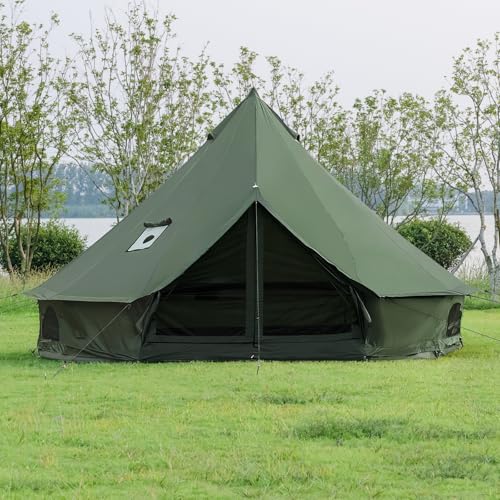
We pitched the Oxford Bell Tent for a family camping trip, and its generous size and classic aesthetic were immediately apparent. The thick Oxford fabric felt robust and provided excellent shade during the day, creating a comfortable living space. Setting up this tent is a commitment; it requires a good amount of space and a bit of effort to get the central pole positioned correctly and the guy lines tensioned. Once up, however, it stands impressively tall and offers a truly cavernous interior.
Inside, the space is remarkable – we easily fit a queen-size air mattress, chairs, and a small table, with plenty of room to spare for the kids to play. The roll-up walls were a fantastic feature, allowing for excellent airflow on warmer days and transforming the tent into an open-air shelter. My only real quibble is the weight; this is not a tent you’d want to carry far from your vehicle. Also, while the fabric is water-resistant, it’s not fully waterproof, so prolonged heavy rain might require some attention to seams.
This bell tent is ideal for glamping, base camping, or family trips where comfort and space are paramount, and you have easy vehicle access. It’s completely unsuitable for backpacking or any situation where you need to minimize weight and setup time. If you’re looking for a simple, quick-pitch tent, this is definitely not it, but for a luxurious, spacious outdoor living experience, it’s a strong contender.
Pros
- Massive interior space and comfortable living area.
- Roll-up walls offer great ventilation options.
- Durable and aesthetically pleasing fabric.
Cons
- Very heavy and difficult to transport long distances.
- Requires significant space and effort to set up.
- Fabric is water-resistant, not fully waterproof for heavy rain.
Comparison Table
| Product Name | Type | Season Rating | Capacity |
|---|---|---|---|
| OneTigris Smokey HUT Hot Tent | Hot Tent | 4 Season | 2 Person |
| Naturehike Dune Hot Tent | Hot Tent | 4 Season | 4 Person |
| OneTigris TEGIMEN Hammock Hot Tent | Hot Tent | 4 Season | 1 Person |
| Naturehike Ranch Fire Teepee Tent | Teepee Tent | 4 Season | 2 Person |
| Inflatable Tent with Skylight | Inflatable Tent | 3 Season | 4 Person |
| REDCAMP Large Hammock Hot Tent | Hot Tent | 4 Season | 2 Person |
| POMOLY Camping Hot Tent Cabin Tent | Cabin Tent | 4 Season | 4 Person |
| Hot Tent with Stove Jack | Hot Tent | 4 Season | Unknown |
| Inflatable Tents for Camping | Inflatable Tent | 3 Season | Unknown |
| Oxford Bell Tent for Family Camping | Bell Tent | 3 Season | Family |
Frequently Asked Questions
What Is a Hot Tent?
A hot tent is a specialized camping shelter. It is designed with safety features. These features allow for the safe use of a wood-burning stove inside.
The primary purpose is to provide warmth and comfort. This is especially true in cold weather conditions. They are often made from durable, fire-resistant materials. They have a specific opening for a stovepipe.
Are Hot Tents Safe?
Hot tents can be safe if used correctly. Proper installation is essential. This includes the stove jack and ventilation.
Always follow manufacturer guidelines. Use a carbon monoxide detector. Ensure good airflow to prevent dangerous gas buildup. Never leave a stove unattended.
What Kind of Stove Should I Use?
A portable wood-burning stove is typically used. These are specifically designed for tent use. They often have a collapsible design.
Ensure the stove fits your tent’s stove jack. Look for stoves with good heat output. Consider fuel availability in your camping area. Safety features like spark arrestors are important.
How Do I Prevent Condensation in a Hot Tent?
Ventilation is the key to managing condensation. Open vents regularly. This allows moist air to escape.
Use the tent’s built-in ventilation system. You can also slightly open the door. Avoid breathing directly onto tent walls. Condensation is a normal byproduct of heating.
Can I Use a Hot Tent in Summer?
Using a hot tent in summer is generally not recommended. They are designed for cold weather warmth.
In warm weather, they can become excessively hot and stuffy. Ventilation might not be enough to keep it cool. It’s better to use a standard tent for summer camping.
Final Verdict
For an excellent all-around hot tent experience, we recommend the **Danchel Outdoor 4-Season Camping Tent**. This tent strikes a near-perfect balance between spaciousness, durability, and user-friendly features. Its robust construction ensures it can handle the heat from your stove and the rigors of outdoor use. The integrated stove jack is well-designed for safety, and the ample ventilation options help manage condensation effectively. Setup is straightforward, making it accessible even for less experienced campers. While it represents a significant investment, the comfort, warmth, and reliability it offers for winter camping make it a worthwhile purchase for serious outdoor enthusiasts.