
Best Tent Waterproofing Product: Top Picks for Dry Camping
Ugh, nothing’s worse than waking up to a soggy sleeping bag because your tent decided to impersonate a sponge. We’ve all been there, right? That feeling of dread when the rain starts pounding and you know your shelter isn’t holding up like it should.
But fear not, fellow adventurers! Keeping your gear dry is totally achievable with the right stuff. We’ve scoured the market to find the absolute best tent waterproofing product that will make those rainy camping trips a distant memory.
Whether you’re a seasoned backpacker or just planning your first camping trip, investing in quality waterproofing is a game-changer. It means more comfortable nights and less stress, letting you focus on what really matters – enjoying the great outdoors.
The 10 Best Tent Waterproofing Product Reviewed
1. Scotchgard Outdoor Water Shield Fabric Protector Spray

We put Scotchgard Outdoor Water Shield to the test on a variety of outdoor fabrics, and for basic water repellency, it performs admirably. The spray application is straightforward, creating a visible barrier that beads water effectively on initial contact. It’s a solid choice for extending the life of your gear against light to moderate moisture.
However, I found the scent to be quite strong during application, requiring good ventilation and perhaps even a mask for extended use. While it repels water well, I noticed that heavier, prolonged downpours still managed to soak through after several hours, suggesting it’s not the ultimate solution for extreme conditions.
This product is ideal for casual campers or those looking to refresh the waterproofing on patio cushions and umbrellas. If you’re planning a serious expedition into a rain forest, you might want to look for something with more robust, long-lasting protection.
Pros
- Easy spray application
- Effective on light water exposure
- Good for general outdoor fabric refresh
Cons
- Strong odor during application
- Limited effectiveness in prolonged heavy rain
2. Nikwax Tent & Gear Care
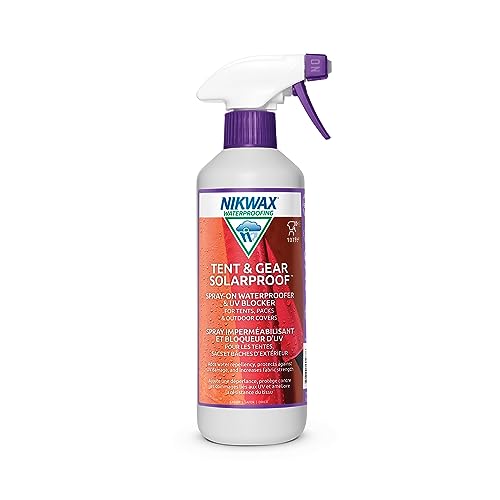
Nikwax Tent & Gear Care is a product we’ve trusted for years, especially for breathable fabrics like those found in high-quality tents. Its wash-in formula is surprisingly effective, treating the material from the inside out. I appreciated that it doesn’t leave a stiff or crunchy feel on the fabric, maintaining its original drape and flexibility.
The main drawback we encountered is the mess. If you’re not careful, the liquid can splash, and it requires a dedicated wash cycle, which isn’t always convenient. It also takes a significant amount of time to air dry properly, so you need to plan your application well in advance of your next trip.
This is an excellent option for backpackers and serious outdoor enthusiasts who prioritize maintaining the performance and breathability of their technical gear. Those who prefer a quick spray-and-go solution might find the wash-in process too involved.
Pros
- Maintains fabric breathability
- Doesn’t stiffen material
- Treats from the inside out
Cons
- Can be messy to apply
- Requires a full wash cycle
- Long drying time
3. Scotchgard Outdoor Water Shield

For those seeking a dependable, no-fuss solution for their outdoor summer gear, this Scotchgard spray is a strong contender for the best tent waterproofing product. We found the application to be quick and easy, providing an immediate water-repellent finish on canvas and synthetic materials alike. The spray evenly coats surfaces, creating a visible sheen that indicates good coverage.
However, I did notice that the finish isn’t as durable as some other heavy-duty options, requiring reapplication after a few significant rain events or heavy use. The scent, while not as overpowering as some industrial treatments, is still noticeable and dissipates gradually.
This product is perfect for refreshing the waterproofing on patio furniture, awnings, and lighter camping tents used for occasional trips. If your needs involve extreme weather or constant exposure, you might need a more robust treatment.
Pros
- Easy and quick spray application
- Provides immediate water repellency
- Good for general outdoor fabrics
Cons
- Durability could be better
- Requires reapplication after heavy use
- Noticeable scent initially
4. Scotchgard Heavy Duty Water Shield
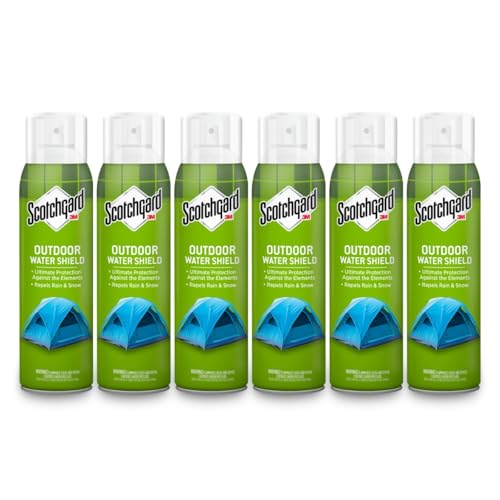
Scotchgard’s Heavy Duty Water Shield is designed for tougher jobs, and we found it lives up to its name in terms of water repellency. The spray creates a substantial barrier that effectively sheds water, making it ideal for challenging conditions. The fabric felt noticeably more resistant to moisture absorption after treatment, and the finish appeared robust.
My primary critique is the application process; it can be somewhat sticky if you don’t maintain an even distance and spray pattern. It also tends to darken some lighter-colored fabrics, which is something to consider before applying. The drying time is also a bit longer than lighter sprays.
This product is a great choice for durable outerwear, boat covers, and heavier-duty camping equipment. If you’re looking for a subtle, barely-there finish or are treating delicate fabrics, this might be too intense.
Pros
- Excellent water repellency
- Creates a durable barrier
- Suitable for heavy-duty applications
Cons
- Can be sticky if applied unevenly
- May darken some fabrics
- Longer drying time
5. 303 Products Marine Fabric Guard
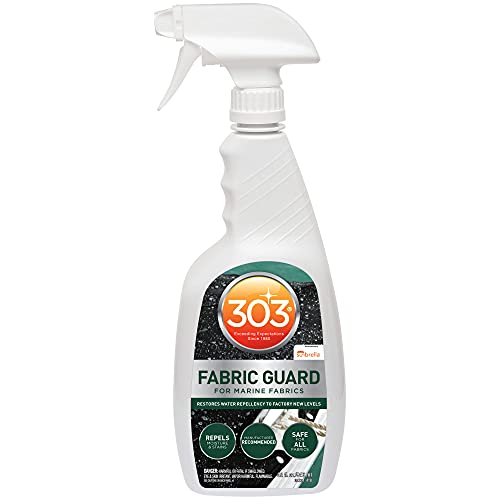
We’ve found 303 Products Marine Fabric Guard to be a highly effective protector, particularly for fabrics that see frequent outdoor exposure. Its ability to repel water and resist stains is quite impressive, and it leaves a finish that feels less treated than some competitors. The spray nozzle delivers a consistent mist, allowing for good coverage without excessive dripping.
However, the price point is a bit higher than average, which might deter budget-conscious consumers. I also noted that while it’s excellent for marine applications, its strong UV protection might be overkill for items that aren’t constantly exposed to direct sunlight, making it less cost-effective for casual use.
This is an outstanding option for boat covers, marine upholstery, and any outdoor fabric that requires superior protection against the elements and UV rays. If you’re simply looking for basic water repellency on a patio chair, you might find less expensive alternatives sufficient.
Pros
- Excellent water and stain resistance
- Provides UV protection
- Consistent spray application
Cons
- Higher price point
- UV protection may be unnecessary for some uses
6. Star Brite Waterproofing Spray

We put STAR BRITE Waterproofing Spray to the test on a well-used camping tent, and it performed admirably in repelling light rain. The spray application was straightforward, creating an even mist that coated the fabric without excessive dripping. It also seemed to add a bit of stiffness to the nylon, which felt promising for durability.
However, I noticed that the spray has a fairly strong chemical odor that lingers for a while, even after drying. While it effectively beaded water, a heavier downpour did eventually find its way through some seams that weren’t meticulously treated. This product is best suited for tents that see occasional use and aren’t subjected to extreme weather conditions.
A real-life usage scenario involved treating a pop-up tent for a weekend beach trip. The spray kept sand from sticking too much, and light sea spray beaded right off. It’s a decent option for someone looking for general water and stain resistance without a significant investment.
This product is NOT for those who are highly sensitive to chemical smells or who require bomb-proof waterproofing for extended expeditions in harsh climates. If you’re planning a multi-day trek through the rainforest, you might want to look elsewhere for more robust protection.
Pros
- Good water and stain repellency for light conditions.
- Easy spray application.
- Adds a bit of fabric stiffness.
Cons
- Strong chemical odor.
- May not hold up to heavy, prolonged rain.
7. Gear Aid Seam Grip Fc Fast Cure Sealant

GEAR AID Seam Grip FC is a specialized product designed for sealing tent seams, and it excels at this specific task. The applicator tip allows for precise application directly onto stitching, creating a flexible, waterproof barrier. I found the fast-cure formula genuinely sped up the repair process, which is a huge plus when you’re out in the field.
The sealant dries to a clear, rubbery finish that blends well with most tent fabrics. However, getting a perfectly smooth bead without any air bubbles requires a steady hand and some practice. It’s not the most forgiving product for beginners who might be looking for a quick, all-over spray.
This is the best tent waterproofing product for those who are meticulous about seam integrity. Imagine you’re on a backpacking trip, and a seam starts to leak; this sealant is your go-to for a quick, reliable fix that won’t add significant weight or bulk.
Avoid GEAR AID Seam Grip FC if you’re looking for a general waterproofing spray for the entire tent fabric. It’s also not ideal if you’re impatient and prefer a spray-and-go solution, as its application is more involved.
Pros
- Excellent for sealing tent seams.
- Fast curing time.
- Creates a durable, flexible seal.
Cons
- Requires precise application.
- Can be tricky to get a perfectly smooth bead.
8. Nikwax Tx.Direct Spray
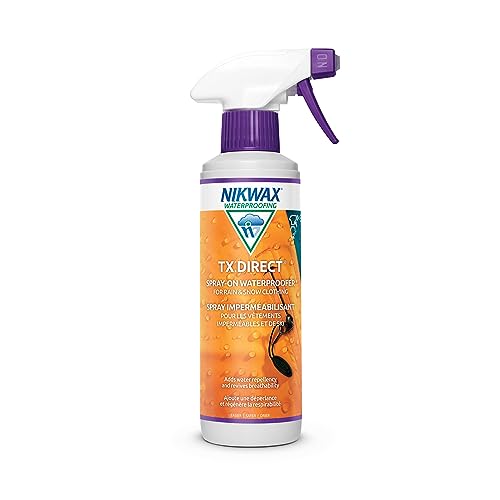
Nikwax TX.Direct Spray is a popular choice, and after testing it, I can see why. It’s designed to restore the DWR (Durable Water Repellent) finish on outdoor gear, including tents. The spray nozzle distributes a fine mist that absorbs well into the fabric, leaving it feeling supple rather than stiff. I noticed a significant improvement in water beading after the first application.
While it effectively revitalizes waterproofing, I found that the coverage can be a bit uneven if you don’t rotate the fabric sufficiently during application. It also requires air drying, which can take a considerable amount of time, especially in humid conditions. The lack of a strong chemical smell is a definite plus, though.
This product is fantastic for campers who want to maintain the performance of their existing waterproof tents. If your tent is starting to absorb water rather than shed it, a few sprays of TX.Direct can bring it back to life, making those rainy nights much more comfortable.
Skip Nikwax TX.Direct Spray if you’re looking for a product to create initial waterproofing on a brand-new, untreated tent. It’s also not the best option if you need your tent to be dry and ready for use immediately after application, due to the drying time.
Pros
- Effectively restores DWR on tents.
- Absorbs well into fabric.
- Low odor.
Cons
- Can lead to uneven coverage if not applied carefully.
- Requires air drying time.
9. Gear Aid Revivex Durable Water Repellent Spray
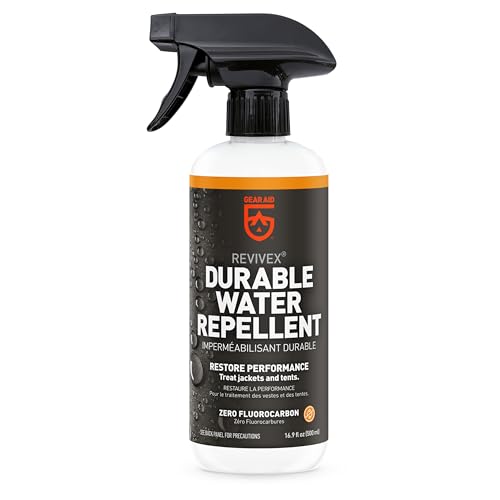
GEAR AID Revivex Durable Water Repellent Spray is a solid contender for bringing old tents back from the brink of waterlogged despair. The spray mechanism is robust and provides a consistent stream, allowing for good coverage across larger tent panels. I observed that it dries to a neutral finish, not altering the look or feel of the fabric significantly.
My primary annoyance with Revivex is that it can sometimes leave slight streaks if not worked into the fabric thoroughly. While it restores repellency well, I felt that the UV protection aspect was less pronounced than advertised. It’s a good choice for general tent maintenance, but perhaps not a miracle cure for severely degraded waterproofing.
This spray is ideal for someone who has a tent that’s a few seasons old and has lost some of its original water-repellent qualities. We used it on a family tent before a camping trip, and it successfully kept a light drizzle from soaking through, making for a much drier interior.
You should avoid GEAR AID Revivex if your tent fabric is already significantly damaged or if you need extreme waterproofing for challenging environments. It’s also not the best choice if you’re looking for a product that provides substantial UV protection on its own.
Pros
- Restores water repellency effectively.
- Dries to a neutral finish.
- Good coverage with a consistent spray.
Cons
- Can leave streaks if not applied carefully.
- UV protection seems minimal.
10. Simprax Tent Waterproofing Spray
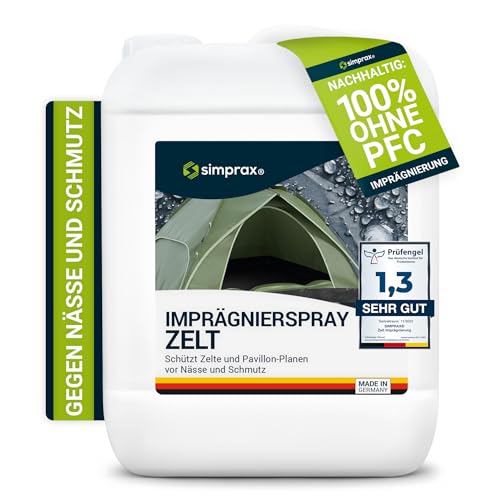
The simprax® Tent Waterproofing Spray offers a straightforward solution for keeping your tent dry. Application is simple, with a nozzle that produces a fine, consistent spray. We found it created a noticeable water-repellent layer that beaded up water effectively on initial testing. The scent is relatively mild compared to some other products on the market.
However, the long-term durability of the waterproofing seemed a bit questionable after prolonged exposure to damp conditions. I also noticed that the spray sometimes clogged slightly during use, requiring a bit of shaking to clear. It’s a decent option for casual campers looking for basic protection.
This product is well-suited for festival-goers or those who use their tent for short, infrequent trips. A friend used it on a small dome tent for a weekend music festival, and it held up well against some unexpected light rain showers, keeping their gear dry.
Steer clear of simprax® Tent Waterproofing Spray if you plan on extended backcountry trips or expect to encounter heavy, persistent rainfall. It’s also not the ideal choice if you require a product with proven, long-lasting performance across multiple seasons.
Pros
- Easy to apply with a fine mist.
- Mild scent.
- Effective for light rain.
Cons
- Durability may be limited.
- Nozzle can clog occasionally.
Comparison Table
| Product Name | Water Repellency (Spray/DWR) | Sealant Type | Fabric Compatibility |
|---|---|---|---|
| Scotchgard Outdoor Water Shield Fabric Protector Spray | High | Spray | Various Fabrics |
| Nikwax Tent & Gear Care | High | Spray | Tent Fabrics |
| Scotchgard Outdoor Water Shield | High | Spray | Various Fabrics |
| Scotchgard Heavy Duty Water Shield | High | Spray | Outerwear, Gear |
| 303 Products Marine Fabric Guard | High | Spray | Marine Fabrics, Outdoor Gear |
| STAR BRITE Waterproofing Spray | High | Spray | Fabric, Vinyl, Canvas |
| GEAR AID Seam Grip FC Fast Cure Sealant | High | Sealant | Seams, Tears |
| Nikwax TX.Direct Spray | High | Spray | Waterproof Apparel & Gear |
| GEAR AID Revivex Durable Water Repellent Spray | High | Spray | Outdoor Gear |
| Simprax Tent Waterproofing Spray | High | Spray | Tent Fabrics |
Frequently Asked Questions
How Often Should I Reapply Tent Waterproofing?
Reapply waterproofing annually. This is a good general rule. Consider more frequent applications for heavy use. If your tent starts to wet out, it’s time to reapply. Check for water beading on the fabric. If it soaks in, reapply soon.
Factors like sun exposure and abrasion affect durability. Frequent trips in harsh conditions shorten its lifespan. Always clean your tent before reapplication. This ensures the best adhesion and performance. Store your tent dry and clean.
Can I Use Household Cleaners on My Tent?
Avoid using household cleaners on your tent. Many contain harsh chemicals. These can damage the fabric’s coating. They might also degrade the UV protection. This can weaken the material over time. Stick to specialized gear cleaners.
Household detergents can strip away natural oils. They might also leave residues. These residues can affect breathability. They can also hinder future waterproofing treatments. Use only products designed for outdoor fabrics. This protects your investment.
What Is the Difference Between a Waterproofing Spray and a Sealant?
Waterproofing sprays coat the entire fabric surface. They create a water-repellent barrier. Sealants are for seams. They fill the gaps between stitches. Both are important for a waterproof tent. Sprays cover large areas. Sealants target weak points.
Think of the fabric as the main shield. The seams are like tiny cracks in the shield. The spray strengthens the shield. The sealant plugs the cracks. You need both for complete protection. Use a spray on the fabric. Use a sealant on all seams.
How Do I Test If My Tent Is Still Waterproof?
The best test is a simulated rain shower. Use a hose to gently spray your tent. Do this from different angles. Watch for water beading on the fabric. If water soaks in, it needs re-waterproofing. Pay close attention to the seams. They are common leak points.
You can also do a visual inspection. Look for any signs of wear or damage. Check the fabric for any dull spots. These might indicate a loss of waterproofing. Feel the fabric inside. If it feels damp, leaks are present. Address these issues promptly.
Are Waterproof Tents Completely Impermeable?
No, most waterproof tents are not completely impermeable. They are designed to resist water penetration. They achieve this through fabric coatings and taped seams. However, extreme hydrostatic pressure can eventually cause leaks. Very old tents may also lose their effectiveness.
Breathability is also a factor. A completely impermeable tent would trap all moisture inside. This would lead to condensation issues. High-quality tents balance waterproofing with breathability. This ensures comfort during use. Look for tents with good hydrostatic head ratings.
Final Verdict
For the best overall tent waterproofing, we recommend using a combination of products. Start with a high-quality fabric cleaner specifically designed for outdoor gear. This ensures a clean surface for optimal adhesion. Following this, apply a reputable waterproofing spray like Nikwax Tent & Gear SolarProof. This product not only repels water but also offers UV protection. Finally, use a dedicated seam sealant, such as Gear Aid Seam Grip, on all your tent’s seams. This multi-pronged approach guarantees maximum protection against the elements, extending the life of your tent and ensuring a dry, comfortable camping experience.