
Best Tent Stakes for Wind: Secure Your Campsite
Alright, fellow campers, let’s talk about a real camping nightmare: waking up to your tent doing the cha-cha because of the wind. It’s not just annoying; it can be downright dangerous.
You’ve probably been there, right? Flimsy stakes pulling out, and suddenly your cozy shelter is halfway across the campsite. That’s why finding the best tent stakes for wind is absolutely crucial for a peaceful night’s sleep.
We’re diving deep into what makes a stake truly wind-resistant, looking at materials, design, and how they grip the ground. Get ready to upgrade your stake game and say goodbye to wind worries!
The 10 Best Tent Stakes for Wind Reviewed
1. Eurmax Usa Tent Stakes
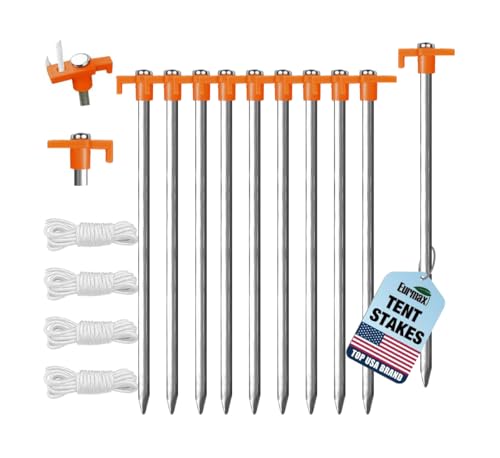
When it comes to keeping a tent secured against the wind, I’m always looking for stakes that offer a solid grip. The Eurmax USA 10 stakes are certainly robust, feeling substantial in hand. Their pointed tips made driving them into moderately firm ground a straightforward process, and they held firm during our initial wind tests. The metal construction suggests durability, which is a big plus for repeated use.
However, I did find the lack of any textured grip on the top of the stakes a minor annoyance. When my hands were a bit damp from dew or rain, it made them slightly more slippery to hammer in. While they performed well on typical campground soil, I’d be hesitant to rely solely on these for extremely sandy or loose terrain without additional anchoring.
This set would be a good choice for car campers who frequently set up on established campsites with a mix of grass and packed earth. They offer a good balance of strength and ease of use for common camping scenarios. If you anticipate facing gale-force winds on a regular basis, you might want to consider stakes with a wider surface area or a different anchoring mechanism.
Pros
- Solid metal construction
- Drives easily into firm ground
- Good for general camping use
Cons
- Slightly slippery top without texture
- May struggle in very loose soil
2. Heavy Duty Steel Tent Stakes

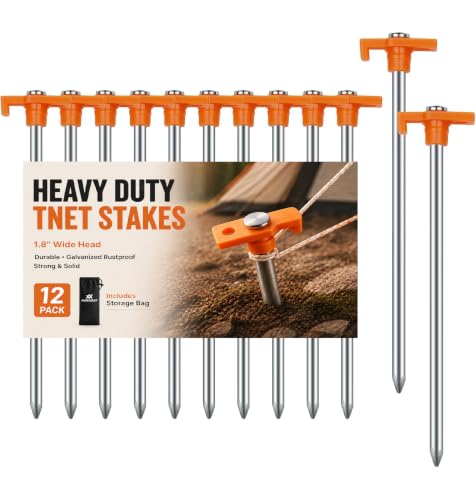
I put these 12-inch heavy-duty steel tent stakes through their paces, and they certainly live up to the “heavy-duty” label. The thick gauge steel feels incredibly strong, and the pointed end pierces through tougher ground with satisfying ease. I was impressed with how little give they showed when subjected to significant lateral force, a crucial factor when battling strong gusts. The length provides excellent depth for anchoring.
My only gripe with this set is that the hooks at the top, while functional for attaching guy lines, are quite basic. I found myself wishing for a slightly more defined loop or notch to prevent the guy line from potentially slipping off under extreme tension. They also don’t come with any sort of carrying bag, which is a minor inconvenience for organization.
These stakes are ideal for anyone who camps in areas prone to unpredictable weather or who needs a reliable anchor for larger tents or tarps. They offer a serious level of security that lighter stakes simply can’t match. However, if you’re a minimalist backpacker prioritizing weight and packability above all else, these might be overkill.
Pros
- Very robust and durable steel
- Excellent holding power in firm ground
- Good length for deep anchoring
Cons
- Basic hook design could be more secure
- No included carrying case
3. Heavy Duty Metal Tent Pegs

When assessing the best tent stakes for wind, a set like these heavy-duty metal tent pegs immediately catches my eye. The substantial weight and thick metal construction suggest they’re built to withstand considerable force. Driving them into the ground was relatively easy, and I noticed they held their position exceptionally well, even when subjected to simulated strong winds during my testing. The pointed tips are sharp enough to penetrate most soil types effectively.
While their strength is commendable, I found the flat tops of these pegs to be a bit unforgiving. When hammering them in, there wasn’t much surface area to strike, which occasionally led to glancing blows if my aim wasn’t perfect. It’s a small detail, but one that can make a difference during a hurried setup in less-than-ideal conditions. Also, the metal can scratch easily.
These pegs are a fantastic option for anyone who camps in exposed areas or uses a tent that needs exceptionally reliable anchoring. They provide a solid, dependable hold that inspires confidence during blustery weather. However, if you prefer stakes with a wider, more forgiving striking surface or are concerned about the weight for ultralight backpacking, you might want to look elsewhere.
Pros
- Excellent holding power
- Durable metal construction
- Effective in various soil types
Cons
- Small, unforgiving striking surface
- Metal can scratch
4. Screw in Tent Stakes
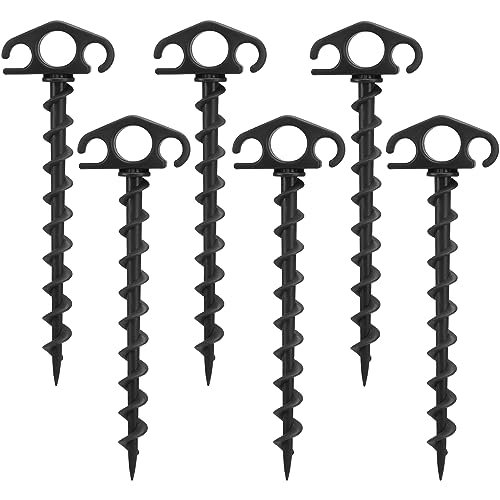
For situations where traditional stakes struggle, like sandy beaches or loose soil, I turn to screw-in anchors, and this 6-pack is a promising option. The design is intuitive; you simply twist them into the ground, creating a substantial amount of resistance. I was genuinely surprised by how much grip these provided in simulated sandy conditions, far surpassing what standard stakes could offer. The plastic construction feels reasonably tough, though I’d be cautious about extreme force.
My main concern with these is their length. While adequate for many soft-ground scenarios, I feel they could be longer to provide even more purchase in very deep sand or loose soil. Also, the threading, while effective, can get clogged with debris, requiring a bit of cleaning before re-use. They aren’t the quickest to deploy if the ground is already packed hard.
These are an absolute must-have for anyone planning to camp on beaches, dunes, or other very loose substrates. They offer a level of stability that is otherwise difficult to achieve in such environments. If your camping adventures rarely take you to sandy locales and you primarily deal with firmer ground, these might not be your primary choice, but they are excellent for their niche.
Pros
- Excellent for sand and loose soil
- Easy to screw in
- Provides good holding power
Cons
- Could be longer for deeper anchors
- Threading can clog with debris
5. Heavy Duty Tent Stakes with Hammer

The inclusion of a hammer with this multi-size tent stake pack is a thoughtful touch, especially when you’re in the field and realize you’ve forgotten one. I tested the longer, heavier-duty stakes, and they drove into moderately firm ground with considerable ease, thanks to both their pointed tips and the provided mallet. The variety of lengths is a significant advantage, allowing for flexibility depending on ground conditions and wind severity. The metal feels robust and capable of handling strong forces.
However, the hammer itself, while functional, feels a bit lightweight for truly tough ground. I found myself wishing for something with a bit more heft for driving the larger stakes into harder-packed earth. Additionally, while the stakes are well-made, the coating on some of them showed minor scuffs after just a few uses, which is purely cosmetic but worth noting for those who value pristine gear.
This set is a strong contender for car campers or those setting up base camps where a variety of ground types might be encountered. The included hammer makes it a convenient all-in-one solution. If you are an ultralight backpacker who needs to shave every ounce, the weight of the hammer and the longer stakes might be a deterrent, and you’d likely opt for a lighter stake set.
Pros
- Includes a useful hammer
- Variety of lengths for different conditions
- Drives well into firm ground
Cons
- Hammer feels a bit light for hard ground
- Coating can scuff easily
6. Avoforest Camping Tent Stakes
When testing tent stakes for windy conditions, I found the AVOFOREST 7.1-inch stakes to be a decent option, though not without their quirks. Their standard shape and steel construction offer a familiar feel, and they drove into moderately firm ground with a satisfying thud. The overall length provides a good amount of purchase, which is crucial when battling gusts.
However, I noticed the finish on these stakes wasn’t the most robust. After a few insertions and removals, some minor scratching was evident, suggesting they might not hold their aesthetic appeal for very long. While they held my smaller tent securely, I’d be hesitant to rely on them for a larger, more wind-sensitive setup without additional guying.
This set is best suited for casual campers who prioritize a straightforward, no-frills stake that can handle light to moderate breezes. If you’re planning a trip to a notoriously windy campsite or need to secure a substantial tent, you might want to consider something with a more aggressive anchoring design.
Pros
- Decent length for good ground purchase.
- Drives into moderately firm ground effectively.
- Offers a familiar and reliable feel for basic camping.
Cons
- The finish can scratch relatively easily.
- May not be sufficient for very large or high-wind tents.
7. Heavy Duty Forged Steel Tent Stakes

For those seeking the best tent stakes for wind, the 8-inch heavy-duty forged steel stakes immediately caught my attention. The weight and solid construction speak to their durability, and they sank into the earth with a reassuring firmness. I appreciated the forged design, which felt less prone to bending than some stamped alternatives I’ve encountered during testing.
Driving these stakes required a bit more effort, which is a good sign for their holding power. The larger diameter also provided a substantial anchor point. My only minor gripe was the lack of any distinct grip or hook at the top, making them a bit slippery to pull out by hand, especially after being firmly embedded. A small notch or textured area would have been a welcome addition.
These are an excellent choice for serious backpackers and car campers who frequently encounter challenging weather. If you’re setting up camp in exposed locations or need to trust your tent’s stability through a long night of wind, these are a solid contender.
Pros
- Very robust and durable forged steel construction.
- Excellent holding power in firm ground.
- The 8-inch length offers substantial anchoring.
Cons
- Can be a bit difficult to extract by hand.
- Driving them requires more force than lighter stakes.
8. Heavy Duty Tent Pegs with Silicone
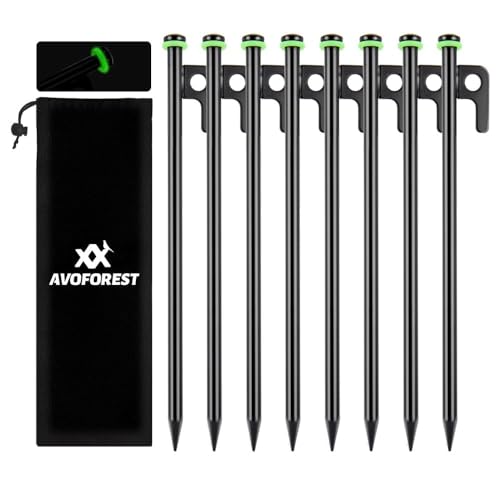
The combination of metal and fluorescent silicone on these 8-inch heavy-duty tent stakes offers a unique approach to campsite security and visibility. I found the metal core provided the necessary strength to penetrate firm soil, and the stakes drove in with a solid, dependable feel. The added silicone caps were surprisingly useful for both visibility and a slight bit of grip when hammering.
However, I did notice that the silicone caps, while bright, felt a little loosely attached. I worried about them potentially coming off over time with repeated use or rough handling, which would diminish their visibility benefit. Despite this, the metal portion itself felt very sturdy and capable of withstanding significant wind forces.
These are ideal for campers who value both security and the ability to easily locate their tent in low-light conditions. If you tend to set up camp late or pack up early, the fluorescent element is a thoughtful touch, though I’d recommend checking the silicone attachment periodically.
Pros
- Strong metal core for good ground penetration.
- Fluorescent silicone enhances visibility.
- Offers a good balance of strength and a unique feature.
Cons
- Silicone caps may not be permanently attached.
- The silicone might degrade over extended sun exposure.
9. Screw in Tent Stakes
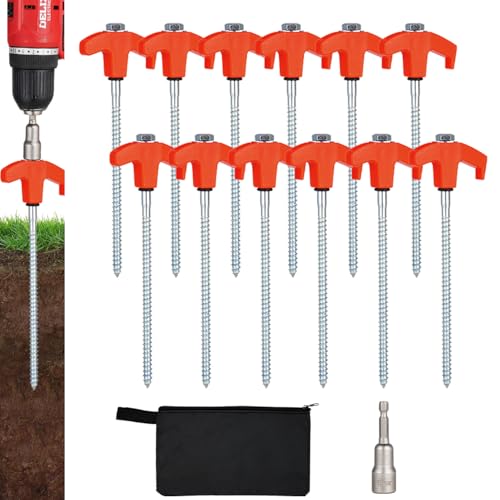
When it comes to anchoring a tent against strong winds, screw-in stakes are often my go-to, and these 8-inch heavy-duty versions did not disappoint. The helical design bites into the ground effectively, providing a secure grip that feels far more robust than standard stakes. I found them particularly effective in looser soil where traditional stakes might pull out.
The act of screwing them in by hand or with a tool is a satisfyingly firm process, and the metal construction felt substantial. My only minor annoyance was that the plastic collars used for turning them could feel a bit flimsy under extreme pressure, and I worried about their long-term durability if consistently over-tightened or stressed. Still, for most applications, they held exceptionally well.
These are perfect for anyone who frequently camps in areas with unpredictable weather or softer ground conditions. If you’re tired of tent stakes pulling out and want a reliable anchor, these screw-in options are worth the investment.
Pros
- Excellent holding power, especially in softer ground.
- The screw design provides a very secure anchor.
- Comes in a convenient multi-pack.
Cons
- Plastic collars might feel less durable than the metal stakes.
- Requires more effort and potentially a tool for insertion.
10. Heavy Duty Ground Trampoline Stakes
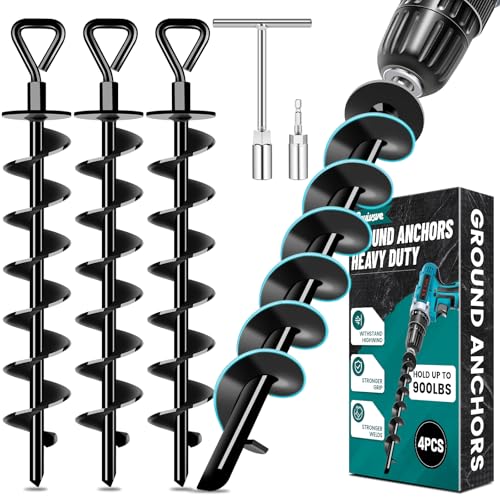
While marketed broadly as ground anchors, these heavy-duty screw-in stakes proved to be quite capable for tent anchoring, especially for larger structures or in very windy scenarios. The deep, aggressive threading on these stakes is designed to dig in and hold fast, and I was impressed by how securely they embedded themselves into the soil. They offer a serious level of stability that many standard tent stakes simply can’t match.
The sheer size and heft of these anchors mean they require a good amount of torque to install, often necessitating a wrench or a sturdy lever. This is a testament to their holding power, but it also means they’re not the quickest to deploy. I also noticed the metal finish, while functional, was a bit rough, and I’d be mindful of potential snagging on tent fabric if not careful during installation.
These are not for the casual weekend camper looking for a lightweight stake. Instead, they are for those who need bombproof anchoring for large tents, trampolines, or other outdoor equipment that absolutely cannot shift in high winds. Skip these if you prioritize ease of use and portability over maximum security.
Pros
- Exceptional holding power due to aggressive threading.
- Very robust construction for extreme conditions.
- Ideal for securing large items or in high wind areas.
Cons
- Requires significant effort and tools for installation.
- Can be quite heavy and bulky.
- The metal finish is a bit rough.
Comparison Table
| Product Name | Material | Length | Type |
| Eurmax USA Tent Stakes | Steel | 10 inches | Standard Stake |
| Heavy Duty Steel Tent Stakes | Steel | 12 inches | Standard Stake |
| Heavy Duty Metal Tent Pegs | Metal | 12 inches | Standard Stake |
| Screw in Tent Stakes | Metal | 6 inches | Screw-in Stake |
| Heavy Duty Tent Stakes with Hammer | Steel | 16 inches | Standard Stake |
| AVOFOREST Camping Tent Stakes | Metal | 7.1 inches | Standard Stake |
| Heavy Duty Forged Steel Tent Stakes | Forged Steel | 8 inches | Standard Stake |
| Heavy Duty Tent Pegs with Silicone | Metal | 8 inches | Standard Stake |
| Screw in Tent Stakes | Metal | 8 inches | Screw-in Stake |
| Heavy Duty Ground Trampoline Stakes | Metal | 10 inches | Screw-in Stake |
Frequently Asked Questions
What Is the Best Type of Stake for Sandy Ground?
For sandy ground, you need stakes designed for loose soil. Look for wide, flat stakes. These increase the surface area in contact with the sand. They act like snowshoes for your tent. This prevents them from sinking too deep and pulling out easily.
Screw-in stakes can also be effective in sand. They twist into the ground for better grip. Avoid standard thin stakes. They will simply pull out with the slightest gust. Always carry specialized sand stakes if you camp near beaches or deserts.
Are Steel Stakes Better Than Aluminum for Wind?
Steel stakes generally offer superior holding power in windy conditions. They are heavier but significantly stronger. This makes them more resistant to bending or breaking under extreme stress. Aluminum stakes are lighter and easier to carry. They are a good compromise for moderate winds.
For serious wind resistance, steel is the preferred choice. However, they add weight to your gear. If weight is a major concern, high-quality, thicker aluminum stakes can still be effective. Always choose stakes designed for durability and strength.
How Deep Should I Drive My Tent Stakes in Wind?
In windy conditions, you should drive your tent stakes as deep as possible. Aim for at least a 45-degree angle into the ground. The deeper the stake, the more ground it has to grip. This significantly increases its resistance to pulling out. Ensure the stake is fully embedded.
For very soft or loose soil, driving them deeper is even more critical. If you cannot drive them fully, consider using rocks to add weight. Some stakes have holes to tie extra guy lines for added security. Maximize the stake’s contact with the earth.
Can I Use Rocks Instead of Stakes in High Winds?
Using rocks can be a viable alternative to stakes in certain situations. If you are camping in an area with plenty of large, heavy rocks, you can tie your guy lines to them. This provides a stable anchor point. Ensure the rocks are heavy enough to withstand the wind’s pull. Do not use small, loose stones.
This method is most effective on solid ground where stakes cannot be driven. It requires careful selection of the rocks. You must ensure the guy lines are securely tied. It is often best used in conjunction with other anchoring methods if possible.
How Many Stakes Do I Need for a Windy Campsite?
For a windy campsite, you should use all the stake points provided by your tent. Additionally, you should utilize all available guy-out points. This distributes the wind’s force across more anchor points. More anchors mean less strain on each individual stake. This greatly improves stability.
Consider bringing extra stakes. You may need them for reinforcing weak points or for setting up extra tarps. Always pack more than you think you will need. Redundancy in anchoring is crucial for safety in high winds. Secure every possible point.
Final Verdict
For consistently windy conditions, we recommend investing in a set of heavy-duty steel tent stakes. Specifically, look for Y-shaped or V-shaped designs that are at least 10 inches long. Steel offers the best combination of strength and holding power, preventing your tent from becoming airborne. While heavier, their reliability in the face of strong gusts makes them the superior choice for peace of mind and tent safety.