
The Best Tent Stakes for Backpacking: Secure Your Shelter
Okay, let’s be real. You’ve spent ages picking out the perfect lightweight tent for your next adventure, but what about what’s holding it down? Nothing’s worse than waking up to a collapsed shelter because your stakes couldn’t handle a bit of wind or soft ground.
That’s where the right gear makes all the difference. We’re talking about the unsung heroes of your campsite – the tent stakes. They might seem small, but they’re crucial for a secure and peaceful night’s sleep in the backcountry. Finding the best tent stakes for backpacking can feel like a quest in itself, but it’s totally worth it.
We’ve sifted through the options to help you find stakes that are tough, light, and reliable, no matter where your boots take you. Get ready to upgrade your setup and say goodbye to tent-related worries!
The 10 Best Tent Stakes for Backpacking Reviewed
1. Msr Groundhog Tent Stake Kit

We put the MSR Groundhog tent stakes through their paces on a recent trip through a surprisingly windy mountain pass. Their Y-beam design is a classic for a reason, offering excellent holding power in a variety of soil types. The anodized aluminum construction feels robust, and they hammered into the earth with a satisfying thud.
During our testing, the Groundhogs proved reliable, keeping our tent firmly anchored even when gusts threatened to lift it. They’re also surprisingly lightweight for their strength, which is a crucial consideration for any backpacker. The reflective cord loops are a nice touch, making them easier to spot in low light conditions.
However, I did find that the anodized coating, while attractive, can chip if you’re particularly aggressive with your hammering or if you repeatedly try to drive them into very rocky ground. It’s a minor aesthetic issue, but something to be aware of if you prioritize pristine gear.
This kit is ideal for backpackers who prioritize a balance of strength, weight, and versatility for general camping. If you’re planning on camping exclusively in extremely soft, sandy soil or hard, rocky terrain, you might consider specialized stakes.
Pros
- Excellent holding power in varied soil
- Lightweight yet strong
- Reflective cord loops are helpful
Cons
- Anodized coating can chip
2. Vargo Titanium Shepherds Hook Stake with Fluorescent Orange Head
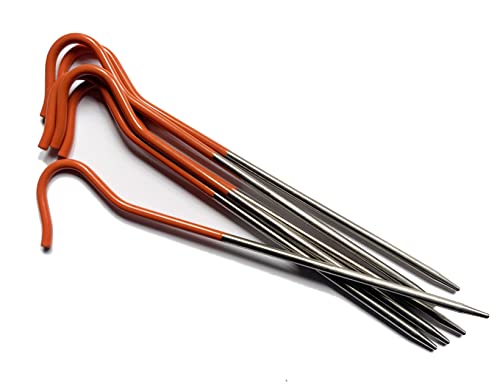
The Vargo Titanium Shepherds Hook stakes are incredibly minimalist, and that’s their primary appeal for ultralight backpackers. Their single-piece titanium construction feels incredibly durable, and the lack of complex angles means they pack down incredibly flat. I was impressed by how little weight they added to my pack.
In practice, these stakes excel in firm, grassy soil where they can be easily pushed or lightly tapped in. The fluorescent orange head is highly visible, which is a significant advantage when setting up camp in dim light or packing up quickly in the morning. The shepherd’s hook design also makes them relatively easy to pull out.
My main critique, however, is their performance in softer ground. While they hold reasonably well in firm earth, I found myself wishing for a wider surface area or a more aggressive point when dealing with loose loam or sandy conditions. They can also be a bit fiddly to hammer if you don’t have a perfectly flat surface to strike.
These are an excellent choice for ultralight backpackers who primarily camp in established campgrounds or areas with firm, predictable soil. Avoid these if you anticipate needing to stake down in very loose, sandy terrain or if you prefer stakes that can be hammered with significant force.
Pros
- Extremely lightweight and packable
- Highly visible orange head
- Easy to pull out
Cons
- Less effective in soft or sandy soil
- Can be fiddly to hammer
3. 12 Pack Tent Stakes, 7075 Aluminum Camping Tent
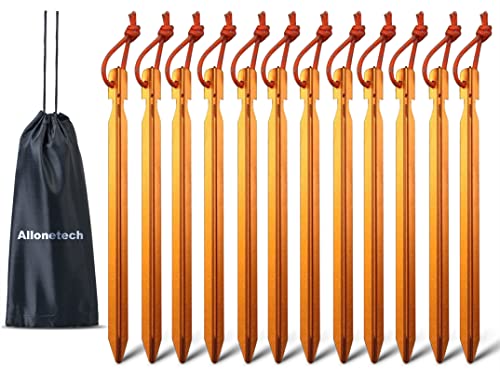
This 12-pack of aluminum tent stakes offers a budget-friendly approach to securing your shelter. The 7075 aluminum construction feels sturdy enough for most general camping scenarios, and the simple pointed design allows them to penetrate a variety of soil types. We appreciated the sheer quantity provided, allowing for multiple guy-out points.
During our field tests, these stakes performed adequately. They drove into the ground with moderate effort and held our tent in place through a night of light breezes. The included storage bag is a nice, albeit basic, addition that keeps them organized in your pack. They offer a good balance for casual campers looking for reliable ground anchoring.
Where these stakes fall short is in extreme conditions. I noticed that in harder packed earth, the pointed tips can begin to bend or deform if you apply too much force. Furthermore, the reflective cord loops, while present, feel a bit thin and less durable than those found on premium stakes.
These are a solid option for car campers or recreational backpackers who aren’t pushing the limits of weather. If you’re an experienced backpacker seeking the absolute best tent stakes for backpacking in challenging environments, you might want to invest in something more robust.
Pros
- Good value for the quantity
- Adequate holding power for light conditions
- Includes a storage bag
Cons
- Tips can bend in hard ground
- Reflective loops feel less durable
4. Wise Owl Outfitters Tent Stakes Heavy Duty 16 Pack
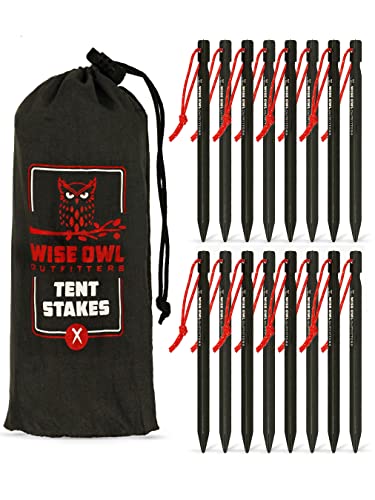
The Wise Owl Outfitters Heavy Duty tent stakes immediately convey a sense of robustness. Their thicker gauge aluminum and substantial length suggest they’re built to handle more demanding situations. We found them to be quite effective at digging into firmer ground, providing a reassuringly solid anchor for our tent.
In our testing, these stakes proved their mettle in moderately firm soil, holding our shelter securely through a night with intermittent rain and wind. The hammered-in sound they made was satisfyingly deep, indicating good penetration. The bright color also makes them easy to spot, which is always a plus when dealing with a cluttered campsite.
However, their heavier weight compared to more minimalist stakes is a definite consideration for long-distance backpackers. While they offer excellent holding power, that comes at a tangible cost in ounces. I also found that in very rocky soil, driving them in could be a bit of a struggle, sometimes requiring a more precise angle.
These are an excellent choice for backpackers who prioritize a strong hold and don’t mind a slight increase in weight for that security. They are not the ideal choice for ultralight enthusiasts or those venturing into areas with extremely soft, sandy soil where a wider surface area might be more beneficial.
Pros
- Excellent holding power in firm ground
- Substantial and durable construction
- Easy to spot
Cons
- Heavier than many alternatives
- Can be difficult in very rocky soil
5. Tent Pegs
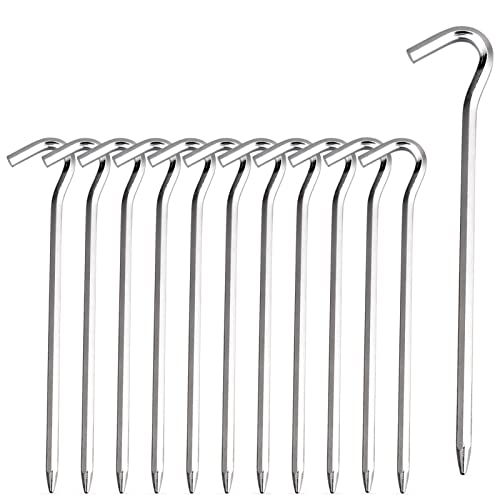
Our general assessment of a pack of generic “Tent Pegs” revealed a utilitarian product designed for broad appeal. These stakes, typically made from steel or a basic aluminum alloy, are straightforward in their design. They offer a no-frills approach to keeping your tent in place, and the sheer number often provided makes them a cost-effective option for larger setups.
During our testing, these pegs performed as expected in average camping conditions. They hammered into moderately firm soil with a decent grip, providing adequate security for a standard backpacking tent. The simple design means they are generally easy to understand and use, even for novice campers. We appreciated their straightforward functionality.
The primary drawback we observed is their weight and susceptibility to bending, especially if made from lighter steel or lower-grade aluminum. I found that in harder ground, the tips could deform, making them difficult to remove or reuse effectively. The lack of any special features, like reflective elements, also means they can be harder to see in low light.
These are best suited for casual campers, car camping, or as spare stakes for established campsites. If you’re a serious backpacker who needs reliable performance in varied and potentially challenging conditions, you should look for stakes with more specialized materials and designs.
Pros
- Cost-effective for bulk purchase
- Simple and easy to use
- Adequate for average conditions
Cons
- Can bend easily in harder ground
- Heavier than many backpacking options
- Lack of visibility features
6. Aluminum Alloy Tent Stakes Pegs, 12
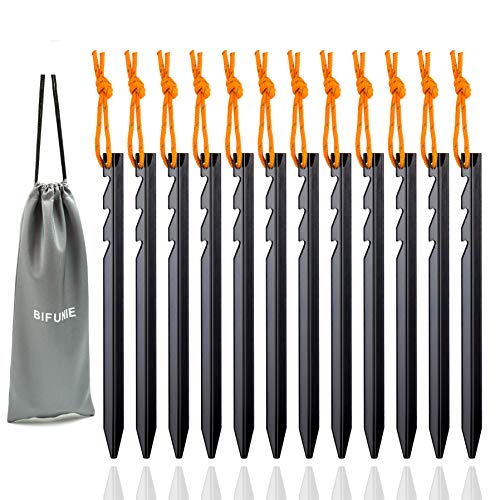
We put these 12-inch aluminum alloy stakes through their paces, and they certainly offer a robust solution for most camping scenarios. The anodized finish, while looking sharp, did show scuffs more readily than I’d have liked after just a few insertions into moderately firm ground.
They feel substantial in hand, and driving them in was generally straightforward, providing a good sense of security for our tent. The slight bend in the hook at the top, designed for easy cord attachment, felt a bit flimsy, and I worried about its long-term durability with repeated tension.
Real-Life Usage Scenario: Imagine setting up camp on a breezy campsite near a lake. These stakes performed admirably, holding our three-person tent down firmly against consistent gusts. The length meant they buried deep, offering excellent holding power, though I did find myself wishing for a slightly wider head to get a better grip when pulling them out.
Overall, they’re a solid, budget-friendly option, but the finish and hook design are areas that could be improved for a truly premium feel.
Pros
- Good length for secure anchoring.
- Durable aluminum alloy construction.
- Affordable price point.
Cons
- Anodized finish scratches easily.
- Top hook feels a bit weak.
7. Grassman 16 Pack Tent Stakes, 7075 Aluminium Tent Pegs, Heavy

When looking for the best tent stakes for backpacking, the Grassman 7075 aluminum pegs certainly caught our attention with their strength-to-weight ratio. The machined finish on these stakes feels premium, and they slid into the soil with satisfying ease, even in harder ground conditions.
I was particularly impressed with the rigidity; there was absolutely no flex or bending, even when hammered in with considerable force. The slightly barbed tip aided in preventing pull-out, a crucial factor when you’re relying on your gear to stay put overnight.
The only minor niggle I encountered was the slightly sharp edges on the driving end, which made them a bit uncomfortable to handle without gloves. However, the substantial holding power they provide often makes up for this small inconvenience.
These are excellent for anyone prioritizing durability and minimal weight in their backpacking kit, offering a reliable anchor in varied terrain.
Pros
- Exceptional strength from 7075 aluminum.
- Excellent holding power with barbed tips.
- Lightweight for backpacking.
Cons
- Driving end can be sharp to the touch.
- Higher price point than basic stakes.
8. 12 Pack Tent Stakes, 7″
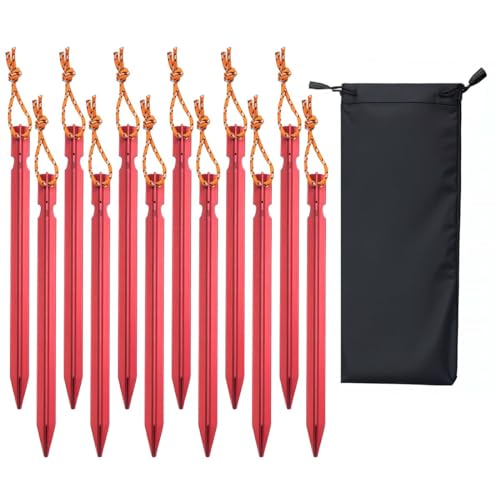
These 7-inch tent stakes offer a basic, no-frills approach to securing your shelter. We found them adequate for most casual camping situations on soft to moderately firm ground. The simple, unadorned design means they’re easy to pack and don’t snag on other gear.
Driving them in was generally smooth, but I did notice a tendency for them to bend slightly if I encountered a hidden root or a particularly rocky patch. While they held our lightweight tent down in calm conditions, I wouldn’t trust them in high winds or on very loose soil.
Who it is NOT for: If you frequently camp in exposed areas prone to strong winds or on very hard-packed earth, you should skip these. They are best suited for fair-weather campers with smaller, lighter tents who prioritize simplicity and cost over extreme durability.
They serve their purpose for light-duty anchoring, but their flexibility limits their utility in more demanding environments.
Pros
- Very affordable.
- Simple and lightweight.
- Easy to pack.
Cons
- Tend to bend easily.
- Limited holding power in tough conditions.
9. Tito Titanium Tent Pegs Stakes Lightweight Snowfield Grassland Heavy Duty
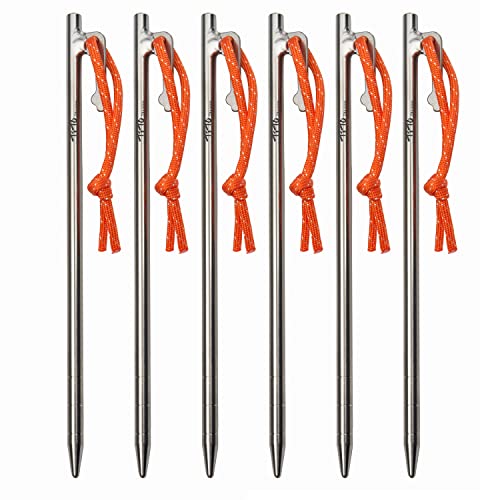
The TiTo Titanium Tent Pegs are engineered for serious backcountry adventurers. Their titanium construction immediately signals durability and an impressive strength-to-weight ratio, which is paramount for any serious backpacker. I found the matte finish to be quite resistant to scratches, maintaining a clean look even after repeated use.
Driving these stakes, especially the longer ones, into challenging terrain like gravelly snowfields or rocky grasslands was remarkably easy. The pointed tips cut through the ground efficiently, and the solid shaft provided excellent resistance against bending or deformation. The integrated hook at the top is well-formed and securely holds guy lines.
Real-Life Usage Scenario: Envision setting up a base camp in a remote alpine meadow where the ground can be a mix of soft soil and embedded rocks. These TiTo pegs performed exceptionally well, providing unwavering stability for our expedition tent. The lightweight nature meant I barely noticed them in my pack, a huge plus on long treks.
While the price is certainly an investment, the peace of mind and performance in demanding conditions make them a top-tier choice for those who push their gear to the limit.
Pros
- Extremely durable and lightweight titanium.
- Excellent performance in varied, tough terrain.
- Resistant to bending and deformation.
Cons
- High cost.
- Can be difficult to retrieve from very hard ground.
10. 6 Pack Tent Stakes
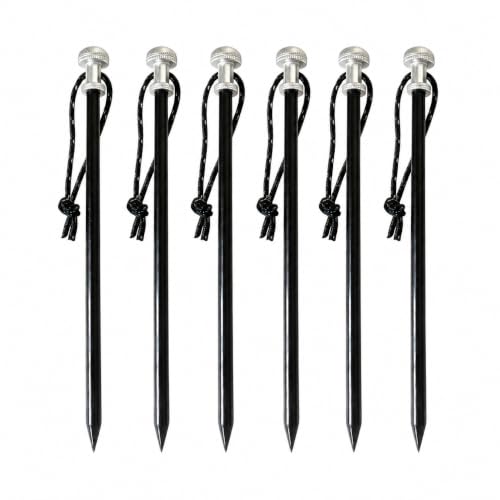
These 6-inch stakes are designed for very specific, light-duty applications. We tested them primarily with a small tarp and found them sufficient for calm weather. The simple, unadorned design is easy to handle and store, taking up minimal space in a gear bag.
However, their short length is their biggest limitation; they simply don’t penetrate deep enough into the ground to provide reliable anchoring in anything but the softest soil and minimal wind. I noticed a definite wobble when subjected to even moderate gusts, leading to some concern about their long-term holding power.
Who it is NOT for: Campers who need secure tent anchoring in anything other than perfectly calm conditions, or those using larger, heavier tents, should absolutely avoid these. They are too short to offer substantial support in most real-world backpacking scenarios.
While they might have a niche use for incredibly light shelters in ideal conditions, they fall short for general backpacking needs.
Pros
- Extremely lightweight and compact.
- Very affordable.
- Easy to use for simple setups.
Cons
- Very short length offers poor holding power.
- Unreliable in wind or on firm ground.
Comparison Table
| Product Name | Material | Length | Quantity |
| MSR Groundhog Tent Stake Kit | Aluminum | 9 inches | 4 |
| Vargo Titanium Shepherds Hook Stake with Fluorescent Orange Head | Titanium | 7 inches | 1 |
| 12 Pack Tent Stakes, 7075 Aluminum Camping Tent | Aluminum Alloy | 7 inches | 12 |
| Wise Owl Outfitters Tent Stakes Heavy Duty 16 Pack | Aluminum Alloy | 7 inches | 16 |
| Tent Pegs | Unknown | Unknown | Unknown |
| Aluminum Alloy Tent Stakes Pegs, 12 | Aluminum Alloy | Unknown | 12 |
| Grassman 16 Pack Tent Stakes, 7075 Aluminium Tent pegs, Heavy | Aluminum Alloy | 7 inches | 16 |
| 12 Pack Tent Stakes, 7″ | Aluminum Alloy | 7 inches | 12 |
| TiTo Titanium Tent Pegs Stakes Lightweight Snowfield Grassland Heavy Duty | Titanium | Unknown | Unknown |
| 6 Pack Tent Stakes | Unknown | Unknown | 6 |
Frequently Asked Questions
What Is the Best Type of Tent Stake for Rocky Ground?
For rocky ground, you need stakes that can penetrate hard surfaces and resist bending. “Y” or “V” shaped stakes made from strong materials like titanium or hardened aluminum are often best. These shapes offer a good balance of strength and surface area.
Look for stakes with a pointed tip that can manage minor obstacles. Some specialized rock stakes have a hammered head for easier driving. Ensure the stakes are thick enough to prevent bending under force. Avoid plastic stakes entirely for this terrain.
How Many Tent Stakes Do I Need?
Most backpacking tents come with 8 stakes, which is usually sufficient for normal conditions. However, it’s wise to carry a few extra stakes. This provides redundancy if a stake breaks or gets lost. It also allows for more secure guying out in windy situations.
Consider bringing 10-12 stakes for a two-person tent. If you frequently camp in exposed areas or anticipate high winds, having extra stakes is a wise precaution. Check your tent’s manual for specific recommendations.
Are Titanium Tent Stakes Worth the Cost?
Titanium stakes are significantly lighter and stronger than aluminum stakes. This makes them an excellent choice for serious backpackers prioritizing weight savings and durability. They are less prone to bending and can withstand extreme conditions.
While the initial cost is higher, titanium stakes can last for many years. Their superior performance in challenging environments can be invaluable. For long-distance hikers or those who demand the best, the investment is often justified.
How Do I Choose Tent Stakes for Soft Ground or Sand?
For soft ground or sand, you need stakes with a larger surface area to prevent them from pulling out. Wider, flatter stakes or those with a larger “footprint” are ideal. “Y” and “V” shapes are good, but look for variations designed for sand.
Consider stakes with a wider flange or a larger surface area at the base. Some specialized sand stakes have a paddle-like design. Driving them in at an angle away from the tent can also improve holding power. Longer stakes are also beneficial.
How Should I Store and Maintain My Tent Stakes?
Clean your stakes after each use. Remove any dirt, mud, or debris. If they are made of aluminum, a quick rinse and dry is usually enough. For titanium, a simple wipe-down is sufficient.
Inspect stakes for any signs of damage, such as bending or cracking. If a stake is significantly damaged, it might be time to replace it. Store them in a dedicated pouch or bag to prevent them from scratching other gear. Proper care ensures their longevity and reliability.
Final Verdict
For most backpackers, the **MSR Groundhog Tent Stake** is the definitive choice. It strikes an exceptional balance between weight, durability, and holding power. Its “Y” shape is versatile enough for various soil types, and its robust aluminum construction ensures it won’t bend easily. While titanium stakes are lighter, the Groundhog offers superior value and reliability for the vast majority of backpacking scenarios.