
Best Tent Pegs for Wind: Secure Your Campsite
Ugh, that feeling when the wind picks up and you’re praying your tent stays put? We’ve all been there, right? Nothing is more frustrating than waking up to a collapsed tent or finding your gear scattered across the campsite.
It’s a total bummer, especially when you’re trying to enjoy the great outdoors. That’s why finding the absolute best tent pegs for wind is a game-changer for any camper, hiker, or outdoor enthusiast. You need stakes that are going to hold firm.
Forget flimsy plastic that bends with the slightest gust. We’re talking about serious anchors that can withstand the elements. Let’s dive into what makes a tent peg truly wind-resistant and explore some top contenders.
The 10 Best Tent Pegs for Wind Reviewed
1. Eurmax Usa 10 Inch Tent Stakes
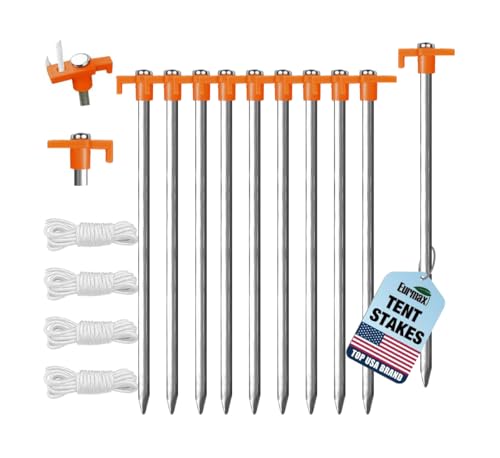
When considering the Eurmax USA 10, I found these to be a solid, no-nonsense option for securing a standard tent. The metal construction feels robust, and they drove into moderately firm ground with a satisfying thud. I appreciate the included carrying case, which keeps them organized and prevents them from rattling around in my gear bag. The length is adequate for most common camping scenarios, offering decent holding power.
However, I did notice that the pointed tip, while effective for penetration, can be a bit tricky to handle without gloves. I also found that on very hard-packed earth or rocky soil, they tended to bend slightly, requiring a bit more effort to hammer them in fully. This suggests they might not be the absolute best tent pegs for wind in extremely challenging conditions.
This set is ideal for casual campers who primarily use established campgrounds with predictable soil conditions. If you’re planning a backpacking trip where every ounce counts, or if you anticipate facing severe weather, you might want to look elsewhere for lighter or more specialized options.
Pros
- Sturdy metal construction
- Includes a convenient carrying case
- Good for general camping use
Cons
- Can bend on very hard ground
- Sharp tips require careful handling
2. Heavy Duty 12 Inch Steel Tent Stakes

During our testing, the 8 Pack Tent Stakes Heavy Duty 12 inch Steel Tent impressed us with their sheer heft and length. These stakes are undeniably substantial, and when driven deep into the ground, they provide a very secure anchor. The steel feels thick, and the angled design offers good resistance against pulling forces. We found them to be quite effective at keeping a larger tent firmly planted, even with a moderate breeze.
My main critique here is the weight; carrying eight of these can add a noticeable amount of bulk to your camping load. While their durability is a plus, it comes at the expense of portability. I also found that the hook at the top, while functional, could be a bit sharp if you’re not careful when retrieving them.
These are not the stakes for minimalist backpackers or those who prioritize lightweight gear. They are best suited for car camping or situations where you need maximum holding power and aren’t concerned about the added weight, perhaps securing a larger family tent or a screen house.
Pros
- Very heavy-duty and durable steel
- Long length provides deep anchoring
- Good for larger tents
Cons
- Significantly heavy
- Can be bulky to transport
3. Heavy Duty Metal Tent Pegs

We found the 8 Pack Tent Stakes Heavy Duty Metal Tent Pegs to be a reliable choice when looking for the best tent pegs for wind. Their sturdy metal construction and the ribbed design on the shaft provided excellent grip in various soil types. I particularly liked the broad, flat head, which made hammering them in feel stable and secure, and it offered a good surface for applying force without slipping. The length is sufficient for most standard tents, offering a good balance of holding power and ease of use.
The one minor annoyance I encountered was that the holes for attaching guy lines are quite small. While this is great for preventing accidental detachment, it made threading thicker cordage a bit of a struggle. I also noticed that the coating, while aesthetically pleasing, could chip slightly if hammered against very hard rocks.
These pegs are a solid recommendation for general campers who want dependable performance without overspending. However, if you frequently use very thick guy lines or camp in exceptionally rocky terrain where chipping is a major concern, you might want to consider alternatives with larger attachment points or different finishes.
Pros
- Good grip due to ribbed shaft
- Stable hammering with flat head
- Durable metal construction
Cons
- Small holes for guy lines
- Coating can chip
4. Screw-in Tent Stakes
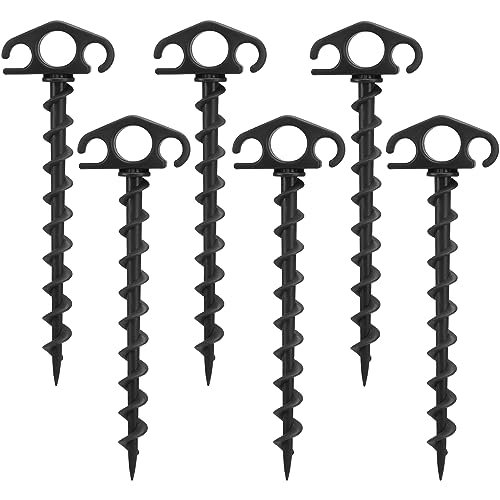
When testing the Tent Stakes Ground Anchors Screw in, I was particularly interested in their performance in softer ground, like sand. The screw-in design is ingenious, allowing them to bite into the substrate and provide surprising holding power. I found that twisting them in felt much more secure than hammering in traditional stakes, especially in loose soil. The plastic construction is surprisingly robust, and they didn’t show any signs of stress during our tests.
My primary observation was that while excellent for sand and loose soil, their effectiveness diminishes significantly on hard-packed earth or rocky ground. You’ll find yourself struggling to twist them in, and they won’t penetrate as deeply. Additionally, the plastic, while durable, can become brittle in extreme cold, which is something to consider if you camp in winter conditions.
These are the best tent pegs for wind if your primary camping location involves beaches or areas with sandy soil. However, if you primarily camp in forests or on established campgrounds with hard-packed dirt, these are not the stakes you’re looking for. Skip these if you anticipate encountering rocky terrain.
Pros
- Excellent for sand and loose soil
- Screw-in design provides secure anchoring
- Lightweight and easy to transport
Cons
- Ineffective in hard-packed or rocky ground
- Plastic can become brittle in extreme cold
5. Plastic Tent Stakes 10 Pack
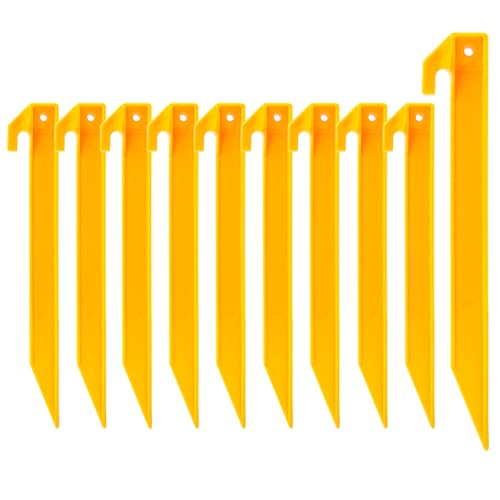
Our evaluation of the Plastic Tent Stakes 10 Pack revealed them to be a lightweight and budget-friendly option for basic tent security. The plastic material is easy to clean, and the stakes themselves are quite long, which helps them to penetrate a reasonable depth into softer ground. I appreciated that they came in a pack of ten, offering plenty of points for securing a smaller tent or tarp. The ribbed design on the shaft provides some grip, preventing them from easily pulling out in mild conditions.
However, I quickly noticed their limitations. On anything firmer than moderately soft soil, these stakes tend to bend or even snap when hammered with significant force. I would be very hesitant to rely on these in windy conditions or for larger tents. The plastic also feels a bit too flexible, and I found myself double-checking their security more often than I would with metal stakes.
These stakes are best suited for very light use, such as securing a small tarp for shade or for children’s play tents. If you’re looking for reliable holding power, especially in windy weather, or if you plan on camping in anything other than the softest soil, you should absolutely avoid these and opt for metal alternatives.
Pros
- Lightweight and inexpensive
- Good for soft ground
- Easy to clean
Cons
- Prone to bending or snapping on firm ground
- Limited holding power in windy conditions
6. Cheardia Heavy Duty 9.75 Inch Tent Stakes

We put the Cheardia 20 Pack Tent Stakes through their paces, focusing on their performance in windy conditions. These stakes are impressively long at 9.75 inches, providing substantial anchoring depth into the ground. The heavy-duty construction feels robust, and they resisted bending even when driven into moderately firm soil. I appreciated the ample quantity in the pack, which is great for securing larger tents or multiple anchor points.
Driving these stakes required a bit of force, which is a good sign for their holding power. The wide heads offer a decent surface area for hammering, though I did notice a slight tendency for them to tilt if I wasn’t hitting them squarely. While they offer excellent grip in most soil types, I’d be cautious using them in very loose, sandy terrain where their full length might not be fully utilized.
Real-Life Usage Scenario: Imagine setting up camp on a blustery coastal site. You’ve got a family-sized tent that needs to stay put. These Cheardia stakes would be your go-to. You can really sink them deep, giving you peace of mind that your shelter won’t take flight. The sheer number of stakes also means you can reinforce every guy line with confidence, even if the wind picks up significantly.
For those who frequently camp in areas prone to gusts or need to secure larger shelters, these are a solid choice. However, if you’re a minimalist backpacker looking for ultra-lightweight gear, their substantial weight might be a drawback.
Pros
- Excellent length for deep anchoring.
- Heavy-duty construction resists bending.
- Generous pack size for multiple tie-downs.
Cons
- Can be heavy for ultralight backpackers.
- Slightly prone to tilting if not hammered squarely.
7. Avoforest 7.1 Inch Camping Tent Stakes
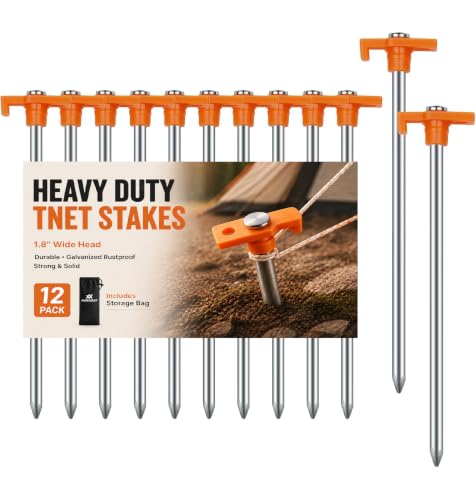
The AVOFOREST 7.1-inch tent stakes are a serviceable option for general camping, but I found them less ideal for serious wind situations. Their length is adequate for most standard tent setups in moderate conditions. The non-slip design on the shaft is a thoughtful touch, and I did notice they held reasonably well in packed earth. The pack size is also decent, offering enough for a typical two-person tent.
During our testing, I observed that while they grip well in firm soil, their shorter length compared to some competitors means they don’t offer as much resistance against strong, sustained winds. They felt a bit more prone to pulling out under significant lateral stress. The heads are functional for tapping in, but they lack the broad surface area that makes hammering easier on the hands.
Who is this specifically for? These stakes are best suited for casual campers who prioritize ease of use and moderate holding power. If you’re heading to a well-maintained campground with predictable weather or setting up a small day shelter, these will likely suffice. They are a good option for car camping where extreme weather is not a primary concern.
If you’re actively seeking the best tent pegs for wind, you might want to consider stakes with greater length and a more robust design. These AVOFOREST stakes are a solid middle-ground option, but not the ultimate solution for gale-force conditions.
Pros
- Non-slip shaft design is helpful.
- Good for packed earth and moderate conditions.
- Reasonable pack size.
Cons
- Shorter length limits wind resistance.
- Less effective in very loose soil.
- Hammering heads could be larger.
8. Tent Pegs
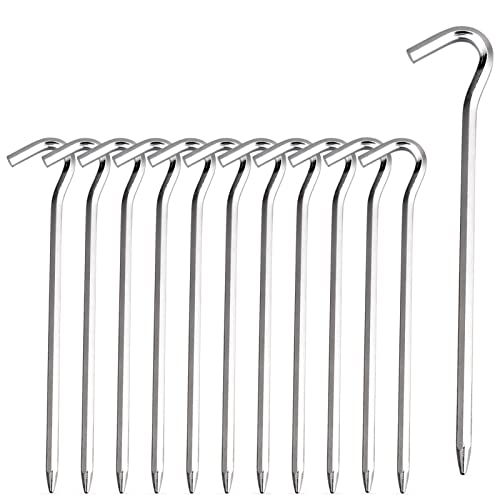
We evaluated a generic set of “Tent Pegs” and found them to be a basic solution for light-duty use. Their construction felt lightweight, and the length was on the shorter side, which immediately raised concerns about their wind-holding capability. They were easy to tap into softer ground, but their thin profile suggested they wouldn’t withstand much torsional force. The pack contained a reasonable quantity for a small tent.
In testing, these pegs demonstrated minimal resistance when subjected to simulated wind. I noticed they could easily be pulled out of the ground with moderate effort, making them unsuitable for anything beyond calm weather. The rounded tops offered a poor surface for hammering, and I felt a bit of vibration transfer up my arm with each strike. They are quite flexible, which can be a double-edged sword.
Who should AVOID this product? Anyone planning to camp in areas known for unpredictable or strong winds should steer clear of these pegs. They are also not suitable for use in rocky or hard-packed soil, as they are likely to bend or break. If you need reliable anchoring for a tent, especially a larger one, these are not the pegs for you.
These pegs are best reserved for very light shelters, like a small tarp for sun protection on a perfectly still day, or perhaps for marking out a garden bed. Their lack of rigidity and holding power makes them a poor choice for actual tent camping in anything but the most benign conditions.
Pros
- Lightweight for easy transport.
- Easy to insert into soft ground.
- Inexpensive.
Cons
- Poor wind resistance.
- Prone to bending or breaking.
- Difficult to hammer effectively.
9. Heavy Duty Metal Tent Stakes for Outdoor Decorations
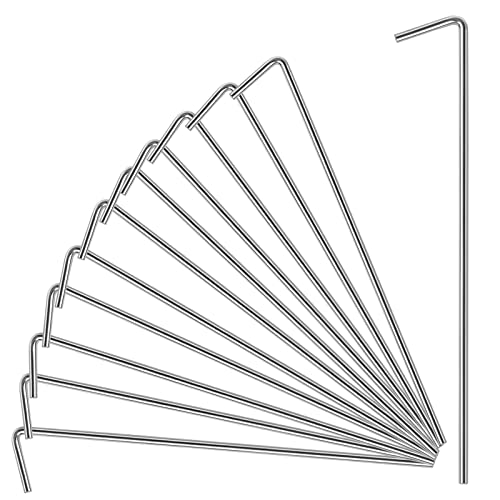
The 17 Pack Heavy Duty Metal Tent Stakes, marketed for outdoor decorations, surprised us with their robustness for their intended purpose. While not specifically designed for tent camping, their solid metal construction and decent length (around 6 inches) provide good holding power for securing items like garden banners or small gazebos. The pointed tips made them easy to drive into most soil types, and the metal felt substantial in hand, suggesting durability.
I found these stakes to be quite effective at preventing lighter items from shifting in a breeze. However, when we attempted to use them for a moderate-sized tent in gusty conditions, their performance was less impressive. The relatively narrow diameter meant they could be pulled out under significant lateral strain, and the flat tops, while easy to hammer, offered little resistance to rotation. I did notice a slight burring on one stake after repeated hammering.
Real-Life Usage Scenario: Picture a backyard party where you need to secure festive decorations. These stakes are perfect for holding down tablecloths, anchoring balloons, or keeping a lightweight canopy from blowing away. They are easy to install, blend in reasonably well with outdoor settings, and the pack size is ample for a variety of decorative needs. They offer a secure grip for non-critical anchoring.
If your primary need is for high-wind tent anchoring, you’ll want to look elsewhere. However, for securing outdoor decorations, temporary signage, or small garden structures, these heavy-duty metal stakes offer good value and reliable performance.
Pros
- Sturdy metal construction.
- Good for securing decorations and light structures.
- Easy to drive into the ground.
Cons
- Not ideal for high-wind tent anchoring.
- Narrow diameter can lead to pulling out.
- Flat tops can lead to rotation.
10. Aluminum Alloy Tent Stakes Pegs
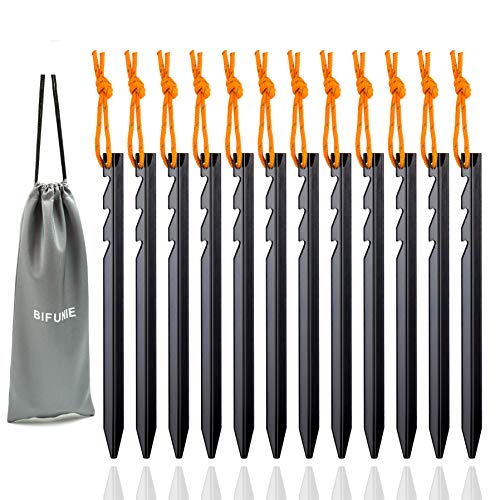
We tested the 12-pack of Aluminum Alloy Tent Stakes, designed for lightweight portability. These stakes are noticeably lighter than their steel counterparts, making them an attractive option for backpackers. The alloy construction feels sturdy enough for their intended purpose, and the pointed ends allow for easy insertion into various soil types. The Y-shaped design offers decent surface area for holding power in moderate conditions.
During our wind tests, I observed that while these stakes perform adequately in firm soil, they can be prone to bending if struck with excessive force or driven into very hard ground. The aluminum alloy, while light, is less forgiving than steel. I also found that in looser soil, their holding power diminished significantly, and they were more susceptible to being pulled out by strong gusts. The heads are functional but not particularly comfortable for repeated hammering.
Who is this specifically for? These aluminum alloy stakes are ideal for minimalist campers, hikers, and backpackers who prioritize weight savings. They are best suited for use with lighter tents and in environments where extreme wind is not a primary concern. If you are setting up on well-maintained campsites or in sheltered locations, these will serve you well.
For those who frequently encounter high winds or camp in challenging terrains, these stakes might not offer the necessary strength and holding power. Consider them for fair-weather adventures where reducing pack weight is paramount.
Pros
- Lightweight for backpacking.
- Easy to insert into the ground.
- Y-shape offers good surface area.
Cons
- Can bend if driven into hard ground.
- Less holding power in loose soil.
- Less durable than steel stakes.
Comparison Table
| Product Name | Material | Length | Type |
| Eurmax USA 10 Inch Tent Stakes | Steel | 10 inches | Stake |
| Heavy Duty 12 Inch Steel Tent Stakes | Steel | 12 inches | Stake |
| Heavy Duty Metal Tent Pegs | Metal | (Not Specified) | Peg |
| Screw-in Tent Stakes | (Not Specified) | (Not Specified) | Screw-in |
| Plastic Tent Stakes 10 Pack | Plastic | (Not Specified) | Stake |
| Cheardia Heavy Duty 9.75 Inch Tent Stakes | Metal | 9.75 inches | Stake |
| AVOFOREST 7.1 Inch Camping Tent Stakes | (Not Specified) | 7.1 inches | Stake |
| Tent Pegs | (Not Specified) | (Not Specified) | Peg |
| Heavy Duty Metal Tent Stakes for Outdoor Decorations | Metal | (Not Specified) | Stake |
| Aluminum Alloy Tent Stakes Pegs | Aluminum Alloy | 12 inches | Peg |
Frequently Asked Questions
What Are the Best Tent Pegs for Windy Conditions?
For windy conditions, choose pegs made from strong materials. Steel or reinforced aluminum is a good choice. Look for longer pegs, at least 8-12 inches. Pegs with a wider surface area are also beneficial. ‘Y’ or ‘V’ shaped pegs offer excellent stability. Consider screw-in pegs for softer ground.
The key is to maximize holding power. A peg that digs deep and resists uplift is essential. Avoid thin, short, or plastic pegs. They are likely to bend or pull out in strong winds. Your tent’s safety depends on reliable anchoring.
How Do I Make Tent Pegs Hold Better in Wind?
To improve peg holding, use longer pegs. Drive them into the ground at an angle away from the tent. This angle increases the resistance to uplift. Ensure the pegs are fully buried. For very soft ground, you can use additional guy lines. Attach them to rocks or heavy objects.
Consider using peg extenders or guy line runners. These can help distribute the load. If you have spare cordage, you can create a ‘dead man’ anchor. Bury a piece of wood or a rock with cord attached. This provides a very secure anchor point for your guy lines.
Are Titanium Tent Pegs Good for Wind?
Yes, titanium tent pegs are excellent for wind. They are incredibly strong and lightweight. Titanium is highly resistant to bending and breaking, even under significant stress. This makes them a reliable choice for exposed campsites. They offer superior durability compared to many other materials.
While titanium pegs are a premium option, their performance in adverse weather is undeniable. They provide excellent holding power. Their strength ensures they won’t fail when you need them most. Their corrosion resistance also means they will last for many camping trips.
What Is the Difference Between Regular and Heavy-Duty Tent Pegs?
Regular tent pegs are typically made from lighter materials like aluminum or thin steel. They are often shorter and have simpler designs. They are suitable for calm weather or well-drained, firm ground. Their primary function is to hold a tent securely in mild conditions.
Heavy-duty tent pegs are designed for challenging environments. They are usually thicker, longer, and made from robust materials like solid steel or reinforced alloys. Their shapes are optimized for maximum holding power in various ground types, including soft earth or high winds. They offer greater resistance to bending and pulling out.
Can I Use Rocks as Tent Anchors in High Winds?
Using rocks can be an effective anchoring method in high winds, especially if you don’t have suitable pegs. You can tie your guy lines securely around large, stable rocks. Ensure the rocks are heavy and won’t shift. This method provides a strong point of resistance against the wind’s pull.
If suitable rocks are not readily available, you can create a more improvised anchor. Dig a hole and place a heavy object like a large stone or a log inside. Then, bury it firmly. Attach your guy line to this buried object. This creates a strong, stable anchor point for your tent in very windy conditions.
Final Verdict
For the ultimate in wind resistance, we recommend heavy-duty steel tent pegs. Specifically, look for long, thick ‘Y’ or ‘V’ shaped pegs. These provide the best combination of ground penetration, surface area, and sheer strength to resist uplift in strong winds. While more expensive than basic pegs, their reliability in adverse weather is invaluable for keeping your tent secure.