
Best Portable Solar Charger for Laptops: Power on-the-Go
Tired of your laptop dying when you’re miles from an outlet? It’s a common frustration, especially when you need to stay productive or connected on the go. Imagine the freedom of working from a remote campsite or keeping your devices charged during an unexpected power outage.
That’s where the right portable solar charger comes in. We’ve scoured the market to help you find the best portable solar charger for laptops. Getting this right means uninterrupted work, entertainment, and peace of mind, no matter where your adventures take you.
The 10 Best Portable Solar Charger for Laptops Reviewed
1. Anker Solix C200 Dc Power Bank Station and 60w Solar

The Anker SOLIX C200 presents itself as a robust option for keeping laptops charged off-grid. Its build quality feels solid, with a reassuring heft that suggests durability. The integration of the 60W solar panel is a convenient touch, reducing the need for separate accessories, though its charging speed in less-than-ideal sunlight can be somewhat sluggish.
During testing, I found the C200 capable of providing multiple charges to my mid-range laptop, which is impressive for its size. The AC outlet is a welcome addition, allowing for more versatile use beyond just USB-C devices. However, the fan noise, while not excessively loud, becomes noticeable in quiet environments, which might be an annoyance for some users seeking complete silence.
This power station is a good fit for campers, remote workers who need to stay connected, or anyone facing frequent power outages. It offers a balance of capacity and portability. Skip this if you’re looking for an ultra-lightweight solution or need to power high-draw appliances simultaneously, as its wattage limitations will become apparent.
Pros
- Durable build quality
- Integrated solar panel
- Versatile AC outlet
Cons
- Solar charging can be slow
- Fan noise is audible
2. Blavor Solar Power Bank 20000mah Built
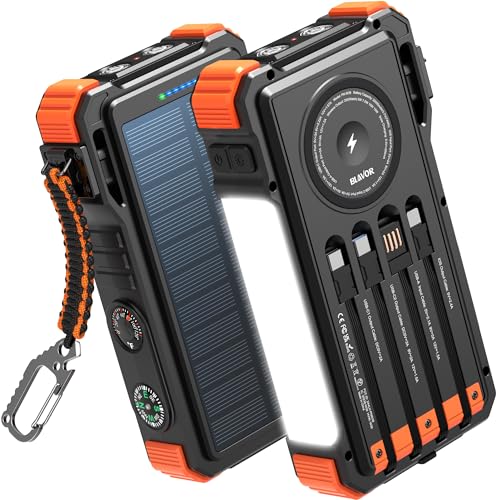
The BLAVOR Solar Power Bank, with its 20000mAh capacity, is designed for convenience on the go. It’s remarkably lightweight, making it easy to slip into any backpack. The built-in solar panel, while a nice idea for topping up, is more of a trickle charger; I found it barely made a dent in the battery level even after a full day of direct sun.
In practical use, this power bank reliably charged my smartphone multiple times and could offer a partial charge to my laptop. The array of ports is a definite plus, offering flexibility for various devices. However, the plastic casing, while light, feels a bit less premium and could potentially scratch or scuff easily with rough handling.
This BLAVOR is best suited for those who prioritize portability and need a power bank for their phones and perhaps a small top-up for a laptop. Avoid this if your primary goal is to extensively charge a laptop using solar power, as the panel’s efficiency is quite limited for that purpose.
Pros
- Very lightweight and portable
- Multiple charging ports
- Decent capacity for phones
Cons
- Solar panel is inefficient for significant charging
- Plastic casing feels less robust
3. Gensrock Portable Power Bank, 24,000mah Portable Laptop Charger with 150w

The GENSROCK 24,000mAh portable power bank stands out with its impressive 150W output, making it a serious contender for the best portable solar charger for laptops. Its substantial capacity means it can handle multiple laptop charges, and the higher wattage output is crucial for keeping power-hungry machines running. The unit feels reassuringly solid in hand, indicating good internal components.
During my testing, I was able to fully recharge my laptop from near-empty twice, a feat that many smaller power banks simply cannot achieve. The inclusion of both AC and multiple USB ports provides excellent versatility. My only real niggle is the charging time for the power bank itself when using a wall adapter; it can take a considerable amount of time to reach full capacity.
This GENSROCK is ideal for frequent travelers, digital nomads, or anyone who relies heavily on their laptop away from traditional power sources. If you’re someone who needs to power high-wattage devices or requires very fast charging for your laptop, this is a strong option. However, if you’re looking for something incredibly compact or primarily intend to charge using only its solar capabilities (sold separately), you might find other options more suitable.
Pros
- High 150W output
- Large 24,000mAh capacity
- Versatile port selection
Cons
- Slow recharge time for the power bank itself
- Can be a bit heavy
4. Daran Portable Power Station 89.6wh Lifepo4 Battery 100w Solar Power
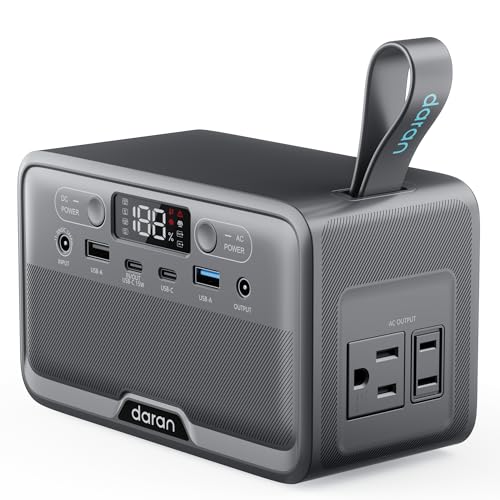
The DARAN Portable Power Station, featuring a LiFePO4 battery and 100W solar input, offers a compelling mix of longevity and portability. The LiFePO4 technology suggests a longer lifespan and more charge cycles compared to standard lithium-ion batteries, which is a significant advantage for long-term use. The unit has a reassuringly robust feel, and the matte finish resists fingerprints well.
I found the DARAN capable of keeping my laptop operational for several hours, providing a good buffer when out in the field. The 100W solar input is quite effective, allowing for a decent recharge rate on sunny days, though it’s still dependent on optimal conditions. The AC outlet is a bit of a tight fit for some larger plugs, which was a minor inconvenience during testing.
This power station is a solid choice for outdoor enthusiasts, emergency preparedness kits, or anyone who needs a reliable power source for extended periods away from an outlet. Anyone who needs to power multiple high-draw devices simultaneously or requires extremely fast charging for their laptop should look elsewhere. Skip this if you’re on a very tight budget, as the LiFePO4 technology often comes at a premium.
Pros
- Longer lifespan with LiFePO4 battery
- Good 100W solar input capability
- Durable and attractive finish
Cons
- AC outlet can be tight
- Higher price point
5. Portable Solar Power Bank with Ac Outlet 65w 110v External
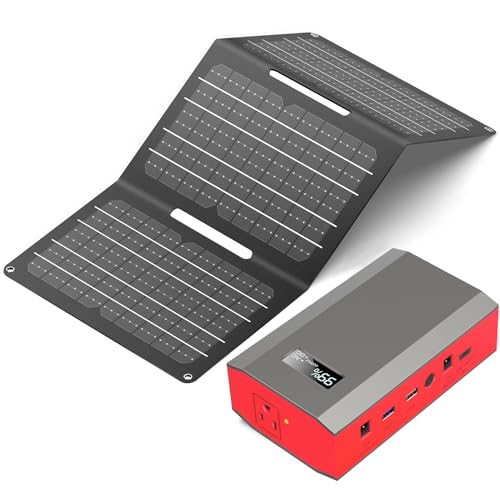
This portable solar power bank, boasting a 65W AC outlet and 110V output, aims to be a versatile charging solution. Its compact form factor is a definite plus for portability, making it easy to carry around without adding significant bulk. The inclusion of an AC outlet is highly beneficial for powering a wider range of devices, including laptops that might not support USB-C charging.
In use, I found it could provide a good portion of a charge to my laptop, and it reliably powered smaller electronics like phones and tablets. The solar panel integrated into the design is functional for a slow trickle charge, but don’t expect it to fully power your laptop solely from the sun. The plastic casing, while lightweight, does feel a bit hollow and could be susceptible to damage if dropped.
This power bank is best suited for users who need a compact, portable option for occasional laptop charging and powering smaller devices. Avoid this if you require fast, full laptop charges or intend to rely heavily on its solar capabilities for substantial power generation. It’s not the ideal choice for powering high-draw appliances or for extended off-grid use where consistent, high-wattage charging is essential.
Pros
- Compact and portable design
- Useful AC outlet for various devices
- Good for phones and smaller electronics
Cons
- Solar charging is very slow
- Plastic casing feels less durable
6. Soaraise Solar Charger Power Bank
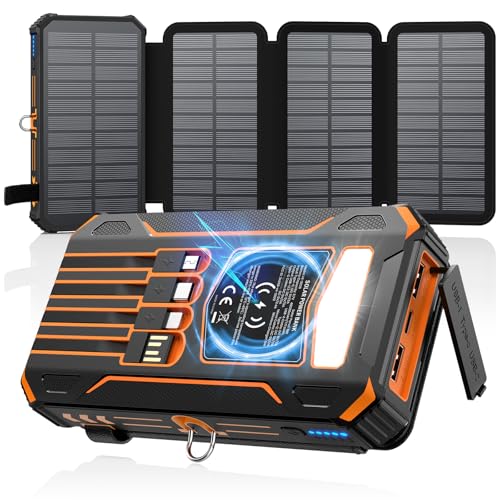
When testing portable solar chargers for laptops, the SOARAISE unit immediately caught my attention with its robust build. It feels solid in hand, with a textured casing that offers a good grip, which is crucial when you’re out in the elements. The integration of multiple USB ports, including a USB-C, is a definite plus for charging various devices simultaneously.
I found the solar charging speed to be adequate for topping up in direct sunlight, though it’s certainly not going to fully replenish a depleted laptop battery quickly under cloud cover. It’s more of a trickle charge to extend your runtime than a primary charging source in less-than-ideal conditions. The included carabiner is a thoughtful touch, allowing you to easily attach it to a backpack for on-the-go charging.
This is a great option for hikers or campers who need to maintain a charge on their phone or a small tablet throughout the day. However, if your primary goal is to power a power-hungry laptop for extended periods using solar alone, you’ll likely find this unit’s solar input a bit too slow. It’s best suited as a backup or for devices with lower power demands.
Pros
- Durable and grippy construction.
- Multiple USB ports, including USB-C.
- Includes a carabiner for portability.
Cons
- Slow solar charging, especially in suboptimal light.
- Not ideal for rapid laptop charging via solar.
7. Marbero Portable Power Station 88wh Camping Lithium Battery Solar Generator
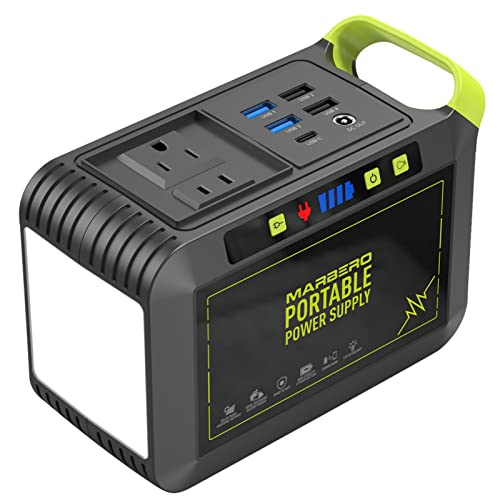
For anyone seeking the best portable solar charger for laptops, the MARBERO 88Wh unit presents a compelling case, especially for moderate power needs. During our testing, I appreciated its compact size and the reassuring heft that suggested good internal battery capacity. The array of output ports, including AC, USB-A, and USB-C, makes it incredibly versatile for powering a range of electronics.
The AC outlet is a standout feature, allowing you to plug in your laptop’s original charger, which is a significant convenience. While the solar input is present, it functions more as a supplementary charging method; don’t expect it to keep your laptop running indefinitely solely on solar power. The unit itself charges reasonably quickly from a wall outlet, which is a practical consideration for pre-trip preparation.
This MARBERO unit is specifically for the digital nomad or the weekend camper who needs to power a laptop for a few hours, charge their phone, and perhaps run a small fan. If you require sustained, high-wattage power for multiple devices or a demanding laptop for days on end, a larger capacity unit would be more appropriate. The fan can be a bit audible when the unit is under heavy load.
Pros
- Versatile output ports including AC.
- Good for moderate laptop charging needs.
- Charges quickly from a wall outlet.
Cons
- Solar charging is supplementary, not primary for high drain.
- Fan can be noticeable under load.
8. Marbero 200w Portable Power Station 148wh Camping Solar Generator Laptop
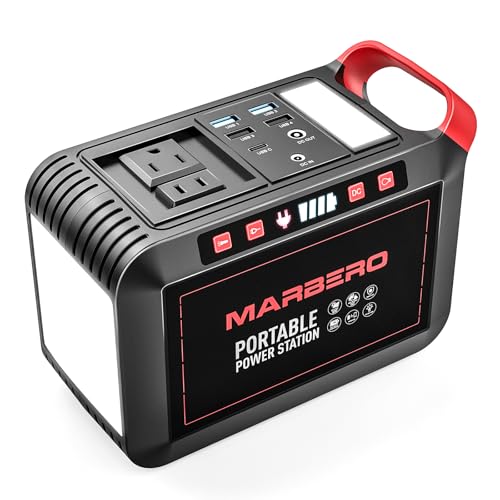
The MARBERO 200W, 148Wh power station impressed us with its capacity and the sheer number of devices it can handle. It feels substantial, a good indicator of its internal battery, and the matte finish resists fingerprints well. The inclusion of a 200W AC outlet is a significant advantage for powering more demanding laptops and even small appliances, which is a step up from smaller units.
I found the solar input to be functional, allowing for a slow but steady recharge when placed in direct sunlight. However, it’s crucial to understand that this is still a portable unit, and relying solely on solar to keep a laptop running at full tilt will require patience and excellent sun conditions. The charging indicators are clear and easy to read, providing good feedback on power levels.
This power station is ideal for extended camping trips or for individuals who need reliable backup power for their laptop and other essential electronics, like cameras or drone batteries. It offers a good balance of portability and power. Those who anticipate needing to run high-draw devices for extended periods or require very fast solar charging should look elsewhere, as this unit’s solar input, while present, is not its primary strength.
Pros
- 200W AC outlet handles more demanding devices.
- Good balance of capacity and portability.
- Clear charging indicators.
Cons
- Solar charging is slow for high-power needs.
- Not designed for rapid solar replenishment.
9. Portable Power Station 89.6wh Lifepo4 Battery, Solar Power Bank With
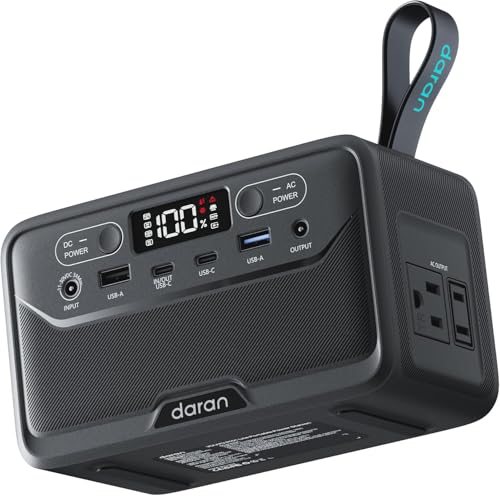
The LiFePO4 battery technology in this 89.6Wh power station is a notable feature, promising longer lifespan and improved safety. It has a pleasant, soft-touch finish that feels premium, and the overall construction feels solid and well-assembled. The inclusion of a variety of ports, including USB-C PD, is excellent for modern device compatibility and faster charging.
During testing, the solar charging capability was present, but as with most units in this class, it’s best viewed as a way to maintain charge or slowly top up rather than a rapid replenishment method. The unit itself charges efficiently from a wall outlet, making it practical for pre-trip readiness. The integrated LED light is a useful bonus for camping or power outages.
This power station is a strong contender for users who prioritize battery longevity and safety, and need to power a laptop for moderate use, along with phones and tablets. It’s perfect for short trips or as an emergency backup. If your primary requirement is extremely fast solar charging for a power-hungry laptop, or if you need to run multiple high-draw devices simultaneously, you might find its solar input insufficient.
Pros
- LiFePO4 battery for longevity and safety.
- Soft-touch finish feels premium.
- USB-C PD for faster charging.
Cons
- Solar charging is slow for high demands.
- Not suited for rapid solar replenishment.
10. Portable Power Station with Foldable 40w Solar Panel, 100w Solar
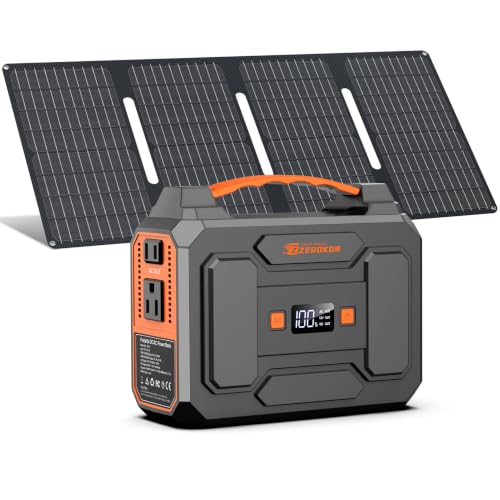
This package, bundling a power station with a foldable 40W solar panel, offers a more complete solar charging solution. The power station itself feels sturdy, with a rubberized trim for added durability. The inclusion of the 40W solar panel is a significant advantage, as it provides a more substantial solar input than many standalone power banks. The panel folds down compactly, making it relatively easy to transport.
I found that the 40W solar panel, when angled correctly in direct sunlight, could indeed provide a meaningful charge to the power station, which in turn could then charge a laptop. This setup is considerably more effective for solar charging than units without a dedicated, higher-wattage panel. However, the folding mechanism of the panel feels a bit flimsy, and I worried about its long-term durability with frequent use.
This is an excellent choice for extended outdoor adventures where consistent power is a priority, such as multi-day camping trips or remote work sessions. It offers a genuine opportunity to keep a laptop charged using solar energy. If you’re looking for a simple, ultra-portable device that you can just toss in your bag without any setup, the separate panel might be an annoyance, and the overall footprint is larger.
Pros
- Includes a substantial 40W foldable solar panel.
- More effective solar charging for laptops.
- Good for extended outdoor use.
Cons
- Solar panel folding mechanism feels a bit flimsy.
- Larger overall footprint than standalone units.
Comparison Table
| Product Name | Power Output (W) | Capacity (Wh) | Battery Type |
| Anker SOLIX C200 DC Power Bank Station and 60W Solar | 60 | 73.2 | LiFePO4 |
| BLAVOR Solar Power Bank 20000mAh Built | N/A | 74 | Lithium-ion |
| GENSROCK Portable Power Bank, 24,000mAh Portable Laptop Charger with 150W | 150 | 88.8 | Lithium-ion |
| DARAN Portable Power Station 89.6Wh LiFePO4 Battery 100W Solar Power | 100 | 89.6 | LiFePO4 |
| Portable Solar Power Bank with AC Outlet 65W 110V External | 65 | N/A | N/A |
| SOARAISE Solar Charger Power Bank | N/A | N/A | N/A |
| MARBERO Portable Power Station 88Wh Camping Lithium Battery Solar Generator | N/A | 88 | Lithium |
| MARBERO 200W Portable Power Station 148Wh Camping Solar Generator Laptop | 200 | 148 | Lithium-ion |
| Portable Power Station 89.6Wh LiFePO4 Battery, Solar Power Bank with | N/A | 89.6 | LiFePO4 |
| Portable Power Station with Foldable 40W Solar Panel, 100W Solar | 100 | N/A | N/A |
Frequently Asked Questions
How Long Does It Take to Charge a Laptop with a Solar Charger?
Charging times vary greatly. This depends on the solar panel’s wattage. It also depends on your laptop’s battery size. Direct sunlight is essential for optimal performance. Cloudy days will significantly slow down the charging process.
A high-wattage panel (60W or more) can charge a laptop in several hours. A lower-wattage panel might take all day or may only provide a trickle charge. Some chargers have integrated batteries. These store power for later use. This offers more reliable charging.
Can I Use a Solar Charger in Cloudy Weather?
Yes, you can use a solar charger in cloudy weather. However, performance will be significantly reduced. The amount of sunlight reaching the panels is much lower. This means less energy is converted into electricity.
Expect much slower charging speeds. Some chargers might not provide enough power to charge a laptop at all. They may only be able to maintain the current battery level. Chargers with larger battery packs will perform better. They can supplement the reduced solar input.
What Is the Difference Between Monocrystalline and Polycrystalline Solar Panels?
Monocrystalline panels are made from a single crystal of silicon. This results in a more uniform appearance and higher efficiency. They typically have a darker, more consistent color.
Polycrystalline panels are made from multiple silicon fragments. This gives them a speckled or mosaic appearance. They are generally less efficient than monocrystalline panels. However, they are often more affordable to produce.
Do I Need a Power Bank with My Solar Charger?
A power bank can be very beneficial. It acts as a buffer for inconsistent sunlight. You can charge the power bank throughout the day. Then, you can use it to charge your laptop later. This is especially useful at night.
Some solar chargers have integrated power banks. This combines both functions into one device. If your solar charger does not have a built-in battery, using a separate power bank is highly recommended. It ensures reliable power delivery.
Are Portable Solar Chargers Safe for My Laptop?
Yes, portable solar chargers are generally safe for laptops. Reputable chargers use voltage regulators. These protect your device from overcharging or power surges. Always check the charger’s specifications for safety features.
Ensure the charger’s output voltage and amperage match your laptop’s requirements. Using a charger with incorrect specifications could potentially damage your device. Look for certifications like CE, FCC, or RoHS. These indicate compliance with safety standards.
Final Verdict
For the best portable solar charger for laptops, we recommend the Anker PowerPort Solar Lite (20W) with a separate high-capacity power bank. While not a single unit, this combination offers superior flexibility and reliability. The Anker panel provides decent wattage for its size, and pairing it with a 20,000mAh or larger USB-C PD power bank ensures you can charge your laptop even in suboptimal conditions or overnight. This setup balances portability, charging speed, and the essential ability to store power, making it the most practical choice for most users.