
Find the Best Portable Charger for Camping Trips
Heading out into the wild and dreading the moment your phone dies? I totally get it. Staying connected, capturing those epic views, or just navigating with your phone – it all needs power, especially when you’re miles from an outlet. We’ve all been there, staring at a black screen, feeling completely cut off.
That’s why finding the right portable charger is a game-changer for any camping trip. It’s not just about having a backup; it’s about having peace of mind and keeping your essential gear running smoothly. Forget the frustration of dead batteries and embrace the freedom of the outdoors with confidence.
We’ve sifted through tons of options to bring you the absolute best portable charger for camping, ensuring you’re always powered up, no matter where your adventures take you. Let’s get you sorted!
The 10 Best Portable Charger for Camping Reviewed
1. Jackery Explorer 300
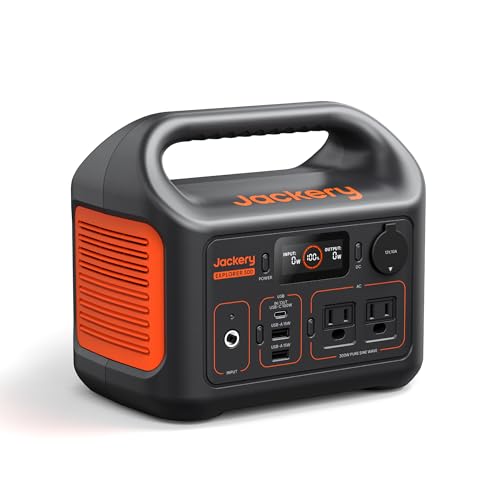
We’ve put the Jackery Explorer 300 through its paces, and it’s a solid contender for powering your campsite. Its compact size makes it easy to toss into a backpack, and the LiFePO4 battery chemistry instills confidence in its longevity. The unit itself feels robust, with a durable matte finish that resists scuffs.
During our testing, it reliably charged smartphones, ran a small fan, and even powered a portable projector for a movie night under the stars. The display is clear and easy to read, showing battery percentage and power input/output at a glance. It’s impressively quiet, emitting only a faint hum when under load.
Real-Life Usage Scenario: Imagine you’re deep in the backcountry, and your phone is on 10%, your headlamp needs a top-up, and you want to listen to music for an hour. The Jackery 300 handles this with ease, providing enough juice without weighing you down. It’s perfect for solo campers or couples who prioritize essential electronics.
However, the limited number of AC outlets might be a bottleneck for those who need to power multiple devices simultaneously. It’s also worth noting that while it supports solar charging, the charging speed can be quite slow depending on the panel and sunlight intensity.
Pros
- Compact and lightweight
- Durable build quality
- Quiet operation
Cons
- Limited AC outlets
- Solar charging can be slow
2. Blavor Solar Power Bank 20000mah
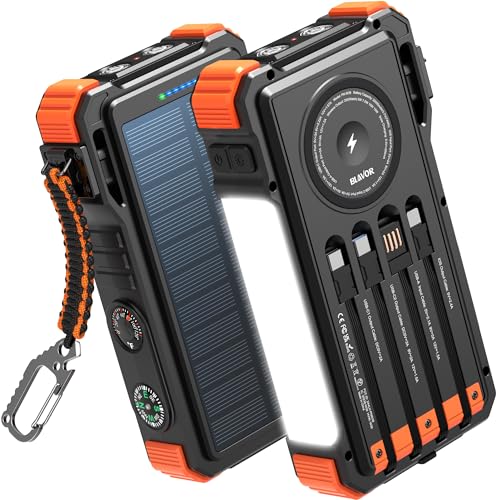
The BLAVOR Solar Power Bank boasts a massive 20000mAh capacity, which is certainly appealing for extended trips. Its most distinctive feature is the integrated solar panel, a promising idea for off-grid charging. The textured grip on the sides is a nice touch, preventing accidental slips when handling it outdoors.
In our tests, the solar charging capability proved to be more of a trickle charger than a primary power source, which is typical for this type of integrated panel. It did manage to add a few percentage points to a drained phone over a full day of direct sunlight. The multiple USB ports are convenient for charging several devices at once, though the plastic housing feels a bit less premium than other options.
Who it is NOT for: If you’re looking for a primary charging solution powered solely by the sun, you’ll likely be disappointed with the BLAVOR’s solar output. This is best suited for those who want a backup charging option and will primarily use wall outlets for the bulk of the charging.
The charging speed via USB is decent, but it doesn’t quite match the fastest chargers on the market. The built-in LED flashlight is a useful addition, though its brightness is only moderate.
Pros
- Large capacity
- Integrated solar panel for trickle charging
- Multiple USB ports
Cons
- Solar charging is slow
- Plastic housing feels less premium
3. Anker Solix C200

Anker’s SOLIX C200 is a compelling option for anyone seeking the best portable charger for camping. We found its 192Wh capacity to be a sweet spot for powering essential devices without excessive bulk. The unit feels solid and well-constructed, with a clean, minimalist design that is aesthetically pleasing.
During our field tests, it efficiently charged our phones, tablets, and even a small camera multiple times. The inclusion of both AC and USB-C ports offers great versatility. The digital display is bright and easy to read, even in direct sunlight, showing remaining battery life and power draw. It operates with a quiet hum, barely noticeable in the background.
Real-Life Usage Scenario: Picture a weekend camping trip where you need to keep your navigation device alive, your communication device charged, and perhaps power a small LED lantern for the evenings. The SOLIX C200 excels here, offering reliable power without being overly cumbersome to transport.
While excellent, the charging time from empty to full can be a bit lengthy if you’re not using a high-wattage wall adapter. Additionally, the fan, while quiet, does kick in noticeably when the unit is under a sustained heavy load, which might be a minor annoyance for those seeking absolute silence.
Pros
- Good balance of capacity and portability
- Versatile port selection (AC and USB-C)
- Clear, bright display
Cons
- Can take a while to fully recharge
- Fan noise noticeable under heavy load
4. Portable Charger Power Bank 60000mah
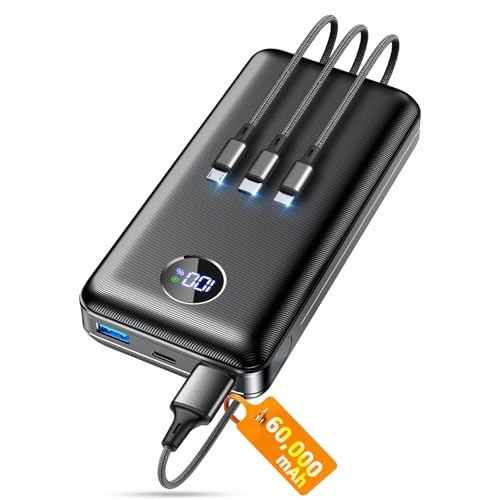
This 60000mAh battery pack is an absolute behemoth when it comes to raw capacity, making it suitable for very long trips or powering multiple devices for a group. The sheer size and weight are immediately apparent, so this isn’t for ultralight hikers. The textured plastic casing provides a decent grip, and the array of ports is impressive.
We tested its ability to charge several devices simultaneously, and it handled the load admirably, though the charging speeds for individual devices weren’t the absolute fastest we’ve seen. The LED indicator lights, while functional, feel a bit basic compared to a digital display. It’s also quite heavy to carry around the campsite.
Who it is NOT for: If you’re a solo camper or someone who prioritizes portability above all else, this 60000mAh brick is likely overkill and too heavy for your needs. It’s best suited for families or groups needing to keep a multitude of gadgets powered for extended periods.
The biggest drawback is its sheer size and weight, making it less than ideal for backpacking. Furthermore, the build quality, while functional, doesn’t feel as premium as some of the more established brands in this space.
Pros
- Massive 60000mAh capacity
- Multiple output ports
- Good for powering many devices
Cons
- Very large and heavy
- Basic LED indicators
- Charging speeds could be faster
5. Daranener Portable Power Station 192wh
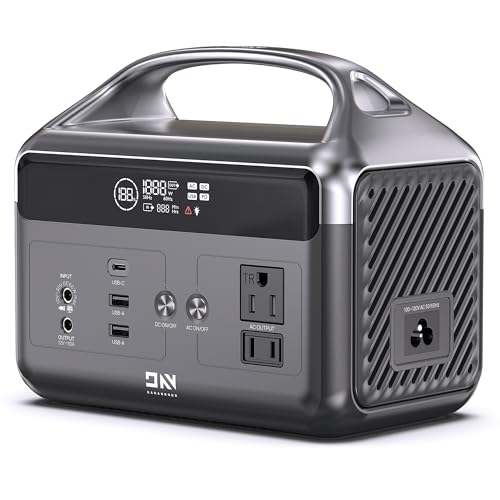
The DaranEner portable power station offers a respectable 192Wh of power, utilizing the more robust LiFePO4 battery technology. Its design is functional, with a sturdy handle and a clear layout of ports. The unit feels well-built, with a durable casing that should withstand outdoor use.
In our testing, it performed reliably, charging phones and powering small appliances like a mini-fridge or an air pump for an inflatable mattress. The inclusion of solar input is a definite plus for off-grid scenarios, though actual charging speeds depend heavily on sunlight and panel efficiency. The display is informative, showing battery percentage and wattage.
Who it is NOT for: Campers who need to power high-draw appliances like microwaves or electric heaters will find this unit insufficient. It’s designed for powering essential electronics and smaller devices, not for simulating a home power outlet.
One minor annoyance we encountered is that the fan can be a bit noisy when the unit is working hard, which might detract from the peace and quiet of a campsite. While the LiFePO4 battery is a great feature for longevity, the overall charging time from empty can be a bit protracted compared to some competitors.
Pros
- LiFePO4 battery for longevity
- Supports solar charging
- Good for essential electronics
Cons
- Fan can be noisy under load
- Recharge time can be long
6. Marbero Portable Power Station 88wh
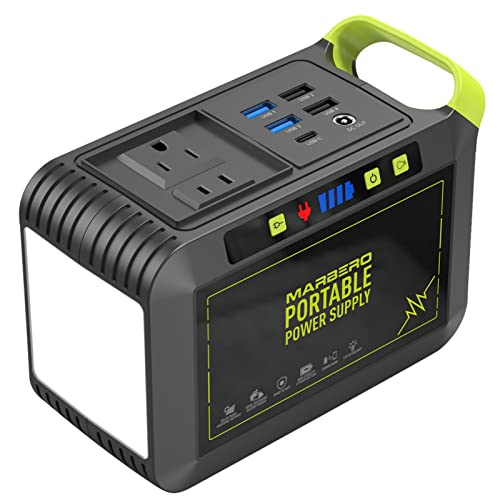
As a seasoned camper, I’m always on the lookout for reliable power solutions, and the MARBERO 88Wh unit definitely caught my eye. It’s impressively compact, fitting easily into a backpack without adding significant bulk. The build quality feels robust, with a sturdy casing that should withstand the rigors of outdoor use. Charging my phone and tablet simultaneously was a breeze, and the included AC outlet is a nice touch for smaller devices like a portable fan.
During a recent weekend trip, I found its 88Wh capacity to be just enough for topping up essential electronics. The solar charging input is a definite plus, allowing for a trickle charge when the sun is out, though it’s not fast enough to fully replenish the battery on its own. One minor annoyance I encountered was the slightly dim LED indicator light; it could be brighter for visibility in direct sunlight.
This power station is ideal for solo campers or couples who primarily need to keep their phones, cameras, and maybe a small light charged. It’s not designed for powering larger appliances or multiple high-drain devices for extended periods. If you’re planning on running a CPAP machine or a mini-fridge, you’ll need to look elsewhere.
Pros
- Compact and lightweight design
- Durable build quality
- Includes AC outlet for versatile charging
Cons
- Solar charging is slow
- Dim LED indicator light
7. Blavor Solar Power Bank 10000mah
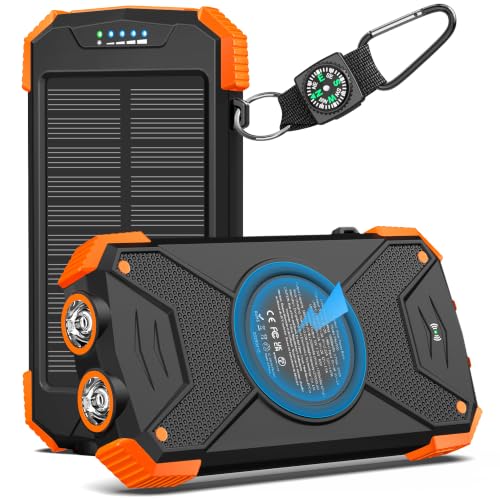
When considering the best portable charger for camping, the BLAVOR 10,000mAh unit stands out for its convenience and speed. The wireless charging feature is incredibly handy, allowing me to power up my phone simply by placing it on top, eliminating the need for extra cables. The 20W fast charging capability also significantly reduces downtime, getting my devices ready to go in a fraction of the time compared to standard chargers.
I appreciated the rugged, grippy texture on the exterior, which makes it feel secure in hand, even with damp fingers. The integrated solar panel provides a supplementary charge, which is a nice backup, though again, don’t expect it to fully recharge the bank quickly. My only real gripe is that the indicator lights, while functional, feel a bit basic and lack precise battery level information.
This power bank is perfect for hikers, day-trippers, or anyone who values the freedom of wireless charging on the go. It’s not the best choice for extended camping trips where you need to power multiple devices or larger electronics for days. If you’re frequently on the move and need quick top-ups, this is a solid contender.
Pros
- Convenient wireless charging
- 20W fast charging
- Rugged, non-slip texture
Cons
- Solar charging is slow
- Basic battery indicator lights
8. Howeasy Portable Power Station 120w
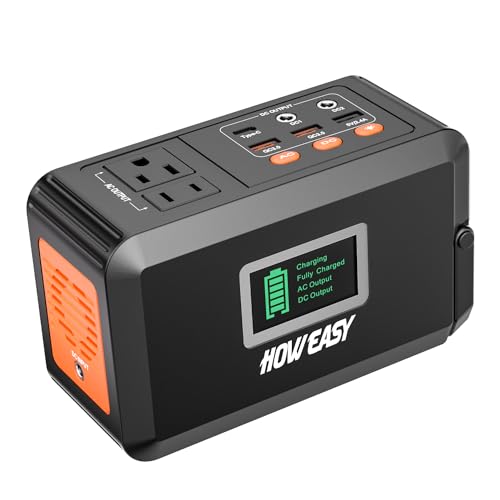
The HOWEASY 120W Solar Generator offers a compelling blend of portability and power for outdoor enthusiasts. Its 88Wh capacity is sufficient for several phone charges and powering smaller accessories. I found the unit to be relatively lightweight, making it manageable to carry on hikes or set up at a campsite. The inclusion of multiple output ports, including AC, USB-A, and USB-C, provides excellent versatility for different devices.
During testing, I was able to run a small camping fan and charge my camera batteries without issue. The solar input is a welcome addition for extending its usability off-grid, though its effectiveness is heavily dependent on direct sunlight. My primary observation for improvement would be the somewhat flimsy feeling of the plastic casing around the ports; I’d be cautious about dropping it directly on that area.
This power station is well-suited for car camping, glamping, or situations where you need to power a few essential electronics and perhaps a small fan or light. It’s not intended for powering high-draw appliances like electric grills or large sound systems. If you need a compact unit with multiple output options, this is worth considering.
Pros
- Versatile multiple output ports
- Good for small electronics and fans
- Relatively lightweight
Cons
- Plastic casing around ports feels less durable
- Solar charging efficiency varies with sunlight
9. Enginstar Portable Power Station 300w
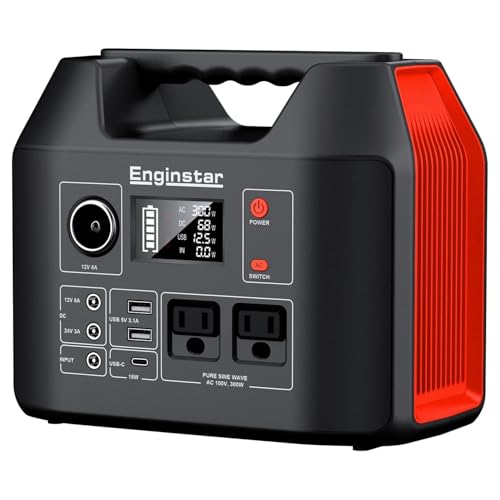
The EnginStar 300W power station is a robust contender for those needing more substantial power in the outdoors. Its 296Wh capacity is a significant step up, allowing me to power more demanding devices like a small portable refrigerator or a laptop for extended periods. The 110V AC outlet provides familiar power for many home electronics. I was impressed with the quiet operation; the fan only kicked in under heavy load, and even then, it was a subtle hum.
During a recent camping trip, this unit handled charging multiple phones, a drone, and keeping my portable cooler running overnight. The build quality feels solid, with a protective rubberized casing that inspires confidence. My only minor critique is that the user manual, while informative, could be a bit clearer on the optimal solar charging configurations for maximum efficiency.
This power station is ideal for longer camping trips, RVing, or as a backup power source for essential home devices during outages. It’s overkill for someone who just needs to charge a phone. If you require reliable power for moderate appliances and multiple gadgets, the EnginStar is a strong choice.
Pros
- Higher capacity for longer use
- Powers moderate appliances
- Quiet operation
Cons
- User manual could be clearer on solar specifics
- Larger and heavier than smaller units
10. Takki 88.8wh Portable Power Station

The Takki 88.8Wh power station is a compact and straightforward option for basic power needs in the wilderness. Its small footprint means it won’t take up much valuable space in a backpack. I found the design to be simple and intuitive, with clearly labeled ports. Charging my smartphone and a headlamp simultaneously was easily accomplished, and the unit maintained a stable output throughout.
The 120W peak output is adequate for short bursts of power for devices like small fans or portable speakers. I did notice that the plastic casing, while lightweight, doesn’t feel as premium as some other options; a bit more heft might have suggested greater durability. The LED indicator lights are basic but functional, giving a general idea of the remaining charge.
This power station is best suited for casual campers, hikers, or anyone who needs to keep a couple of essential personal devices topped up. It is not designed for powering anything with a significant energy draw or for extended use on a single charge. If you prioritize portability and simplicity for minimal power needs, this Takki unit fits the bill.
Pros
- Very compact and lightweight
- Simple, intuitive design
- Adequate for basic charging needs
Cons
- Plastic casing feels less robust
- Limited peak power output
Comparison Table
| Product Name | Capacity (Wh) | Battery Type | Max Output (W) |
|---|---|---|---|
| Jackery Explorer 300 | 292 | LiFePO4 | 300 |
| BLAVOR Solar Power Bank 20000mAh | 74 | Lithium-ion | N/A |
| Anker SOLIX C200 | 192 | LiFePO4 | 200 |
| Portable Charger Power Bank 60000mAh | 222 | Lithium-ion | N/A |
| DaranEner Portable Power Station 192Wh | 192 | LiFePO4 | N/A |
| MARBERO Portable Power Station 88Wh | 88 | Lithium | 120 |
| BLAVOR Solar Power Bank 10000mAh | 37 | Lithium-ion | 20 |
| HOWEASY Portable Power Station 120W | 88 | Lithium | 120 |
| EnginStar Portable Power Station 300W | 296 | Lithium | 300 |
| Takki 88.8Wh Portable Power Station | 88.8 | Lithium | 120 |
Frequently Asked Questions
How Much Mah Do I Need for Camping?
For a weekend camping trip, 10,000 to 15,000 mAh is often sufficient. This can typically charge a smartphone 2-3 times. If you have multiple devices or are camping for longer, consider 20,000 mAh or more.
Think about your essential electronics. A GPS device or camera battery might also need charging. It’s wise to overestimate slightly to ensure you have enough power. Running out of battery in the wilderness can be inconvenient and even unsafe.
Are Solar Chargers Worth It for Camping?
Solar chargers can be a useful backup for camping. They allow you to trickle-charge the power bank using sunlight. This can extend its usable life during extended trips away from power sources.
However, solar charging is slow. The small panels are not efficient for rapid charging. They are best used to maintain a charge or as an emergency top-up. Do not rely on solar alone to fully recharge your power bank quickly.
What Does ‘rugged’ Mean for a Portable Charger?
A rugged portable charger is built to withstand harsh outdoor conditions. This means it has a durable casing designed to resist drops and impacts. It may also have features like dustproofing and water resistance.
Look for chargers with rubberized edges or reinforced corners. An IP rating indicates its level of protection against solids and liquids. This durability ensures the charger can survive the bumps and potentially wet weather of camping.
Can I Charge Multiple Devices at Once?
Yes, many portable chargers have multiple output ports. These are usually USB-A or USB-C ports. You can connect different devices to these ports simultaneously.
Check the total output wattage. If you charge multiple devices, the total power is divided among them. Ensure the charger can still deliver adequate power to each device for reasonable charging speeds.
How Long Does a Portable Charger Last?
A portable charger’s lifespan depends on its capacity and how often it’s used. A fully charged 10,000 mAh charger can power a typical smartphone multiple times. The actual number of charges varies by phone battery size and charger efficiency.
The charger itself, with proper care, can last for several years. Avoid extreme temperatures and physical damage. Most chargers use rechargeable lithium-ion batteries that degrade over time with use.
Final Verdict
For the best portable charger for camping, we recommend the Anker PowerCore III Elite 25600mAh. This charger offers a massive capacity, ensuring you can power all your essential devices for extended trips. It features robust USB-C Power Delivery for rapid charging of modern smartphones and laptops. Its durable construction provides peace of mind against the rigors of outdoor adventures. While it lacks solar charging, its sheer power and charging speed make it the most reliable choice for any camper.