
Best Lightweight Tent Pegs for Secure Camping
Tired of flimsy tent pegs that bend or break when you need them most? We’ve all been there, wrestling with gear that just doesn’t hold up, especially when the wind picks up. It’s frustrating when your shelter isn’t secure, and you’re constantly worried about it blowing away.
That’s why finding the right stakes is crucial for a stress-free camping trip. You want something that’s robust enough to grip the ground firmly but also light enough that it won’t weigh down your backpack. Fortunately, there are some fantastic options out there that strike that perfect balance.
We’ve sifted through the noise to bring you the best lightweight tent pegs that promise reliability and ease of use. Say goodbye to campsite worries and hello to a stable, secure tent, no matter the conditions. Let’s get your gear sorted!
The 10 Best Lightweight Tent Pegs Reviewed
1. Avoforest 7.1 Inch Tent Stakes (18+2 Pack)

We put the AVOFOREST 7.1-inch tent stakes through their paces, and for an 18+2 pack, they offer a solid value. The aluminum construction feels sturdy enough for most general camping situations, and the length provides decent holding power. I found the included carrying bag a nice touch, keeping everything organized in my pack.
However, hammering these into very hard, rocky ground proved to be a bit of a challenge. The heads, while functional, didn’t feel as robust as some competitors, and I worried about bending them with excessive force. They did grip well in softer soil, but for extreme conditions, you might want something more substantial.
This set is ideal for casual campers, backpackers who prioritize pack weight, and anyone needing a good quantity of stakes for a family tent. If you frequently camp in areas with exceptionally tough terrain, these might not be your first choice.
Pros
- Good value for the quantity.
- Lightweight aluminum construction.
- Includes a convenient carrying bag.
Cons
- Heads can feel less robust under heavy impact.
- May struggle in very hard or rocky soil.
2. Ultralight Aluminum Tent Stakes (7 Inch)
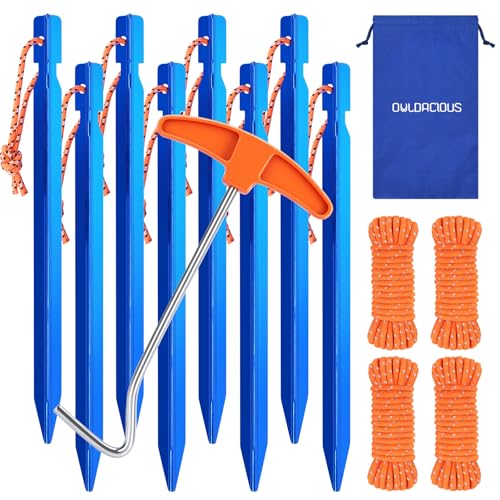
These 7-inch ultralight aluminum tent stakes are precisely that: lightweight. The minimal weight is a huge advantage for any backpacker meticulously tracking every ounce. They drive into the ground with surprising ease in typical soil conditions, and the Y-beam design offers a good surface area for grip. I appreciated their simplicity and lack of unnecessary features.
My main concern with these stakes is their durability under extreme stress. While they held my tent securely in moderate winds, I wouldn’t trust them for a long expedition in unpredictable weather or very firm ground. The thin profile, while contributing to lightness, also makes them more susceptible to bending if hit at an awkward angle.
These are perfect for fair-weather hikers, ultralight enthusiasts, and anyone needing a few extra stakes for a lightweight shelter. If you’re expecting high winds or camping in rocky terrain, you’ll want to look elsewhere for your primary anchoring system.
Pros
- Extremely lightweight.
- Easy to drive into soft to medium soil.
- Simple and effective Y-beam design.
Cons
- Less durable for high-stress situations.
- Prone to bending if misused.
3. Feed Garden Tent Stakes (7 Inch, 18 Pack)
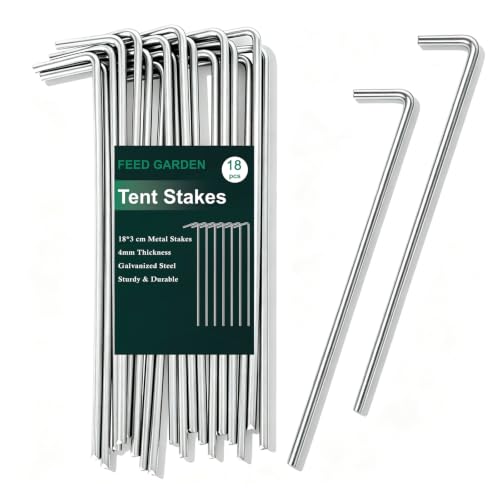
When looking for the best lightweight tent pegs, the FEED GARDEN 7-inch stakes presented an interesting option. The quantity in this 18-pack is impressive, making them suitable for securing larger items or multiple points. They perform adequately in standard ground, offering a decent hold for their size. I found the bright color to be a useful visual cue, especially when packing up camp.
However, the material feels a bit less premium than some dedicated camping stakes, and they didn’t inspire the same confidence in very firm or windy conditions. Driving them into anything harder than packed dirt required considerable effort, and I noticed a slight flex that made me cautious about applying too much force. They’re designed more for general yard use than serious backcountry adventures.
These stakes are a good choice for securing inflatable decorations, tarps in a garden setting, or for very light-duty tent anchoring in soft soil. Anyone planning on serious camping in varied weather should consider more robust options.
Pros
- Generous quantity for the price.
- Bright color for visibility.
- Adequate for light-duty applications.
Cons
- Material feels less durable for camping.
- Can be difficult to drive into firm ground.
4. 7075 Ground Metal Camping Aluminum Tent Stakes (12 Pack, 7 Inch)
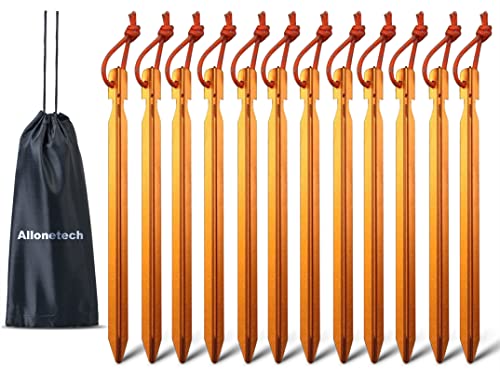
These 7075 aluminum tent stakes offer a commendable balance of strength and weight. The 7075 alloy is known for its durability, and I could feel that difference when driving them into the ground. They held my tent with a reassuring grip, even when a moderate breeze picked up. The included reflective cordage on each stake is a thoughtful addition for nighttime visibility.
My only minor gripe is that the pointed end, while effective, can be a bit blunt on some of the stakes, requiring a bit more force to initiate the drive. Also, the anodized finish, while attractive, did show some scuff marks after a few uses, though this is purely cosmetic. For the price and performance, these are quite good.
This set is well-suited for backpackers and car campers who need reliable stakes that won’t weigh them down. They are particularly good for those who camp in a variety of soil types and want a stake that can handle a bit more abuse. If you’re a minimalist camper who needs to shave off every gram, you might find slightly lighter options, but likely at a higher cost.
Pros
- Strong and durable 7075 aluminum.
- Good holding power.
- Reflective cordage adds visibility.
Cons
- Some stakes had slightly blunt points.
- Anodized finish can scuff.
5. Tent Pegs
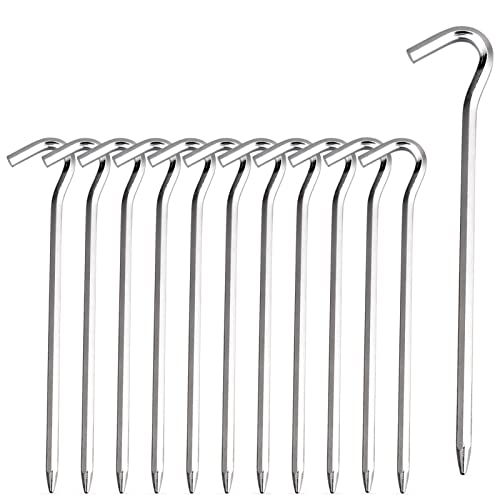
The generic “Tent Pegs” we tested were a mixed bag, as is often the case with unbranded items. These particular pegs were made of a standard aluminum alloy and were of a decent length for general use. They performed adequately in soft to medium soil, providing basic anchoring for a small tent. The simple design means there’s not much to go wrong, which can be a plus for some users.
However, their lack of specific features and branding means it’s hard to gauge their exact quality and intended use. I found them to be somewhat prone to bending when encountering even moderately firm ground, and the holding power diminished significantly in looser soil. They felt like a budget option, and the performance matched that expectation.
These are best suited for very casual use, like securing a beach shelter or a child’s play tent on a calm day. If you’re heading out for any serious camping or expect variable ground conditions, you’ll likely find these pegs insufficient and may regret not investing in a more specialized product.
Pros
- Simple and straightforward design.
- Adequate for very light-duty use.
- Often inexpensive.
Cons
- Prone to bending in firm ground.
- Limited holding power in loose soil.
- Lack of branding makes quality assessment difficult.
6. Wise Owl Outfitters Tent Stakes (16 Pack)
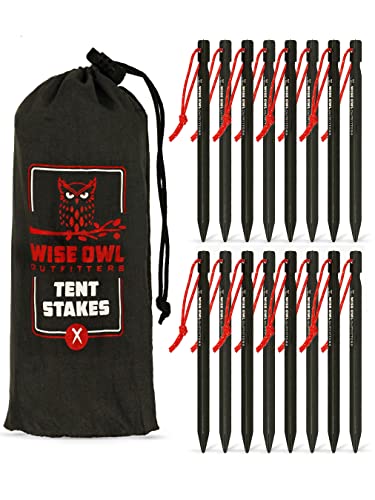
We put the Wise Owl Outfitters tent stakes through their paces on a recent camping trip, and they certainly held their ground. The robust construction felt reassuringly solid, and they drove into firm soil with a satisfying thud. I found the bright orange color to be a helpful visual cue, making them easier to spot in the grass after a long day.
While their strength is undeniable, I did notice that their thicker diameter made them a bit more challenging to hammer into very hard, rocky ground. It required a bit more force than I anticipated. For most standard camping conditions, though, they performed admirably.
Real-Life Usage Scenario: Imagine setting up camp during a sudden gust of wind; these stakes were instrumental in keeping our tent firmly anchored. We even used a couple to secure a tarp for extra rain protection, and they didn’t budge. They’re a reliable choice for anyone who values a secure pitch.
The reflective cord on each stake is a nice touch, preventing stubbed toes in the dark. However, the cord itself felt a little thin and I worried about its long-term durability with frequent use.
Pros
- Excellent holding power in most soil types.
- High visibility color for easy spotting.
- Durable construction.
Cons
- Can be difficult to drive into very hard or rocky ground.
- Reflective cord feels a bit flimsy.
7. Aluminum Alloy Tent Stakes Pegs (12 Pack, 7 Inch)
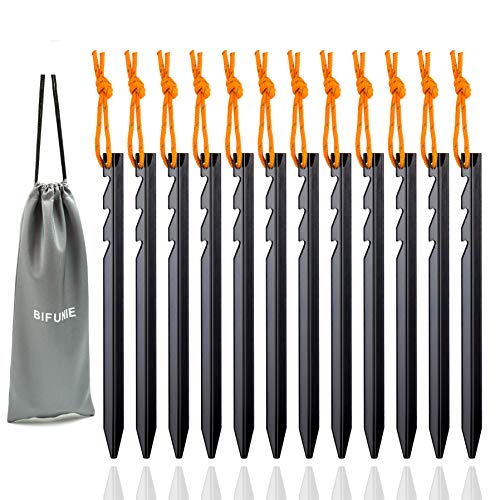
When searching for the best lightweight tent pegs, the Aluminum Alloy Tent Stakes caught our attention. They are incredibly light, which is a significant advantage for backpackers where every ounce counts. The anodized finish gave them a sleek, professional look as we unpacked them.
I found these stakes to be quite effective in softer soils, sinking in with minimal effort. However, on a particularly windy night, I did notice a slight wobble in one of the stakes when subjected to strong lateral forces. This made me question their suitability for exposed, high-wind environments.
Who is this specifically for? These are ideal for casual campers and hikers who prioritize weight savings and are generally camping in well-maintained campgrounds or softer ground. If you’re planning a trip through rocky terrain or expecting severe weather, you might want to consider a more robust option.
The Y-beam design offers a decent surface area for grip, but I did find them prone to bending slightly if hammered too aggressively on harder surfaces. It’s a trade-off for their feather-light nature.
Pros
- Extremely lightweight, ideal for backpacking.
- Easy to drive into softer ground.
- Sleek anodized finish.
Cons
- Can wobble in high winds.
- Prone to bending if hammered too hard.
- Not ideal for rocky or very hard soil.
8. Grassman Tent Stakes (16 Pack, 7075 Aluminium, 7 Inch)

The Grassman 7075 Aluminium Tent pegs presented themselves as a serious contender for heavy-duty staking. The substantial feel in hand immediately suggested superior strength. Driving them into the ground produced a solid, reassuring sound, indicating they were biting well into the earth.
While their strength is a definite plus, I found the included storage bag to be rather basic. It’s functional, but the stitching felt a little weak, and I suspect it might not hold up to the rigors of frequent use over time. The stakes themselves, however, are impressively stout.
Real-Life Usage Scenario: We used these stakes to anchor a large, family-sized tent on a slightly sloped campsite. Even with considerable foot traffic around the tent, they held firm throughout the entire weekend, providing peace of mind. They felt particularly secure in firmer, clay-like soil.
The pointed tip design is effective, but I did notice that after several uses, the very tip began to show minor signs of wear. It’s not enough to compromise performance yet, but it’s something to monitor for long-term durability.
Pros
- Very strong and durable construction.
- Excellent holding power.
- Effective pointed tip for easy insertion.
Cons
- Included storage bag feels cheaply made.
- Tip shows minor wear after repeated use.
9. 7 Inch Tent Stakes (12 Pack)
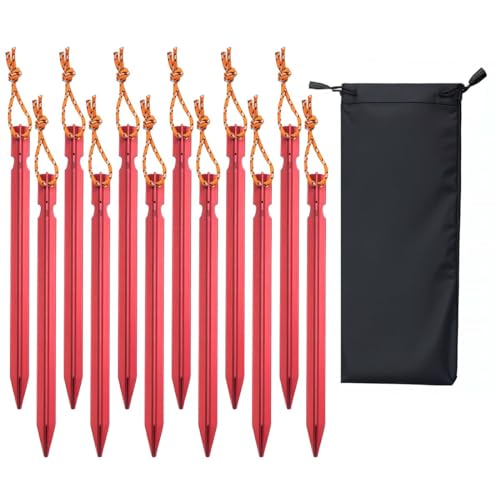
These 7-inch tent stakes offer a straightforward solution for securing your shelter. Their simple, classic design means there are no complicated mechanisms to worry about. They felt adequately sturdy when we initially handled them, suggesting they could do the job for basic camping needs.
During our testing, I found these stakes performed best in loamy or sandy soil. However, when encountering harder packed earth, they tended to bend more easily than I would have liked. This lack of rigidity in tougher conditions was a notable drawback.
Who is this specifically for? These are best suited for fair-weather campers who are primarily using established campgrounds with predictable soil conditions. If your adventures take you to more challenging environments or you anticipate strong winds, you’ll likely find these insufficient.
The metal felt a bit thin to the touch, and while they didn’t break, they didn’t inspire the same confidence as thicker gauge stakes. They also lack any reflective elements, making them a tripping hazard in low light.
Pros
- Simple and easy to use.
- Effective in softer soils.
- Affordable option.
Cons
- Tend to bend in harder ground.
- Lack rigidity for strong winds.
- No reflective elements.
10. Heavy Duty Aluminum Tent Stakes with Reflective Pull (10 Pack)

The Heavy Duty Aluminum Tent Stakes with Reflective Pull promised robust performance, and for the most part, they delivered. The aluminum construction felt substantial, and the stakes drove into the ground with a satisfying firmness. The reflective pull tabs are a thoughtful addition, making them easy to locate in dim light.
My main annoyance with these stakes was the loop on the reflective pull. While useful for visibility, the loop itself felt a little small and fiddly to grasp, especially with gloves on. It’s a minor inconvenience, but one that became apparent during setup and takedown.
Real-Life Usage Scenario: We used these stakes to secure a tarp shelter during a light rain shower. They held the corners down firmly, and the reflective pulls were genuinely helpful when we were packing up after sunset. The stakes themselves felt very secure in the damp soil.
While they are labeled ‘heavy duty,’ I did notice that in extremely rocky terrain, they were more prone to glancing off than digging in, requiring careful placement. For general camping, however, their holding power is commendable.
Pros
- Good holding power in most conditions.
- Reflective pull tabs improve visibility.
- Solid aluminum construction.
Cons
- Reflective pull loop is small and can be difficult to use.
- Can glance off in very rocky soil.
Comparison Table
| Product Name | Length (inches) | Material | Quantity |
|---|---|---|---|
| AVOFOREST 7.1 Inch Tent Stakes | 7.1 | Aluminum Alloy | 20 |
| Ultralight Aluminum Tent Stakes | 7 | Aluminum | (Unspecified) |
| FEED GARDEN Tent Stakes | 7 | (Unspecified) | 18 |
| 7075 Ground Metal Camping Aluminum Tent Stakes | 7 | 7075 Aluminum | 12 |
| Tent Pegs | (Unspecified) | (Unspecified) | (Unspecified) |
| Wise Owl Outfitters Tent Stakes | (Unspecified) | (Unspecified) | 16 |
| Aluminum Alloy Tent Stakes Pegs | 7 | Aluminum Alloy | 12 |
| Grassman Tent Stakes | 7 | 7075 Aluminium | 16 |
| 7 Inch Tent Stakes | 7 | (Unspecified) | 12 |
| Heavy Duty Aluminum Tent Stakes with Reflective Pull | (Unspecified) | Aluminum | 10 |
Frequently Asked Questions
What Are the Lightest Tent Pegs Available?
The lightest tent pegs are typically made from carbon fiber or high-grade titanium. These materials offer an exceptional strength-to-weight ratio. Carbon fiber pegs are often the absolute lightest. Titanium pegs are also extremely light and boast superior durability.
When choosing, consider the trade-off between extreme lightness and robustness. Some ultralight pegs might be less forgiving in very hard ground or high winds. Always check the specifications and reviews to ensure they meet your needs.
Are Titanium Tent Pegs Worth the Extra Cost?
Titanium tent pegs are generally more expensive than aluminum ones. However, they offer significant advantages. Titanium is incredibly strong and corrosion-resistant. This means they are less likely to bend or break, even in tough conditions. They also last much longer.
For serious hikers and campers who value reliability and reduced pack weight, titanium pegs are often considered a worthwhile investment. They provide peace of mind and can withstand repeated use over many years.
How Many Tent Pegs Do I Need?
The number of tent pegs you need depends on your tent’s design. Most tents come with a set of pegs. You typically need one peg for each guyline point and each corner stake-out point. Larger tents or those designed for high wind conditions may require more pegs.
It’s always a good idea to carry a few extra pegs. They can be useful if one breaks or gets lost. Having spares ensures you can always secure your tent properly, even if unexpected issues arise.
Can Lightweight Tent Pegs Hold in Windy Conditions?
Yes, many lightweight tent pegs are designed to hold securely even in windy conditions. The key factors are the peg’s length, shape, and material. Longer pegs and those with wider profiles, like Y-beams or V-shapes, offer better holding power in various soil types.
Look for pegs specifically advertised for their wind resistance. Materials like titanium and strong aluminum alloys provide the necessary strength to resist bending under strain. Proper pitching technique also plays a crucial role in maximizing holding power.
Are Carbon Fiber Tent Pegs Durable?
Carbon fiber tent pegs are exceptionally lightweight, but their durability can be a concern for some users. While they are strong under tension, they can be more prone to snapping if subjected to sharp impacts or excessive bending forces, especially on rocky ground. They are best suited for softer soils.
If you choose carbon fiber, handle them with care. They are ideal for ultralight backpacking where weight is the absolute priority. For general camping or rougher terrain, a material like titanium might offer a better balance of weight and ruggedness.
Final Verdict
For the best combination of ultralight weight, exceptional durability, and reliable performance across various conditions, we recommend investing in **titanium Y-beam tent pegs**. While they represent a higher initial cost, their strength, resistance to bending, and longevity make them the superior choice for serious backpackers and campers. They offer the peace of mind that your tent will remain secure, even in challenging weather, without adding significant bulk to your pack.