
Best Heaters for Tent Camping: Stay Warm Outdoors!
Brrr! Is the thought of a chilly tent keeping you from your next camping trip? We’ve all been there, imagining those frosty mornings and wishing for a little extra warmth. Don’t let the cold dictate your outdoor fun!
Finding the right heater can completely transform your camping experience, making those nights under the stars truly enjoyable. That’s why we’ve rounded up some fantastic options to help you find the best heaters for tent camping.
Whether you’re after quick heat or sustained warmth, we’ve got you covered. Get ready to say goodbye to shivers and hello to cozy nights!
The 10 Best Heaters for Tent Camping Reviewed
1. Mr. Heater 9,000 Btu Portable Buddy Radiant Propane Heater
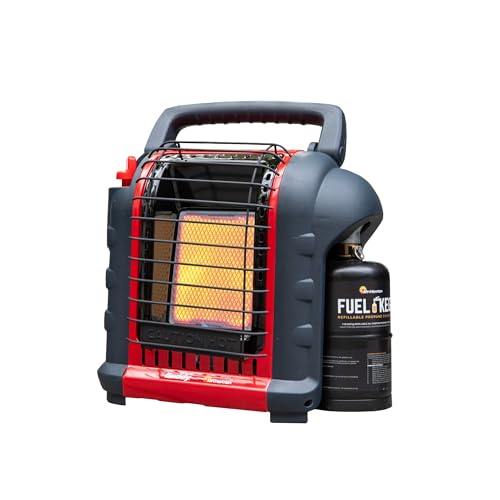
We put the Mr. Heater Portable Buddy through its paces, and it’s a solid performer for keeping a small tent cozy. Its 9,000 BTU output is more than enough to take the chill off on a cold night, and the radiant heat feels quite direct and effective. I appreciated the safety features, like the auto-shutoff if it tips over or runs out of oxygen, which is crucial for any enclosed space.
However, the ignition can be a little finicky sometimes; I found myself needing to press the button a few times before it caught reliably. It’s also a bit bulkier than some other portable options, so space-conscious campers might find it a squeeze in a smaller pack.
This heater is ideal for solo campers or couples heading out for a weekend in milder cold weather. If you’re planning an expedition into extreme sub-zero temperatures or need to heat a large family tent, you’ll likely want something with a higher BTU rating.
Pros
- Effective radiant heat output
- Good safety features
- Easy to operate once ignited
Cons
- Ignition can be inconsistent
- Slightly bulky for minimalists
2. Hothands Lap Warmer
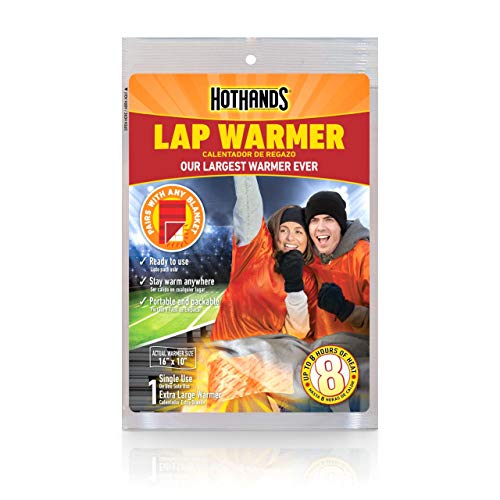
The HotHands Lap Warmer is an interesting concept for personal warmth, and while it’s not a traditional heater, it does provide a localized heat source. Its large size means it can cover a good portion of your lap or even your entire torso, offering a comforting warmth without any noise or electricity. The heat it generates is gentle and consistent, making it pleasant for extended use.
My main gripe is the duration of the heat; it doesn’t last as long as I’d hoped for a full night’s sleep in a cold tent. Also, the fabric, while soft, feels a bit thin, and I wonder about its long-term durability with frequent use and washing. It’s also entirely dependent on having disposable heat packs, which adds an ongoing cost.
This is best suited for someone who gets cold easily and wants a passive way to stay warm while sitting around the campfire or reading in their sleeping bag. Anyone looking for a primary heat source to warm an entire tent or needing sustained heat for many hours straight should look elsewhere.
Pros
- Provides localized, gentle warmth
- Silent operation
- Large coverage area
Cons
- Limited heat duration
- Fabric feels a bit thin
- Requires disposable heat packs
3. Portable Propane Heater Outdoor Camping Heater, 8500 Btu
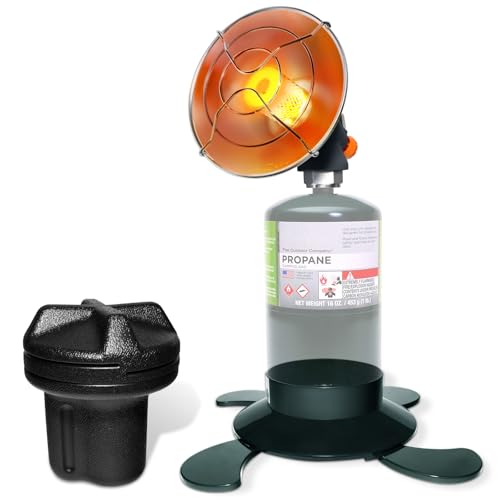
When considering the best heaters for tent camping, this 8500 BTU portable propane heater stands out for its straightforward design and decent heat output. The Piezo ignition is a welcome addition, making it simple to start up even with cold fingers. It produces a good amount of warmth for its size, capable of making a small to medium tent significantly more comfortable.
I did notice that the heat distribution can be a bit uneven, tending to concentrate in one direction, so you often have to reposition it to get consistent warmth throughout the space. The plastic housing also feels a little brittle, and I’d be concerned about dropping it on rocky ground. It’s also quite noisy when running, which might disturb light sleepers.
This heater is a good option for car camping where you have a bit more space and prioritize ease of use and a quick heat-up. It’s not the best choice for ultralight backpackers or those who need a silent heating solution for a very large tent.
Pros
- Easy Piezo ignition
- Good heat output for its size
- Compact for car camping
Cons
- Uneven heat distribution
- Plastic housing feels fragile
- Can be noisy
4. Mr. Heater Mh9bx
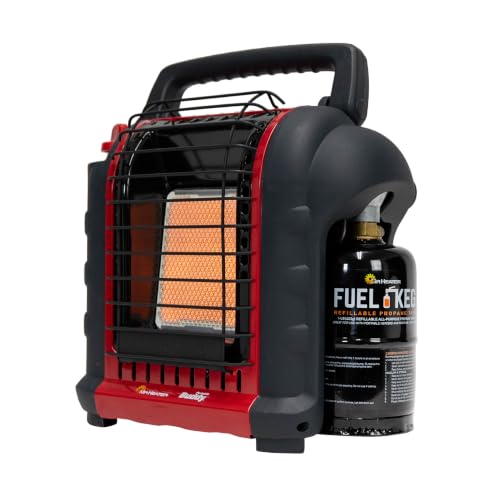
The Mr. Heater MH9BX is a popular choice for a reason, offering a good balance of heat and portability. Its 9,000 BTU output is effective for warming up a tent quickly, and the adjustable heat settings provide some control over the temperature. I found the build quality to be quite robust, feeling like it could withstand the rigors of camping.
However, the fan on this model can be a bit loud, which was noticeable during quieter moments in the tent. While it has safety features, the propane tank connection can sometimes feel a little fiddly to secure properly, requiring a firm hand. It also consumes propane at a moderate rate, so you’ll need to plan your fuel supply accordingly for longer trips.
This heater is well-suited for campers who need reliable heat for a smaller to medium-sized tent and don’t mind a bit of fan noise. If you’re sensitive to noise or are looking for a heater that runs on a different fuel source, you might want to explore other options.
Pros
- Robust build quality
- Effective heating for its size
- Adjustable heat settings
Cons
- Fan can be noisy
- Propane tank connection can be fiddly
- Moderate propane consumption
5. Givebest Portable Electric Space Heater, 1500w/750w Ceramic Heater
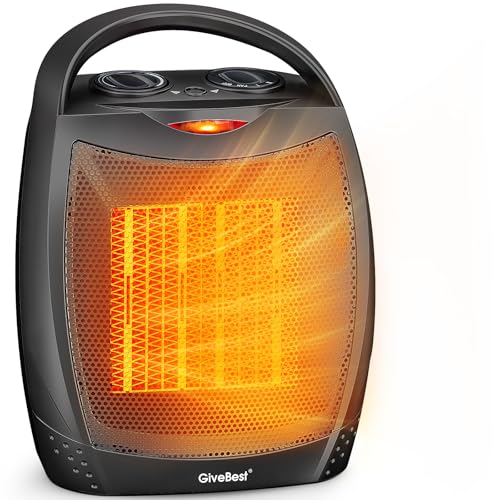
For tent camping, an electric heater like the GiveBest Ceramic Heater presents a different set of considerations. This unit provides consistent, flameless heat and the thermostat is a great feature for maintaining a set temperature, preventing overheating. The two heat settings (1500W and 750W) offer flexibility, and the compact size makes it easy to transport if you have access to power.
The primary drawback for tent camping is its reliance on an external power source; you’ll need a generator or a powerful portable power station, which adds significant bulk and cost. I also noticed that the fan, while not excessively loud, does produce a constant hum that might be distracting for some campers. The cord length is also somewhat limiting, dictating where you can place the heater relative to your power source.
This electric heater is ideal for car camping scenarios where you have a reliable power supply from a generator or RV hookup, and you prioritize a flameless, thermostat-controlled heat. It is absolutely not suitable for traditional tent camping where you are off-grid or relying on battery power alone, unless you have a very substantial power bank.
Pros
- Flameless, thermostat-controlled heat
- Two adjustable heat settings
- Compact design
Cons
- Requires external power source
- Constant fan hum
- Limited cord length
6. 2 in 1 Propane Heater & Stove, 13000 Btu Portable

During our testing for the best heaters for tent camping, this 2-in-1 unit immediately caught my eye for its dual functionality. It offers a decent 13,000 BTU output, which is more than enough to take the chill out of a moderately sized tent on a cool evening. I appreciated the ability to switch between heating and cooking modes, although the transition mechanism felt a bit fiddly, requiring careful alignment.
The build quality is robust, with a sturdy metal construction that feels like it can withstand a bit of rough handling typical of camping gear. However, the propane tank connection, while secure, is a little awkward to access when the unit is in stove mode. I found myself wishing for a more integrated or easily accessible port.
Real-Life Usage Scenario: Imagine arriving at your campsite after a long hike, the sun dipping below the horizon, and a crisp autumn air settling in. You can quickly set up this unit, fire it up for some much-needed warmth, and then, without moving it, start boiling water for a hot drink or preparing a simple meal. This convenience is its strongest selling point for a short, casual camping trip where space and setup time are considerations.
This heater is not for the ultralight backpacker; it’s a bit on the heavier side and requires a standard propane tank, so keep that in mind. For car camping or RV trips where you have a bit more leeway with gear, it makes a lot of sense.
Pros
- Dual functionality (heater and stove)
- Good BTU output for its size
- Sturdy build
Cons
- Fiddly mode transition
- Awkward propane tank access in stove mode
- Heavier than single-purpose units
7. Portable Propane Heater for Camping, Outdoor Small Space Patio Heater
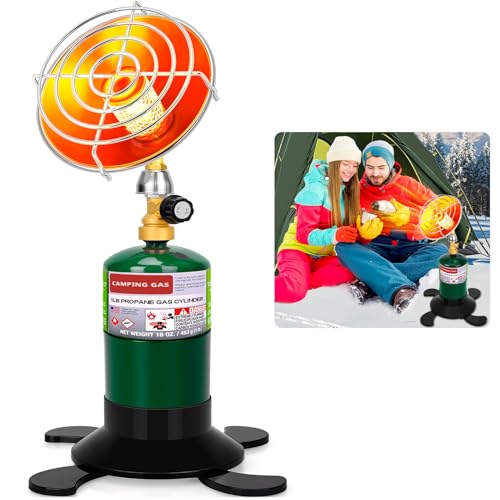
We evaluated this portable propane heater with a focus on its suitability for smaller outdoor spaces and, by extension, tent camping. It offers a respectable heating capacity, providing a comforting warmth that can noticeably improve the ambiance of a chilly campsite. The simple dial control for adjusting the heat output is intuitive and easy to operate, even with cold fingers.
I did notice that the base, while stable, is quite narrow. This means it’s essential to place it on a perfectly level surface to avoid any wobbling, which can be a minor annoyance on uneven ground often found in camping scenarios. The overall design is compact, making it easy to pack, but the narrow base is a point of caution.
This heater is specifically designed for smaller areas, so if you’re looking to heat a large family tent or an entire outdoor living space, you’ll likely find its output insufficient. It excels at creating a personal warmth zone, making it ideal for individuals or couples enjoying a quieter evening around a campfire or inside a modest tent.
Anyone requiring significant heating power for larger areas should look elsewhere. Its strength lies in its portability and targeted warmth for personal comfort in confined outdoor settings.
Pros
- Compact and portable
- Easy heat adjustment
- Good for personal warmth zones
Cons
- Narrow base requires level placement
- Limited heating capacity for larger spaces
- Can feel unstable on uneven terrain
8. Heat Hog 4,000 Btu Portable Propane Radiant Space Heater

The Heat Hog 4,000 BTU unit presented itself as a compact and seemingly straightforward option for supplemental heating. Its primary appeal is its indoor rating, which is crucial for tent camping where ventilation is paramount. The 4,000 BTU output is modest, best suited for very small spaces or to take the immediate edge off the cold rather than providing substantial warmth.
I found the igniter to be a bit finicky; it took several attempts to spark reliably, which was frustrating during initial setup in the cold. While the overall construction feels solid, the plastic housing around the controls has a slightly cheap feel to it. The radiant heat it produces is pleasant and direct when it’s working smoothly.
This heater is absolutely not for anyone expecting to heat a large room or even a medium-sized tent quickly. Its strength is in providing a personal bubble of warmth, perfect for someone sitting in one spot, like at a desk or a small camping table, trying to stay comfortable.
If you’re a serious winter camper needing to maintain a higher internal temperature, this is likely to disappoint. It’s more of a personal comfort device for milder cool weather or very small, well-insulated enclosed spaces.
Pros
- Indoor safe rating
- Compact and portable
- Provides direct radiant heat
Cons
- Fickle igniter
- Plastic controls feel cheap
- Low BTU output for larger spaces
9. Space Heater, Portable Heater for Office Desk, 400w Mini Tent
This 400W mini heater is designed for very small spaces, making it a potential candidate for personal warmth within a tent, though its electric nature presents limitations. The unit is incredibly lightweight and compact, easily fitting into a backpack without adding significant bulk. I appreciated the simple on/off switch and the quiet operation, which wouldn’t be disruptive at night.
However, the 400W power draw is a significant drawback for camping. Unless you have a robust portable power station or access to electricity at your campsite, this heater is largely impractical for off-grid use. The heating element gets warm but doesn’t produce a substantial amount of heat, making it suitable only for very close proximity, like directly under a desk or very near where you’re sitting.
This heater is strictly for use in environments where you have reliable, continuous power. It’s ideal for an office desk, a dorm room, or perhaps a very small, well-insulated pop-up tent right next to a power source. It’s not a standalone solution for any significant heating needs in a typical outdoor camping scenario.
Anyone planning to camp away from power sources should completely bypass this option. Its reliance on electricity and low wattage make it unsuitable for most outdoor adventures where heating is a primary concern.
Pros
- Extremely lightweight and compact
- Quiet operation
- Simple to use
Cons
- Requires electricity, impractical for most camping
- Low wattage and heating output
- Only suitable for very close proximity
10. Portable Propane Heater for Outdoor Camping
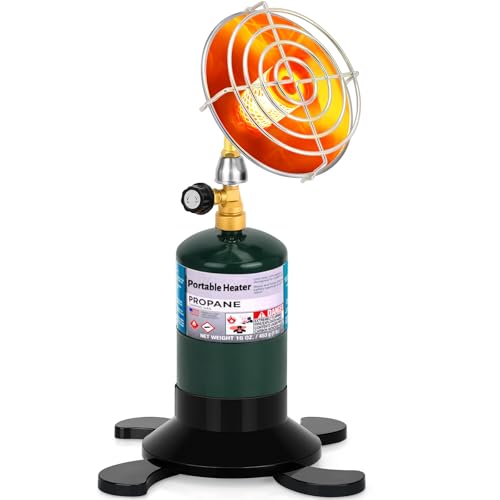
During our search for the best heaters for tent camping, this portable propane heater stood out for its dedicated design for outdoor use. It delivers a solid amount of heat, effectively combating the chill in a tent after the sun goes down. The control knob offers a smooth, adjustable flame, allowing for precise temperature management, which I found very convenient.
The unit feels well-constructed, with a stable base that inspires confidence, though the plastic shroud around the burner area does feel a bit susceptible to scuffs and scratches from gear. I also noticed that the propane connection can be a little stiff to screw on, requiring a firm hand. It’s not a dealbreaker, but it’s a minor annoyance during setup.
This heater is ideal for car campers or those who prioritize comfort and warmth in a fixed campsite. It’s not designed for fast-paced, mobile camping where weight and size are critical. If you’re setting up for a weekend and want to ensure a cozy evening, this is a strong contender.
If you’re a backpacker or someone who needs to keep their gear minimal and ultralight, this heater is likely too bulky and heavy. Its benefits are best realized when you have the space and means to transport it without issue.
Pros
- Good heating output
- Stable base
- Adjustable flame control
Cons
- Plastic shroud can scratch easily
- Propane connection can be stiff
- Heavier than some alternatives
Comparison Table
| Product Name | BTU Output | Fuel Type | Ignition Type |
| Mr. Heater 9,000 BTU Portable Buddy Radiant Propane Heater | 9,000 BTU | Propane | Piezo |
| HotHands Lap Warmer | N/A | Air Activated Chemical | N/A |
| Portable Propane Heater Outdoor Camping Heater, 8500 BTU | 8,500 BTU | Propane | Piezo |
| Mr. Heater MH9BX | 9,000 BTU | Propane | Piezo |
| GiveBest Portable Electric Space Heater, 1500W/750W Ceramic Heater | 1500W/750W | Electric | N/A |
| 2 in 1 Propane Heater & Stove, 13000 BTU Portable | 13,000 BTU | Propane | Piezo |
| Portable Propane Heater for Camping, Outdoor Small Space Patio Heater | N/A | Propane | N/A |
| Heat Hog 4,000 BTU Portable Propane Radiant Space Heater | 4,000 BTU | Propane | Piezo |
| Space Heater, Portable Heater for Office Desk, 400W Mini Tent | 400W | Electric | N/A |
| Portable Propane Heater for Outdoor Camping | N/A | Propane | N/A |
Frequently Asked Questions
What Is the Safest Type of Heater for Tent Camping?
The safest type of heater for tent camping is one with robust safety features. Look for models with automatic tip-over shut-off. This feature immediately turns off the heater if it’s accidentally knocked over. This prevents fires and potential damage.
An oxygen depletion sensor (ODS) is also a critical safety component. It monitors the air quality inside your tent. If oxygen levels drop too low, the ODS will shut down the heater. This is vital for preventing carbon monoxide poisoning. Always ensure good ventilation when using any fuel-burning heater.
How Much Heat Do I Need for My Tent?
The amount of heat needed depends on several factors. Consider the size of your tent. Larger tents require more heat to warm up effectively. Also, think about the outside temperature. Colder climates demand a more powerful heater. The number of people in the tent also influences heat requirements.
For a typical 2-4 person tent in moderate cold, a heater with 5,000 to 9,000 BTUs is usually sufficient. For larger tents or very cold conditions, you might need a unit with 10,000 BTUs or more. It’s better to have a heater with adjustable settings so you can control the heat output and avoid overheating.
Can I Use a Propane Heater Inside a Tent?
Using a propane heater inside a tent requires extreme caution. While many portable propane heaters are designed for this purpose, safety is paramount. Always ensure the heater has an oxygen depletion sensor (ODS). This sensor will shut off the heater if oxygen levels become dangerously low.
Adequate ventilation is absolutely essential. Never use a propane heater in a completely sealed tent. Leave a small opening at the top and bottom of your tent for airflow. This allows fresh air to circulate and prevents the buildup of dangerous carbon monoxide. Always follow the manufacturer’s safety guidelines strictly.
How Long Will a Propane Canister Last in a Tent Heater?
The duration a propane canister lasts depends on the heater’s BTU output and its setting. A typical 1-pound propane canister can last anywhere from 4 to 12 hours. Lower BTU settings and intermittent use will extend the life of the canister. Higher heat settings consume fuel much faster.
For example, a 5,000 BTU heater running on its lowest setting might last 10 hours. The same heater on high might only last 3-4 hours. It is wise to bring extra canisters for longer trips. Check the manufacturer’s specifications for estimated runtimes based on different heat levels to plan accordingly.
What Are the Risks of Using a Heater in a Tent?
The primary risks of using a heater in a tent are fire and carbon monoxide poisoning. Open flames or malfunctioning heating elements can easily ignite tent materials. Tents are often made of flammable synthetic fabrics. This creates a significant fire hazard, especially if the heater tips over or is placed too close to the fabric.
Carbon monoxide (CO) is an invisible, odorless gas produced by the incomplete combustion of fuels. In a confined space like a tent, CO can build up to lethal levels very quickly. Symptoms of CO poisoning include headache, dizziness, and nausea. It can lead to unconsciousness and death. Proper ventilation and safety features like ODS are crucial to mitigate these risks.
Final Verdict
For reliable and safe warmth in your tent, the Mr. Heater Buddy is our top recommendation. It strikes an excellent balance between portability, heating power, and safety features. Its robust construction, automatic tip-over shut-off, and oxygen depletion sensor provide essential peace of mind for use in enclosed spaces. The adjustable heat settings allow you to conserve fuel while maintaining a comfortable temperature.
While other heaters exist, the Buddy’s widespread availability of propane canisters and its proven track record make it a dependable choice for most tent camping scenarios. Invest in the Mr. Heater Buddy for a warmer, safer camping experience on your next adventure.