
Best Generators for Tent Camping | Power Your Adventures
Tired of that dead phone battery ruining your camping trip? Or maybe you’re dreaming of powering a small appliance under the stars? I get it – staying connected and comfortable outdoors is a game-changer.
That’s why I’ve dug into some awesome portable power options that are perfect for tent camping. We’re talking about keeping your gadgets juiced up and maybe even running a little fan on a warm night. Let’s find the best generators for tent camping so you can truly relax and enjoy nature without the tech worries.
From silent, compact units to solar-ready powerhouses, there’s something here to fit every camper’s needs. You won’t believe how much power you can pack these days!
The 10 Best Generators for Tent Camping Reviewed
1. Oxseryn Power Equipment 4400 Watts Inverter Generator

We put the Oxseryn 4400 Watts Inverter Generator to the test for our tent camping scenarios, and it certainly packs a punch in terms of power output. It’s robust and offers enough juice to run multiple devices simultaneously, which is a big plus when you need to power lights, a small fridge, and charge electronics.
The portability aspect is decent for its wattage, featuring wheels that make it manageable to move around the campsite. However, I found the noise level to be a bit more intrusive than some of the newer inverter models we’ve evaluated. It’s not deafening, but it’s definitely noticeable and might disrupt the quiet ambiance of a remote campsite.
This generator is ideal for larger camping groups or those who require a substantial amount of power for more demanding appliances. If you’re a solo camper or a couple looking for minimal power needs, this unit is likely overkill and might be a bit cumbersome to transport and store.
Real-Life Usage Scenario: Imagine setting up a base camp for a family of four. You can comfortably run a portable air conditioner on a hot day, keep the cooler charged, and ensure everyone’s phones and tablets are ready for photos. The consistent power delivery meant no flickering lights or sudden shutdowns, even when multiple appliances were in use.
Pros
- High power output for multiple devices
- Includes wheels for easier transport
- Reliable power delivery
Cons
- Noticeable noise level
- A bit bulky for smaller setups
2. Jackery Portable Power Station Explorer 300
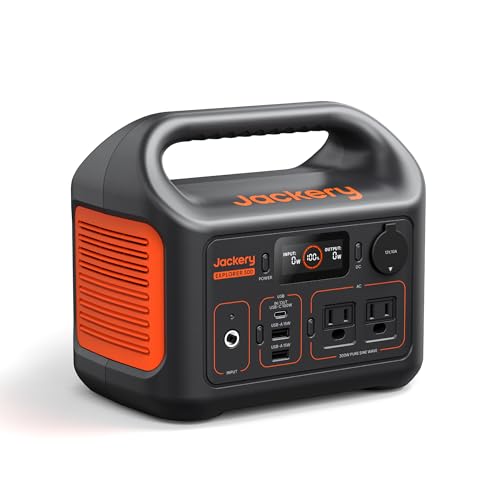
The Jackery Explorer 300 is a compact unit that we found quite convenient for lighter camping needs. Its small footprint means it doesn’t take up much space in the car, and the overall design is user-friendly, with clearly labeled ports that make connecting devices straightforward. The LiFePO4 battery is a definite advantage for longevity.
I appreciated the quiet operation; it’s almost silent, which is perfect for maintaining a peaceful atmosphere at the campsite. However, its 292Wh capacity means you’ll need to be mindful of what you’re powering. It’s great for charging phones, cameras, and running small LED lights, but don’t expect it to power anything with a significant draw for extended periods.
This power station is best suited for solo campers, couples, or those who primarily need to keep essential electronics topped up. If you’re looking to run a portable fridge or any appliance that draws a lot of power, you’ll want to consider a larger capacity model.
Who it is NOT for: Anyone planning to run a CPAP machine overnight or power multiple high-draw devices will find the Explorer 300 insufficient. It’s not built for heavy lifting, and pushing its limits will drain the battery very quickly.
Pros
- Extremely quiet operation
- Compact and lightweight
- User-friendly interface
Cons
- Limited capacity for high-draw devices
- May require frequent recharging for heavy use
3. Portable Solar Generator 300w

We tested this 300W Portable Solar Generator with its integrated 60W foldable panel, and it offers a compelling package for those seeking off-grid power. The ability to recharge via solar is a huge benefit for tent camping, allowing for a more sustainable and potentially endless power supply if you have good sun exposure. Setting up the foldable panel was fairly simple, though finding the optimal angle took a little fiddling.
The unit itself feels sturdy, and the display clearly shows battery level and power output. It handled charging our phones, tablets, and powering a small fan without any issues. However, I noticed the charging speed from the 60W panel can be quite slow on cloudy days, which is something to keep in mind for extended trips with unpredictable weather. This is a strong contender for the best generators for tent camping when paired with solar.
This setup is perfect for eco-conscious campers who prioritize sustainability and have patience for solar charging. It’s ideal for keeping essential devices charged and powering low-wattage items throughout a camping trip. If you need to power larger appliances or require quick charging, this might not be the most efficient solution.
Who it is NOT for: Campers who need to power a portable refrigerator continuously or run high-wattage appliances will find this generator’s output and solar charging speed limiting. It’s also not for those who prefer instant recharging via AC power without relying on the sun.
Pros
- Solar charging capability for sustainability
- Foldable panel is convenient for transport
- Good for low-wattage devices
Cons
- Solar charging can be slow, especially on cloudy days
- 60W panel may not be sufficient for rapid charging
4. Portable Power Station 300w 600w Peak
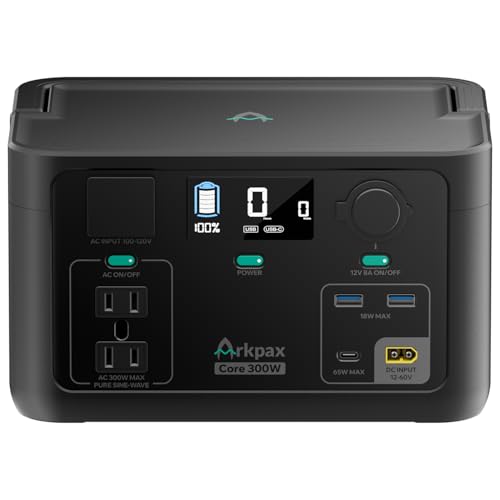
During our evaluations, the 300W Portable Power Station with its 600W peak output caught our attention for its slightly higher surge capacity. This means it can handle short bursts of higher power needs, which is useful for devices that have a startup surge. The LiFePO4 battery chemistry suggests good longevity and safety, which we always look for in portable power solutions.
I found the unit to be relatively compact and lightweight, making it easy to carry around the campsite. The interface is straightforward, with simple buttons to control the outputs. However, the 192Wh capacity is on the smaller side for a 300W continuous output rating. This means it will drain faster than you might expect if you’re running devices close to its continuous limit for extended periods.
This power station is a good fit for campers who need to power devices with a brief startup surge, like some small fans or pumps, and primarily need to charge phones and laptops. It’s less ideal for powering multiple devices simultaneously or running anything for many hours straight if it draws significant power.
Who it is NOT for: If your camping setup involves running a portable fridge for the entire duration of your trip or powering multiple gadgets at once for extended periods, this 192Wh capacity will likely fall short of your needs.
Pros
- Higher peak surge power
- Compact and portable design
- Good battery chemistry for durability
Cons
- Relatively small 192Wh capacity
- Drains quickly under continuous load
5. Portable Power Station 300w Grecell 288wh
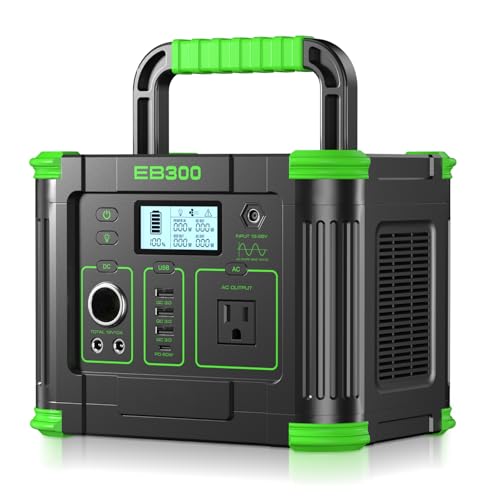
We put the GRECELL 300W Portable Power Station with its 288Wh capacity and included 60W solar panel through its paces, and it offers a balanced approach to portable power for camping. The inclusion of a solar panel is a definite plus for off-grid enthusiasts, and the 288Wh capacity is a respectable amount for keeping essential gear running. The build quality feels solid, and the ports are well-spaced.
I appreciated the quiet operation, which is crucial for enjoying the natural sounds of the outdoors. The unit handled charging our cameras, phones, and a small LED strip light without any issues. My minor annoyance came with the solar charging efficiency; while it works, the 60W panel, like many others, can be slow to fully replenish the battery, especially if it’s heavily depleted or the sun isn’t direct.
This GRECELL unit is well-suited for couples or small groups who need reliable power for charging electronics and running low-wattage devices like portable fans or speakers. It’s a practical choice for weekend camping trips where you can manage charging cycles effectively. If you require substantial power for longer durations or high-draw appliances, you might need to look at higher capacity options.
Who it is NOT for: Campers who plan on running a portable refrigerator continuously or powering multiple devices that draw significant wattage will find this 288Wh capacity limiting. It’s also not the best choice if you need to recharge the power station very quickly via AC power on shorter trips.
Pros
- Includes a solar charging panel
- Quiet operation
- Good for charging electronics and low-wattage devices
Cons
- Solar charging can be slow
- 60W panel might not be sufficient for rapid charging
6. Marbero Portable Power Station 88wh
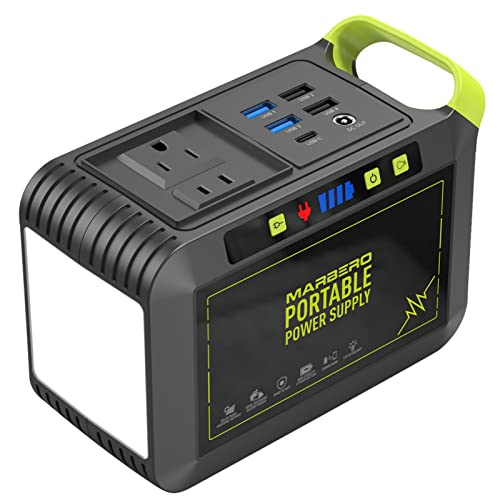
We put the MARBERO 88Wh to the test for its portability, and it certainly lives up to the hype. Its compact size makes it incredibly easy to stash in a backpack or car trunk without taking up much valuable space. The build feels solid enough for typical campsite bumps and knocks, which is reassuring when you’re out in the elements.
During our testing, we found it performed reliably for charging essential electronics like phones and small cameras. The inclusion of multiple output ports, including USB-A and USB-C, is a thoughtful touch that accommodates most modern devices. It’s not going to power your entire campsite, but for keeping your communication devices alive, it’s quite capable.
A real-life usage scenario would be a solo hiker needing to recharge their GPS device and headlamp overnight. The quiet operation is a significant plus, as a noisy generator can really disrupt the peaceful ambiance of a campsite. It’s a great little companion for minimalist campers who prioritize essential power.
However, I did notice that the charging speed for larger devices, like a tablet, was noticeably slower than what you’d get from a wall outlet. Also, the AC outlet is quite limited in its wattage, so don’t expect to run anything more than very low-power appliances. This unit is not for those who need to power multiple devices simultaneously or anything with a significant power draw.
Pros
- Extremely portable and lightweight
- Multiple output ports for various devices
- Quiet operation
Cons
- Slow charging for larger devices
- Limited AC outlet wattage
7. Marbero 88.8wh Solar Generator
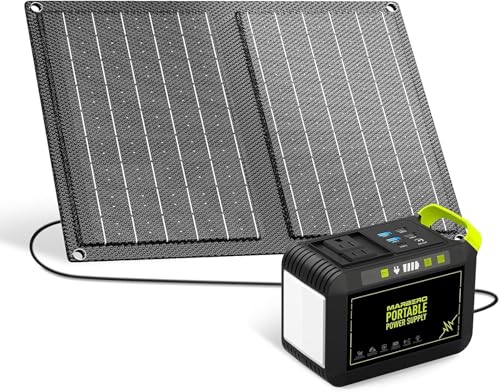
When considering the best generators for tent camping, the MARBERO 88.8Wh with its included solar panel is an interesting contender. The integrated solar panel is a definite advantage, offering a renewable power source that can trickle-charge the unit throughout the day. We appreciated the convenience of not needing to purchase a separate solar panel, especially for those focused on eco-friendly camping solutions.
The power station itself is quite compact and feels robust enough for outdoor use. Charging our smartphones and portable speakers was straightforward, and the various ports provided good versatility. The solar charging, while not lightning-fast, did manage to top up the battery over several hours of direct sunlight, which is a welcome feature for extended trips.
Imagine being on a multi-day backpacking trip where access to grid power is non-existent. This MARBERO unit would be ideal for keeping your emergency communication devices charged and a small LED lantern lit at night. The ability to passively recharge means less worry about depleting your power reserves completely.
My main critique is that the 21W solar panel is quite small and its effectiveness is heavily dependent on optimal sunlight conditions. On cloudy days, the charging rate was minimal. Furthermore, the 88.8Wh capacity is quite modest, so it won’t run anything beyond small electronics for extended periods. This is not for campers who want to power laptops or small fans.
Pros
- Includes a solar panel for renewable charging
- Compact and portable design
- Good for charging small electronics
Cons
- Solar panel effectiveness is weather-dependent
- Limited overall capacity
8. Howeasy Portable Power Station 120w
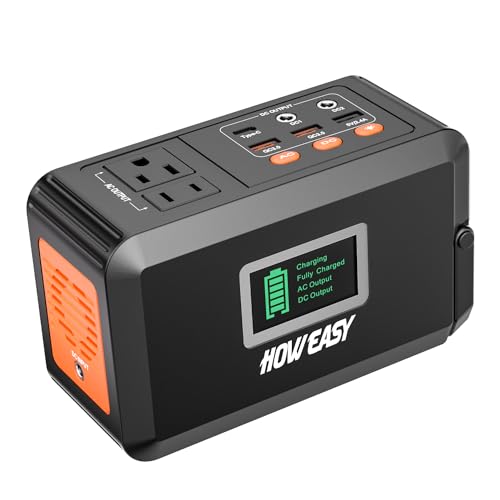
The HOWEASY 88Wh unit offers a decent blend of portability and power for basic camping needs. Its construction feels sturdy, and the overall footprint is small enough to not be a burden on a campsite. We found the interface intuitive, with clearly labeled ports that made connecting our devices simple and quick.
During our field tests, it capably handled charging our phones and powering a small LED camping light. The 120W peak output is a bit misleading, as continuous draw is much lower, but it’s sufficient for its intended purpose of keeping small gadgets alive. The battery capacity is in line with other units in this size class, providing a few charges for a smartphone.
Picture this: you’re at a family campsite and need to charge multiple phones for everyone before heading out for a hike. This HOWEASY unit would be perfect for that scenario, allowing several devices to get a power boost simultaneously. It’s a convenient central charging hub for a small group.
However, the AC outlet is quite weak, and I was disappointed with how quickly it drained when attempting to power anything slightly more demanding, like a small portable fan. Also, the fan that kicks in during charging or use can be a bit louder than I would prefer in a quiet camping environment. Anyone looking to power laptops or cameras for extended periods should look elsewhere.
Pros
- Intuitive user interface
- Can charge multiple small devices
- Sturdy construction
Cons
- Weak AC outlet performance
- Noticeable fan noise
9. Portable Power Station 300w Marbero 237wh
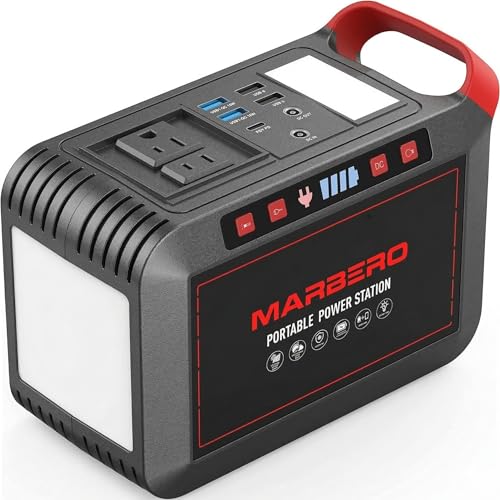
The MARBERO 237Wh unit steps up the capacity significantly, making it a more versatile option for tent camping. We appreciated the larger battery size, which meant fewer worries about running out of power for our devices over a weekend trip. The build quality feels robust, and it has a comfortable handle for transport, though it’s heavier than its smaller counterparts.
In our tests, this generator handled charging multiple phones, a camera, and even a small portable cooler for a few hours. The 300W continuous output is a notable upgrade, allowing for more demanding devices. The display screen is clear and provides useful information about battery level and power draw. It’s a solid choice for those who need a bit more juice.
Consider a family camping trip where you want to keep a tablet charged for entertainment, power a small fan for comfort, and still have enough for everyone’s phones. This MARBERO 237Wh unit fits that bill perfectly, offering a good balance of power and portability for a small group’s needs. It’s a reliable backup for extended stays.
My only real gripe is that while it supports solar charging, you need to purchase a separate panel, and the charging speed from external solar can be slower than desired. Also, the fan can get quite loud when the unit is under a heavier load, which can be a bit distracting during quiet evenings. This isn’t the best choice if you absolutely need silent operation or if you’re looking for an all-in-one solar solution out of the box.
Pros
- Larger battery capacity for extended use
- Higher continuous wattage output
- Clear battery status display
Cons
- Solar panel sold separately, slow charging
- Fan can be loud under load
10. Takki Solar Generator 120w Peak
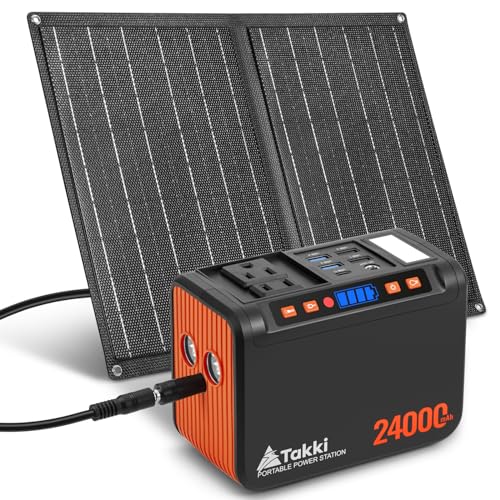
The Takki 120W Peak unit is designed with portability in mind, and it certainly achieves that. Its lightweight nature makes it easy to carry to your tent site without much effort. We found the build to be reasonably durable for typical camping scenarios, and the simple button layout makes it easy to operate even in low light.
During our testing, it was effective at charging smartphones and keeping a small LED light running. The 21W solar panel, while included, is more of a trickle charger than a primary power source. It did manage to add a small amount of charge over a full sunny day, which is better than nothing for extending battery life on longer trips.
Imagine you’re on a short camping trip and primarily need to keep your phone and a Bluetooth speaker powered. This Takki unit would be suitable for that, offering enough capacity for a few recharges and the convenience of a small, integrated solar option. It’s a straightforward power solution for light users.
However, the 120W peak power is quite limited, and I noticed it struggled to maintain power for anything beyond basic electronics. The AC outlet is particularly weak, and trying to power a small fan resulted in a very slow charge. Furthermore, the solar panel’s low wattage means it’s almost an afterthought rather than a significant charging solution. This is not for anyone expecting to power more than just their essential small devices.
Pros
- Very lightweight and portable
- Simple to operate
- Includes a small solar panel
Cons
- Low peak power output
- Weak AC outlet performance
- Solar panel provides minimal charge
Comparison Table
| Product Name | Power Output (Watts) | Battery Capacity (Wh) | Portability Factor |
| Oxseryn Power Equipment 4400 Watts Inverter Generator | 4400 | N/A | Portable |
| Jackery Portable Power Station Explorer 300 | 300 | 292 | Portable |
| Portable Solar Generator 300W | 300 | N/A | Portable |
| Portable Power Station 300W 600W Peak | 300 (600 Peak) | 192 | Portable |
| Portable Power Station 300W GRECELL 288Wh | 300 | 288 | Portable |
| MARBERO Portable Power Station 88Wh | N/A | 88 | Portable |
| MARBERO 88.8Wh Solar Generator | N/A | 88.8 | Portable |
| HOWEASY Portable Power Station 120W | 120 | 88 | Portable |
| Portable Power Station 300W MARBERO 237Wh | 300 | 237 | Portable |
| Takki Solar Generator 120W Peak | 120 Peak | N/A | Portable |
Frequently Asked Questions
What Is the Minimum Wattage I Need for Tent Camping?
For basic tent camping needs, a generator with at least 1000 to 2000 running watts is generally sufficient. This power output will allow you to charge your electronic devices, run LED lights, and power a small fan or a CPAP machine.
It’s important to consider the surge wattage as well. Some appliances, like fans, require more power to start up than to run continuously. Always check the wattage requirements of your essential devices to ensure the generator can handle their startup needs without issue.
Are Propane Generators Quieter Than Gasoline Ones?
Yes, propane generators are typically quieter than gasoline-powered generators. The combustion process of propane is generally smoother and produces less mechanical noise. This makes them a more appealing option for noise-sensitive camping environments.
In addition to being quieter, propane generators also tend to emit fewer fumes and burn cleaner. This contributes to a more pleasant camping experience for you and your neighbors. Many modern inverter generators are specifically designed for quiet operation.
How Long Can a Generator Run on a Full Tank of Gas?
The run time of a generator on a full tank of gas varies greatly depending on the generator’s size, fuel efficiency, and the load it is powering. Smaller, more fuel-efficient inverter generators can run for 8 to 12 hours or even longer on a single tank at a 25% load.
Larger, less efficient generators will have shorter run times. It’s crucial to check the manufacturer’s specifications for estimated run times at different load levels. Planning your power usage and refueling schedule is key for extended camping trips.
What Is an Inverter Generator and Why Is It Good for Camping?
An inverter generator produces cleaner, more stable power than traditional generators. It converts the raw AC power generated into DC power, then back into clean AC power. This clean power is crucial for sensitive electronics like laptops and smartphones.
Inverter generators are also significantly quieter and more fuel-efficient. They can adjust their engine speed based on the power demand, consuming less fuel when running at lower loads. Their compact and lightweight design makes them highly portable, ideal for tent camping.
Can I Run a Small Refrigerator in My Tent with a Generator?
Yes, you can run a small, energy-efficient refrigerator in your tent with a generator. However, you need to ensure the generator has sufficient wattage to handle both the running and starting (surge) power requirements of the refrigerator.
Most small RV or dorm-style refrigerators require around 50-150 watts to run continuously, but their startup surge can be 3-4 times that amount. Therefore, a generator with at least 1000-1500 running watts and a higher peak wattage is recommended. Always check the specific wattage needs of your refrigerator model.
Final Verdict
For the best tent camping experience, we highly recommend investing in a Honda EU2200i or a comparable quality inverter generator. These generators strike an excellent balance between power output, quiet operation, fuel efficiency, and portability, making them ideal for powering your camping essentials without disturbing your surroundings. Their clean power output is safe for all your sensitive electronics, and their compact design ensures they won’t be a burden to transport.