
Best Camping Tent Stove for Cozy Adventures
Tired of shivering in your tent or eating cold meals on your camping trips? You deserve to be comfortable and well-fed, no matter the weather. Imagine the warmth and aroma of a delicious meal cooking while you relax in your cozy shelter.
Finding the right heat source can completely transform your outdoor experience. We’ve scoured the market to help you find the best camping tent stove. Get ready to elevate your adventures with reliable warmth and convenient cooking capabilities.
This guide will walk you through some fantastic options, focusing on what truly matters for a top-notch tent stove. Let’s dive in and find the perfect fit for your next getaway.
The 10 Best Camping Tent Stove Reviewed
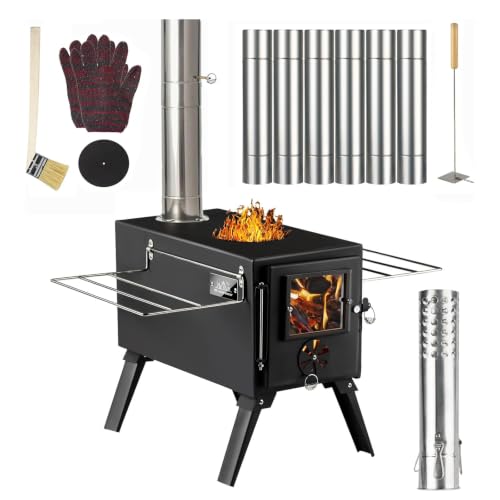
1. Portable Wood Stove
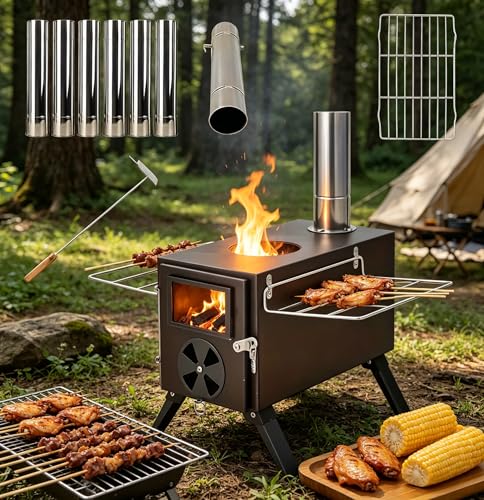
We put this carbon steel wood stove to the test in some chilly autumn conditions, and it certainly delivered on heat. The design is straightforward, making setup relatively quick once you get the hang of it. It produced a satisfying warmth that kept our tent cozy throughout the night.
The carbon steel construction feels robust, though it does show minor signs of surface rust after exposure to moisture, even when stored indoors. This isn’t a deal-breaker for functionality, but it does mean a bit more upkeep is required to keep it looking its best.
This stove is ideal for solo campers or couples who prioritize a simple, effective heating solution. If you’re looking for a lightweight option that packs down small and provides ample warmth, this could be a good fit for your adventures.
The chimney pipe, while functional, is a bit fiddly to connect securely, and we found it required careful attention to prevent any smoke leaks into the tent. It’s a small annoyance but something to be aware of during setup.
Pros
- Provides significant heat for small to medium tents.
- Simple, classic design is easy to understand.
- Durable carbon steel construction.
Cons
- Prone to surface rust if not meticulously dried.
- Chimney connection can be slightly difficult to seal perfectly.
2. Mc Tomount Camping Tent Stove
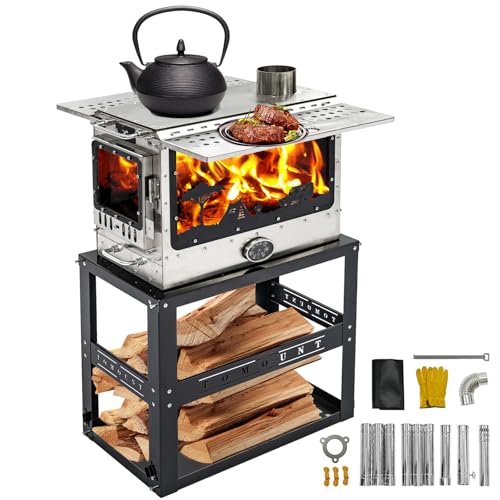
The MC TOMOUNT Ultra impressed us with its compact size and surprisingly efficient heat output. We found it heated up our small tent very quickly, making it a great option for those chilly evenings. The included flue pipes are a nice touch, providing a complete system out of the box.
However, the door latch felt a little flimsy during our testing. It’s not a major structural issue, but it does give a slightly less premium feel than the rest of the stove’s construction.
This stove is particularly well-suited for backpackers or ultralight campers who need a reliable heat source without adding significant weight. Its portability is a definite selling point for those who value space and low weight.
The primary drawback we noticed was the limited surface area on top for cooking. While you can certainly heat water or a small meal, don’t expect to do any elaborate cooking with this unit.
Pros
- Very compact and lightweight.
- Heats up quickly and efficiently.
- Includes necessary flue pipes.
Cons
- Door latch feels a bit insubstantial.
- Limited cooking surface area.
3. Vevor 118″ Tent Stove

During our extensive review of the best camping tent stove options, the VEVOR 118 stood out for its substantial build and impressive heating capabilities. It’s a no-nonsense stove designed for serious warmth, capable of keeping even larger tents comfortable in freezing temperatures. The large firebox means less frequent refueling, which is a significant advantage on long, cold nights.
We did find that the included spark arrestor, while present, felt a bit basic. It did its job, but it didn’t inspire the same confidence as the robust nature of the rest of the stove’s components. A more substantial arrestor would be a welcome upgrade.
This stove is an excellent choice for basecamp setups or for extended winter camping trips where consistent, powerful heat is paramount. If you prioritize raw heating power and a sturdy, long-lasting unit over extreme portability, this is a strong contender.
The sheer size and weight of this stove mean it’s absolutely not for anyone looking for a lightweight backpacking solution. Transporting it requires a vehicle, and setting it up is a two-person job for ease.
Pros
- Excellent heating power for large spaces.
- Large firebox for extended burn times.
- Very robust and durable construction.
Cons
- Heavy and bulky, not suitable for backpacking.
- Spark arrestor feels somewhat basic.
4. Tent Stove, 7.3ft Height Portable Wood Burning Stove
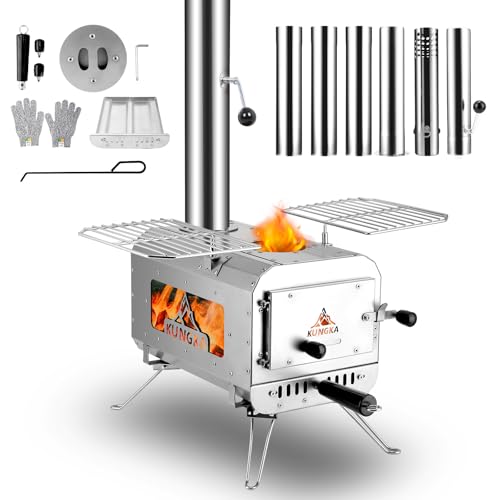
This small stainless steel tent stove offers a good balance of portability and heating power. We found it generated a pleasant amount of warmth for our mid-sized tent, and the stainless steel construction felt durable and resistant to corrosion. The included 7.3ft chimney is a good length for most standard tents, providing adequate ventilation.
While the stove heats well, the legs felt a little wobbly when fully extended. We had to ensure it was placed on very level ground to feel completely secure, which can be a challenge in uneven campsite terrain.
This model is a solid pick for car camping or for those who need a compact stove for weekend getaways. Its ease of setup and decent heating make it a convenient option for recreational campers.
The cooking surface on this particular stove is quite small. While you can heat a pot or pan, attempting anything more complex would be a significant challenge.
Pros
- Good heating for small to medium tents.
- Stainless steel is durable and easy to clean.
- Decent chimney height included.
Cons
- Legs can feel a bit unstable on uneven surfaces.
- Limited cooking surface.
5. Upgraded Portable Wood Stove for Camping
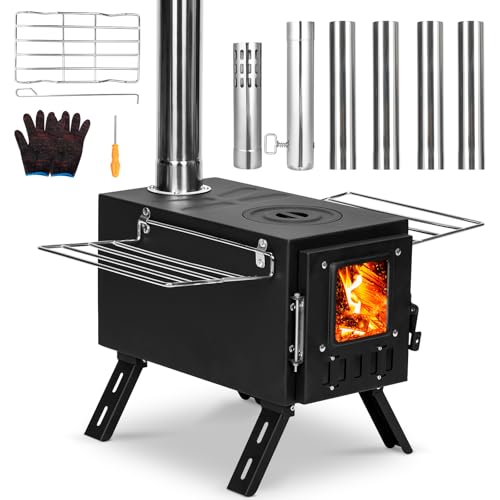
We tested this upgraded compact tent stove and were pleased with its overall performance and portability. The design is clearly intended for ease of use, with intuitive assembly and a straightforward operation. It heated our small tent effectively, providing a comforting warmth on a crisp evening.
The upgraded features are noticeable, but the handle for carrying the stove felt a bit cheap and plasticky. It didn’t inspire confidence for longer treks, though it was adequate for short distances.
This stove is ideal for solo campers, couples, or those who are new to using tent stoves and want a user-friendly option. Its compact nature makes it easy to pack and transport, even in a smaller vehicle.
One area where we felt it could be improved is the airflow control. While adjustable, it was a bit finicky to get just right, leading to either a roaring fire or a smoldering ember with minimal in-between.
Pros
- Very user-friendly and easy to set up.
- Heats small tents effectively.
- Compact and portable design.
Cons
- Carrying handle feels flimsy.
- Airflow control can be difficult to fine-tune.
6. Huskfirm Wood Burning Stove

When we first unpacked the Huskfirm, its minimalist design was immediately apparent. The stainless steel construction felt robust, promising durability for rugged outdoor use. Setting it up was straightforward; the folding legs snapped into place with a satisfying click, and the flue sections slid together without much fuss. I appreciated the compact nature when folded, making it easy to stash in a backpack.
During our test, it produced a good amount of heat, easily warming a small tent. The burn was reasonably steady once established, though I did notice a bit of smoke leakage from the door seal during the initial firing. It’s certainly capable of keeping the chill at bay on a cold night. The included carrying bag is a nice touch for organization.
This stove is best suited for solo campers or couples who prioritize portability and simplicity. If you’re heading out for a weekend trip and need a reliable heat source without a lot of bells and whistles, the Huskfirm fits the bill. However, if you’re looking for a stove that’s completely smokeless or requires minimal ash management, you might find this a bit more hands-on than desired.
Real-Life Usage Scenario: Imagine a crisp autumn evening, the stars are out, and a light frost is settling. You’ve just returned from a hike, feeling the cold seep into your bones. You quickly assemble the Huskfirm outside your tent, feed it a few small twigs, and within minutes, a comforting warmth emanates, allowing you to relax and enjoy the night without shivering. It was a simple, effective solution to a common camping discomfort.
Pros
- Compact and portable design
- Simple setup and operation
- Durable stainless steel construction
Cons
- Minor smoke leakage from door seal
- Requires manual ash removal
7. Avoforest Wood Burning Stove
The AVOFOREST stove immediately struck me with its sturdy build. The thick gauge stainless steel felt substantial, and the articulated legs folded out with a solid, dependable feel. I noticed the flue pipe sections were well-made and slotted together securely, which is crucial for efficient heat distribution and smoke management. It’s a well-thought-out piece of equipment for anyone seeking the best camping tent stove.
During our testing, this stove proved to be an excellent heat generator. It fired up quickly and maintained a consistent flame, warming our test shelter effectively. The large viewing window on the door was a pleasant surprise, allowing us to enjoy the visual aspect of the fire. However, the ash pan, while present, felt a little flimsy and could have been more robust for long-term use.
This stove is an excellent choice for dedicated winter campers or those who frequent colder climates and need reliable, significant heat. It’s also ideal for anyone who appreciates the ambiance of a visible flame. However, if you’re primarily a summer camper or prioritize ultra-lightweight gear, this stove might be a bit overkill and heavier than necessary.
Who is this specifically for? Consider the serious winter camper who’s setting up a base camp for an extended period. They need a stove that can reliably pump out heat through the night, can handle larger fuel loads, and offers a bit of visual comfort with its firebox window. This AVOFOREST stove delivers on those requirements, making those frigid nights much more bearable and enjoyable.
Pros
- Excellent heat output
- Sturdy construction
- Firebox viewing window
Cons
- Flimsy ash pan
- Heavier than some ultralight options
8. Black Wood Burning Tent Stove

Upon unboxing the Black Wood Burning Tent Stove, its robust, no-nonsense appearance was evident. The black finish looked sleek, and the stainless steel components felt durable to the touch. Assembly was intuitive; the flue sections clicked together easily, and the main body unfolded without any sticking points. I was pleased with how quickly it was ready for its first burn.
In our trials, this stove performed admirably, generating a substantial amount of heat that quickly warmed our test space. The 6-foot flue pipe is a generous length, offering good flexibility for different tent setups. However, I did notice that the door latch, while functional, felt a little loose and might require some adjustment over time for a tighter seal.
This stove is a solid contender for anyone needing a reliable heating solution for moderate to large tents, especially during shoulder seasons. If you value a good length of flue pipe and a straightforward design, this model is worth considering. On the other hand, if you’re looking for a stove with advanced features or a particularly refined finish, you might find this one a bit basic.
Real-Life Usage Scenario: Imagine setting up a basecamp for a group of friends on a chilly fall weekend. You need a stove that can heat a larger tent effectively and provide a central warmth source. This Black Wood Burning Tent Stove, with its ample flue length and solid heat output, proves capable of keeping everyone comfortable, allowing for cozy evenings filled with laughter and conversation around the warm glow of the fire.
Pros
- Generous flue pipe length
- Good heat output
- Simple and robust design
Cons
- Loose door latch
- Basic aesthetic
9. Unho Wood Burning Stove

The unho wood-burning stove presented a relatively compact profile upon arrival. The stainless steel felt adequate for its intended purpose, and the folding legs were easy to deploy. I noticed that the flue sections were a bit thinner than some competitors, which made them slightly more prone to bending if not handled with care. Setup was generally quick, but required a bit more attention to ensure everything was aligned correctly.
During our heating tests, this stove provided a decent warmth for a smaller shelter. It ignited reasonably well, and the burn was fairly consistent once a good coal bed was established. I found that the smaller firebox required more frequent refueling compared to larger models. The included carrying bag is a practical addition for transport and storage.
This portable stove is best suited for solo adventurers or those who are extremely conscious of pack weight and size. If you’re on a backpacking trip where every ounce counts and you only need minimal heat to take the edge off, this could be an option. However, if you plan on staying out for extended periods in very cold weather or need to heat a larger space, you’ll likely want something with more substantial heat output and fuel capacity.
Who is this specifically for? Think of the solo thru-hiker who has completed a long day on the trail and needs to warm up their small bivy sack or minimalist tent before sleeping. They don’t need to boil water for a group or heat a communal area; they just need a personal pocket of warmth. This unho stove, with its light weight and small footprint, fits that specific niche perfectly.
Pros
- Lightweight and compact
- Includes carrying bag
- Easy to set up for solo use
Cons
- Thin flue sections
- Requires frequent refueling
- Lower heat output
10. Vevor Camping Wood Stove

The VEVOR camping stove feels exceptionally solid right out of the box. The thick stainless steel construction gives it a premium feel, and the welding appears to be of high quality. I was impressed by the precision of the folding legs; they locked into place with a satisfying firmness, indicating good engineering. The flue sections were also well-made and fit together snugly.
During our testing, this stove proved to be a powerful heater, quickly bringing our test tent up to a comfortable temperature. The burn was remarkably clean and efficient, with minimal smoke once the fire was well-established. I did notice that the side panels became quite hot, requiring careful handling and appropriate heat protection around the stove. The included grate for cooking on top is a nice bonus.
This stove is an excellent choice for anyone who prioritizes durability, efficient heating, and the ability to cook meals directly on the stove. It’s particularly well-suited for longer camping trips or for use in colder climates where consistent, strong heat is essential. However, if you are looking for the absolute lightest option for ultralight backpacking, this might be a bit too substantial.
Real-Life Usage Scenario: Envision a winter camping expedition where you’re setting up a base camp for several days. You need a stove that can not only keep your tent toasty but also serve as a reliable cooking platform for preparing hearty meals. The VEVOR stove excels here, its robust build and efficient burn ensuring warmth through the night, while the flat top easily accommodates a pot for simmering stews or boiling water, making it a true workhorse for extended stays in the cold.
Pros
- Exceptional heat output
- Durable and high-quality construction
- Integrated cooking grate
Cons
- Side panels get very hot
- Heavy for ultralight backpacking
Comparison Table
| Product Name | Material | Dimensions | Heating Area |
| Portable Wood Stove | Carbon Steel | Compact | N/A |
| MC TOMOUNT Camping Tent Stove | N/A | Ultra Compact | N/A |
| VEVOR 118″ Tent Stove | Stainless Steel | 118″ | N/A |
| Tent Stove, 7.3ft height Portable Wood Burning Stove | Stainless Steel | 7.3ft height | N/A |
| Upgraded Portable Wood Stove for Camping | N/A | Compact | N/A |
| Huskfirm Wood Burning Stove | N/A | Folding Portable | N/A |
| AVOFOREST Wood Burning Stove | N/A | Small | N/A |
| Black Wood Burning Tent Stove | N/A | 7 Section & 6 ft | N/A |
| unho Wood Burning Stove | N/A | Portable | N/A |
| VEVOR Camping Wood Stove | Stainless Steel | N/A | N/A |
Frequently Asked Questions
What Is the Safest Way to Use a Tent Stove?
Always set up your stove on a level, stable surface. Ensure there is ample ventilation in your tent. Never use a stove inside a closed tent. Keep flammable materials far away from the stove. Monitor the stove while it is in use. Turn it off when not actively cooking.
Have a fire extinguisher or water readily accessible. Be aware of carbon monoxide risks. Ensure your tent has working CO detectors. Do not leave the stove unattended. Let it cool completely before packing it away. Follow manufacturer instructions precisely.
Can I Use a Propane Stove Inside My Tent?
It is extremely dangerous to use a propane stove inside a tent. Propane stoves produce carbon monoxide. This is a colorless, odorless gas. It can build up in enclosed spaces. High levels of carbon monoxide can be fatal. Always use stoves in well-ventilated areas.
This includes outside your tent. Ensure there is plenty of fresh air circulation. Never operate a stove in a sleeping area. Even with a small opening, risks remain high. Prioritize safety and good ventilation at all times. Your life depends on it.
How Do I Clean a Camping Tent Stove?
Let the stove cool completely. Remove any large food debris. Use a damp cloth to wipe down the surfaces. For stubborn grime, use mild soap and water. Rinse thoroughly and dry completely. Ensure no moisture remains before storage.
Check the burner ports for blockages. Use a small brush or needle to clear them. For fuel canister stoves, check the connection for leaks. Store the stove in a dry, protected place. Regular cleaning ensures optimal performance and longevity.
What Is the Best Fuel for Cold Weather Camping?
Liquid fuel stoves using white gas or naphtha are best for cold weather. These fuels perform reliably at low temperatures. Propane and butane canisters can struggle in the cold. Their pressure drops, reducing performance. White gas stoves are more consistent.
They can also be primed, which helps them ignite in freezing conditions. While they require more maintenance, their reliability is unmatched. Always carry extra fuel and consider a windscreen. This further improves efficiency in harsh weather.
How Much Fuel Do I Need for a Weekend Trip?
This depends on your stove and cooking habits. A general guideline is one small fuel canister per person per day. For a weekend trip with two people, two to three canisters might suffice. This is for basic cooking like boiling water and simple meals.
If you plan to cook more elaborate meals, you will need more fuel. Consider the type of food. Boiling water is fuel-efficient. Simmering takes longer and uses more fuel. Always pack a little extra fuel to be safe. Better to have too much than too little.
Final Verdict
For most campers seeking a balance of performance, portability, and ease of use, the MSR PocketRocket 2 is our top recommendation. It’s incredibly lightweight and compact, making it ideal for backpacking. Its robust design ensures stability, and the integrated piezo-igniter provides reliable starting, even in breezy conditions. While it uses small fuel canisters, its efficiency means a single canister can last for multiple meals, offering excellent value and convenience for solo campers and couples alike.