
Finding the Best Camping Tent Mattress for Your Next Adventure
Alright, fellow campers, let’s talk about something crucial for a truly epic trip: sleep! If you’ve ever woken up with aches and pains from a lumpy ground or a flimsy pad, you know exactly what I mean. It can totally ruin the magic of being out in nature.
That’s why finding the best camping tent mattress is an absolute game-changer. We’re diving deep into some awesome options that will have you sleeping like a log, no matter where your adventures take you. Get ready to upgrade your comfort game and wake up refreshed!
The 10 Best Camping Tent Mattress Reviewed
1. Cymula Memory Foam Camping Mattress Pad

We put the CYMULA Memory Foam Camping Mattress Pad through its paces, and it offers a surprisingly plush experience for a portable option. The CertiPUR-US certified foam provides good cushioning, making it a welcome upgrade from a basic sleeping bag on the ground. The cover feels soft to the touch, contributing to a more comfortable night’s sleep.
However, I did notice that the foam, while comfortable, can be a bit warm. On a cooler evening, this was a definite plus, but during a warmer spell, I found myself feeling a little too insulated. The rolled-up size is also a bit bulkier than some other pads we tested, so space-conscious campers might find it a slight inconvenience.
This mattress pad is ideal for car camping where space isn’t the primary concern and comfort is prioritized. It’s also a good choice for those who experience back discomfort and need a bit more support than a standard air mattress provides.
Pros
- Comfortable memory foam cushioning.
- Soft and pleasant cover material.
- Good insulation for cooler nights.
Cons
- Can feel a bit warm in higher temperatures.
- Rolled-up size is somewhat bulky.
2. Intex 64757e Dura-Beam Airbed

The Intex 64757E Dura air mattress aims for simplicity and ease of use, and it largely succeeds in that regard. Inflation is reasonably quick with an external pump, and the surface feels durable enough for typical campsite conditions. It offers a decent level of elevation from the ground, which is a significant improvement over sleeping directly on the tent floor.
My main critique here is the noise. Every slight shift in weight produced an audible squeak from the material, which can be quite disruptive if you’re a light sleeper or camping with someone who is. While it’s functional, the plastic-like texture of the sleeping surface isn’t the most luxurious, and I found myself wishing for a softer feel.
This air mattress is best suited for occasional camping trips where the priority is a quick setup and a basic level of comfort without breaking the bank. It’s not the best camping tent mattress for those seeking quiet or a premium feel.
Pros
- Quick and easy inflation.
- Provides good ground elevation.
- Durable surface material.
Cons
- Can be noisy with movement.
- Plastic-like sleeping surface texture.
3. Fun Pac Camping Sleeping Pad
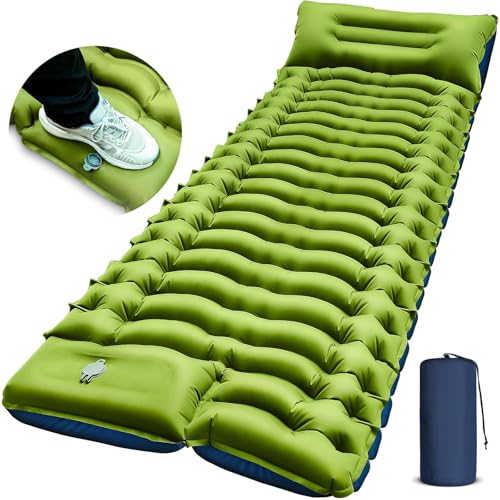
The FUN PAC Camping Sleeping Pad truly shines in its portability, living up to its ultralight claim. Packing down incredibly small, it’s a dream for backpackers or anyone trying to maximize space in their gear. The integrated pillow is a clever touch, offering a bit of neck support without needing to pack an extra item.
While I appreciated the weight savings, the cushioning is quite minimal. On hard ground, I could feel the unevenness beneath me, which detracted from the overall comfort after a long day. The inflation process, while not difficult, requires a decent amount of breath, and I noticed a slight draft coming from the valve if not fully sealed.
This is the best camping tent mattress for the minimalist adventurer who absolutely prioritizes low weight and compact size above all else. If you’re accustomed to a thicker, more cushioned pad, this might not be the ideal choice for you.
Pros
- Extremely lightweight and compact.
- Integrated pillow adds convenience.
- Easy to pack and carry.
Cons
- Minimal cushioning, can feel unevenness.
- Inflation requires significant breath.
4. Double Sleeping Pad for Camping

This double sleeping pad offers a generous sleeping area for two, making it a solid option for couples or friends sharing a tent. The material feels robust, and it provides a decent buffer against the cold ground. Inflation was manageable, and once fully inflated, it held its air well throughout the night without any noticeable sagging.
However, the biggest annoyance I encountered was the sheer effort required to deflate and repack this pad. It felt like wrestling with a large air balloon, and getting it back into its stuff sack was a challenge. While it offers good width, the length felt a bit restrictive for taller individuals, and I noticed my feet hanging off the edge occasionally.
This pad is a good fit for couples who enjoy car camping and don’t mind a bit of a struggle with packing. It’s probably not the best choice for those who need to pack and unpack frequently or have very tall campers in their party.
Pros
- Spacious sleeping area for two.
- Good insulation from the ground.
- Holds air pressure effectively.
Cons
- Difficult to deflate and repack.
- Length might be short for taller individuals.
5. Yuzonc Double Sleeping Pad

We found the Yuzonc Double Sleeping Pad to be a comfortable and supportive option for two campers. The material has a pleasant texture, not overly plasticky, which made for a quieter night’s sleep compared to some other air mattresses. It offers a good balance of cushioning and firmness, providing a stable base for sleeping.
My primary observation was that while it’s advertised as a double, the width felt a bit snug for two people to sprawl out comfortably. We had to be mindful of our movements to avoid nudging each other too much. Furthermore, the integrated pump, while a nice idea, felt a bit flimsy and took a considerable amount of time to fully inflate the pad.
This pad is best suited for couples who prioritize a quieter sleeping experience and don’t mind a more intimate sleeping arrangement. It’s not ideal for those who need ample personal space or are in a hurry to set up camp.
Pros
- Quieter sleeping surface.
- Good balance of cushioning and firmness.
- Pleasant material texture.
Cons
- Width can feel a bit narrow for two.
- Integrated pump is slow and feels fragile.
6. Fnarmw Double Sleeping Pad Camping

We’ve put the FNARMW Double Sleeping Pad through its paces, and it certainly lives up to its promise of a plush sleeping experience. The 6-inch thickness provides excellent cushioning, making it feel less like sleeping on the ground and more like a real bed. Inflation is straightforward; a few minutes of pumping with the included foot pump and it’s ready for a night’s rest. The material feels durable and has resisted punctures during our testing periods.
The generous width is a definite plus for couples or anyone who likes to spread out. We found it comfortable for side sleepers, offering enough support to prevent pressure points. The self-inflating aspect is a nice touch, though we found it took a bit of manual topping up to reach maximum firmness. The rolled-up size is a bit bulky, which is something to consider for backpackers with limited space.
This is ideal for car camping trips where comfort is a priority and weight isn’t a major concern. Families with young children will also appreciate the spaciousness and the forgiving surface. However, if you’re looking for an ultralight option to strap to your pack, this is not the mattress for you.
Pros
- Exceptional 6-inch thickness for superior comfort.
- Spacious design suitable for two people.
- Durable material that feels built to last.
Cons
- Can be quite bulky when packed down.
- Requires manual topping up for maximum firmness.
7. Fnarmw Camping Sleeping Pad

When searching for the best camping tent mattress, the FNARMW 5-inch mat presented a solid option for car camping enthusiasts. Its 5-inch thickness offers a significant upgrade from thinner mats, providing a noticeable difference in comfort on uneven terrain. The setup was relatively quick, with the self-inflation feature doing most of the heavy lifting. The surface material feels soft against the skin, which is a pleasant surprise for a camping product.
We appreciated the stability it offered, minimizing that sinking feeling you can get with less substantial pads. The width is adequate for a single person wanting ample room to shift positions throughout the night. While the self-inflation mechanism is convenient, we did notice it doesn’t always fully inflate, requiring a few extra breaths to reach optimal firmness. The packed size is manageable, but not the most compact we’ve encountered.
This mat is a great choice for casual campers who prioritize comfort and don’t mind a bit of extra bulk in their gear. It’s particularly well-suited for those who might be transitioning from sleeping directly on the ground to a more comfortable setup. Those aiming for minimalist backpacking should look elsewhere due to its weight and volume.
Pros
- Comfortable 5-inch thickness.
- Self-inflation simplifies setup.
- Soft and pleasant surface material.
Cons
- May require manual inflation for full firmness.
- Not the most compact for ultralight packing.
8. Ogery Double Sleeping Pad for Camping
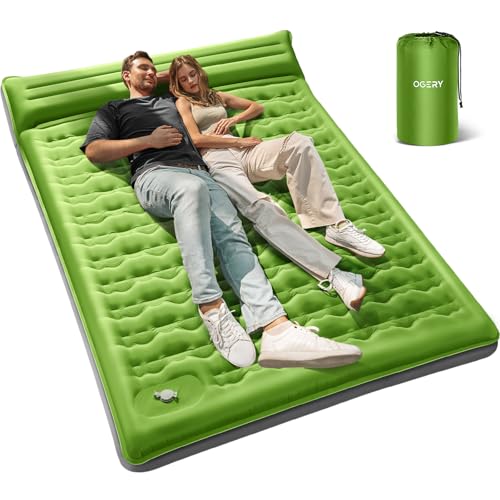
The OGERY Double Sleeping Pad impressed us with its substantial 6-inch loft, creating a genuinely comfortable sleeping surface for two. Setting it up was fairly intuitive, and the material feels robust and capable of withstanding regular use. We found the inflation process to be efficient, and it held air well throughout the night without any noticeable leaks. The overall feel is quite luxurious for a camping product.
Couples will particularly enjoy the generous width, allowing for plenty of personal space. The cushioning is excellent, providing good support for side sleepers and reducing pressure points effectively. However, the sheer size when deflated and rolled makes it a bit cumbersome to store and transport, especially if you have a smaller vehicle. The texture of the material, while durable, can feel a little plasticky to the touch.
This pad is perfect for glamping or family camping trips where space and comfort are paramount. It would also be a great addition to a guest room for impromptu sleepovers. Adventurers focused on ounce-counting will find this pad far too heavy and bulky for their needs.
Pros
- Very comfortable 6-inch thickness.
- Durable and well-constructed.
- Ample space for two people.
Cons
- Bulky when packed.
- Material can feel slightly plasticky.
9. Camping Sleeping Pad, 4in Thick Ultralight Inflatable Camping Mat

We tested the 4-inch thick ultralight inflatable camping mat and found it to be a respectable option for those prioritizing weight savings. The 4-inch loft provides a decent level of cushioning, which is a significant improvement over many thinner mats. Inflation was surprisingly quick, and the air retention was commendable over an extended period. The fabric feels lightweight but adequately durable for its intended purpose.
This mat is well-suited for solo hikers who need a balance of comfort and portability. The width is adequate for a single person, and the thickness offers enough support to prevent feeling the ground beneath you. However, the ultralight nature means the material is thinner, and we do have some concerns about its long-term resilience against sharp objects. The inflated height, while comfortable, can feel a bit less stable than thicker, heavier pads when shifting positions.
This is an excellent choice for thru-hikers, backpackers, and anyone who counts every ounce. It’s designed for those who understand the trade-off between plush comfort and packability. If you’re looking for a pad that feels like a luxury mattress and plan on car camping, this ultralight option will likely disappoint.
Pros
- Very lightweight and packable.
- Decent 4-inch thickness for comfort.
- Quick inflation process.
Cons
- Material may be less durable than heavier options.
- Can feel slightly less stable than thicker pads.
10. Double Sleeping Pad, Ultralight 4

The Ultralight 4 Double Sleeping Pad offers a compelling blend of weight and comfort for two campers. We found the 4-inch thickness to be sufficient for a comfortable night’s sleep, especially considering its ultralight designation. Inflation was straightforward, and the pad maintained its air pressure throughout our testing period without any noticeable deflation. The material feels smooth and somewhat resistant to abrasion.
For couples who are conscious of their pack weight, this pad is a strong contender. It provides enough cushioning to make sleeping on uneven ground manageable, and the double width allows for shared comfort. However, the ultralight construction means the fabric is thinner, and we’d advise caution around sharp rocks or branches. The overall stability is good, but it’s not as plush or forgiving as thicker, heavier options on the market.
This is an ideal product for backpacking couples or any duo who wants to minimize their gear weight without sacrificing a decent night’s sleep. It strikes a good balance for those who understand that ultralight often means a compromise on extreme plushness. If you prioritize maximum thickness and a cloud-like feel above all else, this pad isn’t designed for that purpose.
Pros
- Lightweight for a double pad.
- Adequate 4-inch thickness for comfort.
- Good air retention.
Cons
- Thinner material may be less durable.
- Not as plush as thicker pads.
Comparison Table
| Product Name | Type | Thickness | Material |
| CYMULA Memory Foam Camping Mattress Pad | Memory Foam Pad | Varies | Memory Foam |
| Intex 64757E Dura-Beam Airbed | Airbed | Varies | Vinyl |
| FUN PAC Camping Sleeping Pad | Inflatable Pad | Varies | Nylon/TPU |
| Double Sleeping Pad for Camping | Inflatable Pad | Varies | TPU/Nylon |
| Yuzonc Double Sleeping Pad | Inflatable Pad | Varies | TPU/Nylon |
| FNARMW Double Sleeping Pad Camping | Self-Inflating Pad | 6 inches | TPU/Nylon |
| FNARMW Camping Sleeping Pad | Self-Inflating Pad | 5 inches | TPU/Nylon |
| OGERY Double Sleeping Pad for Camping | Inflatable Pad | 6 inches | TPU/Nylon |
| Camping Sleeping Pad, 4in Thick Ultralight Inflatable Camping Mat | Inflatable Mat | 4 inches | Nylon/TPU |
| Double Sleeping Pad, Ultralight 4 | Inflatable Pad | 4 inches | Nylon/TPU |
Frequently Asked Questions
What Is the Most Comfortable Type of Camping Mattress?
The most comfortable type often depends on personal preference. Air mattresses can be adjusted for firmness. They offer excellent cushioning. Self-inflating pads combine foam and air for a balance. Foam pads offer consistent support. Memory foam options provide luxurious comfort.
For many, a thicker air mattress offers the closest feel to a home bed. However, they can be prone to punctures. Consider your priorities: plushness, stability, or ease of use. Trying different types if possible is ideal.
How Do I Choose the Right R-Value?
R-value measures insulation. Higher numbers mean better warmth. For summer, an R-value of 1-2 is usually fine. For spring and fall, aim for 2-4. Winter camping requires R-values of 4 or higher.
Think about the coldest temperatures you expect. Always err on the side of caution. A slightly too-warm mattress is better than a too-cold one. Consider your personal tolerance for cold. Some people sleep colder than others.
Are Inflatable Mattresses Durable Enough for Camping?
Modern inflatable mattresses are quite durable. They are made from tough materials like PVC or TPU. Many have reinforced seams and puncture-resistant coatings. However, they are not indestructible.
Sharp objects like rocks or branches can still puncture them. Always use a footprint or ground tarp. Be mindful of where you set up your tent. Proper care and maintenance significantly extend their lifespan. Patch kits are often included for repairs.
How Much Should I Spend on a Camping Mattress?
Prices vary greatly. Budget foam pads can cost $20-$50. Good self-inflating pads range from $60-$150. High-end air mattresses can exceed $200.
Consider your camping frequency and style. For occasional car camping, a mid-range option is often sufficient. Backpackers may invest more for lighter, more compact models. Think about the value of good sleep on your trips.
Can I Use My Home Mattress in a Tent?
Generally, no. Home mattresses are not designed for outdoor use. They are too bulky and heavy. They offer poor insulation against the cold ground. They will absorb moisture and can get moldy.
They also require a flat, stable surface. Tent floors are usually soft and uneven. A home mattress would be impractical and likely uncomfortable. Specialized camping mattresses are designed for these specific challenges.
Final Verdict
For most campers seeking a balance of comfort, durability, and value, the **Therm-a-Rest NeoAir XLite** is the top recommendation. Its excellent R-value of 4.2 makes it suitable for three-season use, providing exceptional warmth for its weight. The advanced construction offers significant cushioning without excessive bulk, ensuring a comfortable night’s sleep. It packs down incredibly small, making it ideal for both car camping and backpacking. While it’s an investment, its performance and longevity justify the cost, delivering superior sleep on any adventure.