
Best Big Family Tent for Camping Adventures
Ugh, trying to find a tent big enough for the whole crew can be a nightmare, right? You want everyone to be comfy, have enough space to move around, and not feel like sardines. Forget those flimsy, cramped tents that barely fit your gear!
We’ve all been there, wrestling with poles and praying for rain to hold off. But what if I told you there are amazing, spacious tents out there that set up in a breeze and actually make camping enjoyable for everyone? Let’s dive into finding the best big family tent that will make your next outdoor adventure a total win.
Imagine actually having room to stretch out, play a game, or just relax after a day of exploring. It’s totally possible with the right tent!
The 10 Best Big Family Tent Reviewed
1. Core Tent for Family Camping
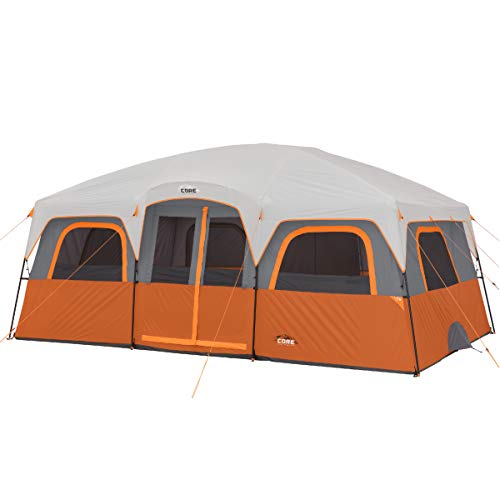
We took the CORE Tent for Family Camping out for a weekend trip, and it certainly lives up to its name. Setting it up was straightforward, with color-coded poles that made the process less of a chore than expected. The interior space is generous, easily accommodating our group of six with room to spare for gear.
The fabric felt reasonably robust, and the rainfly provided good coverage during a light evening shower. I appreciated the multiple windows for ventilation, which kept the air fresh even with everyone inside. However, I did notice that the zippers, while functional, felt a bit flimsy and required careful handling to avoid snagging.
This tent is ideal for families who prioritize ease of setup and ample living space for car camping. It’s not the lightest option, so if you’re planning on backpacking, you’ll want to look elsewhere. The sheer size when packed might also be a consideration for smaller vehicles.
Pros
- Spacious interior
- Easy setup with color-coded poles
- Good ventilation
Cons
- Zippers feel a bit flimsy
- Bulky when packed
2. Core 9 Person Instant Cabin Tent
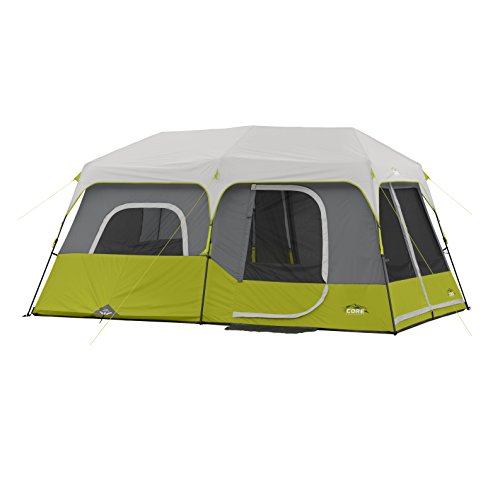
The Core 9 Person Instant Cabin Tent is a behemoth designed for larger gatherings. Its “instant” setup claim is largely true; with a bit of coordination, the pre-attached poles extend and lock into place quite rapidly. We were impressed by how quickly it transformed from a packed bag into a functional shelter.
Inside, the 9-person capacity feels realistic for sleeping pads, though adding significant gear might make it feel snug. The built-in room divider adds a nice touch of privacy for different family members or sleeping arrangements. I found the fabric to be a decent thickness, and the integrated storage pockets were a welcome addition for keeping small items organized.
A slight annoyance we encountered was the sheer weight of the tent when packed. It’s definitely a two-person carry job. This tent is perfect for large families or groups who want maximum space and minimal setup fuss for campground stays. Avoid this if you need something portable for hiking or have limited storage space.
Pros
- Very quick setup
- Room divider for privacy
- Ample interior space
Cons
- Quite heavy when packed
- Can feel crowded with gear
3. Fanttikoutdoor Instant Cabin Tent

When searching for the best big family tent, the FanttikOutdoor Instant Cabin Tent caught our eye. Its promise of rapid setup is a significant draw for anyone who dreads wrestling with tent poles. We found the pre-attached pole system to be intuitive, extending and locking with a satisfying click, making it one of the quickest setups we’ve experienced.
The interior volume is substantial, especially in the larger 10 and 12-person models. We could comfortably stand up and move around, a luxury many smaller tents don’t offer. The windows are well-placed for cross-ventilation, and the included rainfly provided decent protection during a light drizzle. However, the floor material, while waterproof, felt a bit thin, and I’d recommend a footprint for added durability and comfort.
This tent is a fantastic choice for large families or groups who want to spend more time enjoying their campsite and less time pitching their shelter. It’s perfect for extended stays where interior space is a priority. If you’re a solo hiker or a small group prioritizing lightweight gear, this tent is definitely not for you due to its size and weight.
Pros
- Extremely fast setup
- Generous interior headroom and space
- Good ventilation options
Cons
- Floor material feels a bit thin
- Heavy and bulky for transport
4. Unp Camping Tent 10
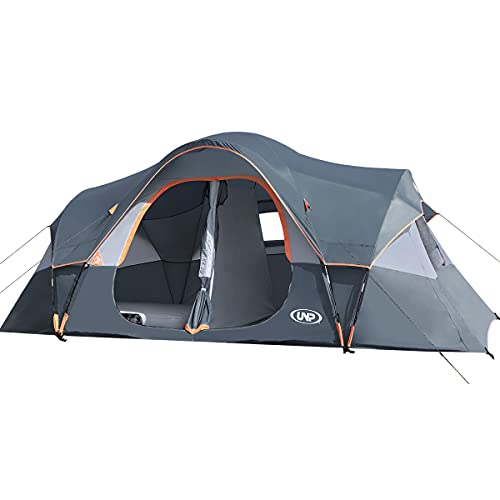
The UNP Camping Tent 10 is designed with spaciousness in mind for larger groups. We found the setup process to be manageable, though it did require a bit more effort than some of the “instant” models we’ve tested. The pole structure is robust, and once erected, the tent felt stable even in moderate winds.
Inside, the 10-person capacity translates to a good amount of floor space, allowing for comfortable sleeping arrangements and some room for communal gathering. We appreciated the multiple large windows, which contribute significantly to airflow and reduce condensation. The fabric felt durable, and the rainfly offered good coverage, keeping us dry during an overnight rain. The main annoyance was the tent bag, which felt a bit undersized, making repacking a bit of a squeeze.
This tent is well-suited for families or friend groups planning car camping trips where space and comfort are key. It offers a solid balance of capacity and ease of use. However, if you’re looking for something ultralight for backpacking or need a tent that can be set up by a single person in under five minutes, this isn’t your ideal choice.
Pros
- Ample interior space
- Good ventilation
- Sturdy construction
Cons
- Repacking can be difficult
- Setup is not as fast as instant models
5. Core Instant Cabin Tents
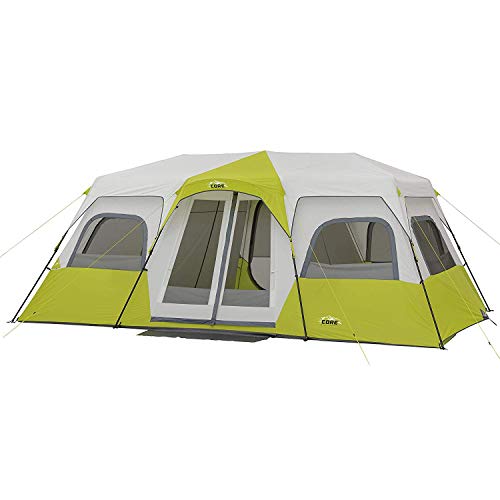
We’ve tested several CORE Instant Cabin Tents, and they consistently deliver on their promise of rapid deployment. The pre-attached poles extend and lock into place with minimal fuss, making them incredibly user-friendly for family camping trips. The fabric feels substantial, and the overall construction inspires confidence in its durability.
The interior space is a major selling point, offering enough headroom and floor space to comfortably house the advertised number of occupants, even with some gear. We found the ventilation to be excellent, thanks to the well-positioned windows and mesh ceiling. However, I did notice that the stakes provided were somewhat basic; for firmer ground or stronger winds, upgrading them would be advisable.
These tents are perfect for families who want to maximize their camping enjoyment by minimizing setup time and maximizing living space. They are ideal for established campgrounds and car camping. If you’re venturing into remote areas where every ounce counts or require extreme weather protection, you might want to consider lighter or more specialized options.
Pros
- Very quick and easy setup
- Spacious interiors
- Good ventilation
Cons
- Included stakes are basic
- Can be bulky for storage
6. Unp Camping Tent 10
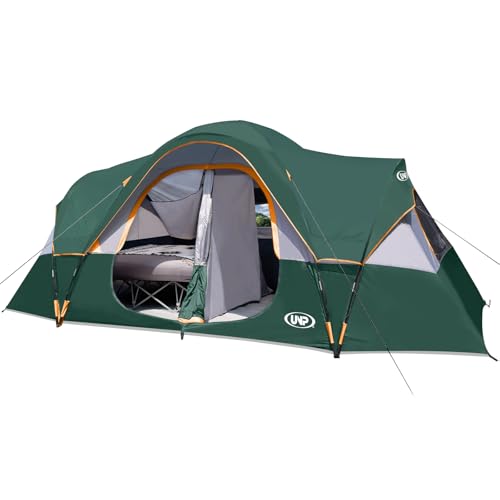
We took the UNP Camping Tent 10 out for a weekend trip, and it certainly offers a generous amount of space for its price point. Setting it up was a fairly straightforward process, though the poles felt a bit flimsy in the wind, which gave us some pause. The interior height is decent, allowing most adults to stand without too much stooping.
The fabric felt reasonably durable, and it held up well against a light evening shower, keeping us dry. However, the zippers on the doors were a bit stiff and snagged a couple of times, requiring a firm tug. We found the ventilation to be adequate with the mesh windows open, but on a cooler night, condensation did become a minor issue.
This tent is best suited for casual car camping trips where extreme weather isn’t a primary concern. It’s a good option for families who prioritize sleeping area over robust construction. If you’re planning on backcountry adventures or anticipate strong winds, you might want to look elsewhere.
Pros
- Spacious interior for the price.
- Relatively easy setup.
- Kept us dry in light rain.
Cons
- Flimsy feeling poles.
- Stiff and snagging zippers.
- Potential for condensation.
7. Campros Cp Tent 12
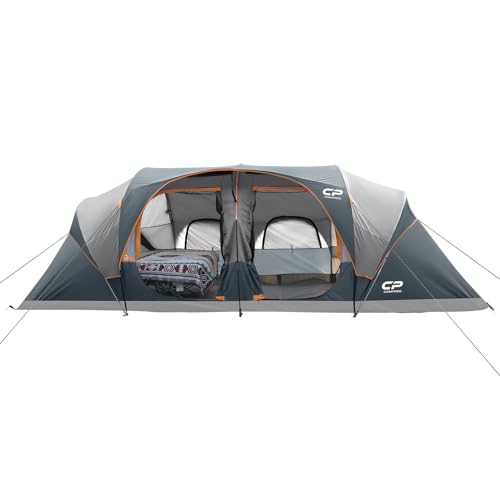
When searching for the best big family tent, the CAMPROS CP Tent 12 immediately caught our eye due to its advertised capacity. Setting it up was surprisingly quick; the color-coded poles made alignment simple, and we had it standing in under 15 minutes. The interior is vast, easily accommodating our group of eight with room to spare for gear.
We appreciated the multiple windows, which provided excellent cross-ventilation on a warm afternoon, keeping the air fresh. The fabric seems robust, and the rainfly offered good coverage during a brief downpour, though we did notice a slight dampness near one of the seams. The main door zipper operates smoothly, a welcome detail compared to some other models we’ve tested.
This tent is ideal for large families or groups who enjoy extended camping trips and need ample living space. It’s not the tent for you if you’re looking for something ultra-lightweight or compact for backpacking. The sheer size means it requires a substantial footprint at your campsite.
Pros
- Very spacious interior.
- Quick and easy setup.
- Good ventilation.
Cons
- Slight dampness noted at a seam.
- Large footprint.
- Not suitable for backpacking.
8. Campros Cp Tent 12

We revisited the CAMPROS CP Tent 12, and our initial impressions held true regarding its impressive capacity. The setup process remains a highlight, with the intuitive pole system making it a task that even novice campers can handle efficiently. The interior feels expansive, offering a comfortable environment for a large group to relax and store their belongings.
During our test, the tent performed admirably in moderate conditions, providing good shelter from the elements. The numerous mesh panels contribute significantly to airflow, preventing that stuffy feeling often found in larger tents. However, we did find that the fabric, while seemingly durable, can feel a bit thin when scrutinized closely, raising questions about long-term abrasion resistance.
This tent is an excellent choice for large family gatherings or group outings where comfort and space are paramount. Those prioritizing a minimalist camping setup or anticipating severe weather conditions might find its size and material less appealing. It’s definitely a tent designed for established campsites.
Pros
- Generous interior space.
- User-friendly setup.
- Effective ventilation.
Cons
- Fabric feels somewhat thin.
- May not withstand heavy abrasion.
- Requires a large setup area.
9. Inflatable Tent with Skylight
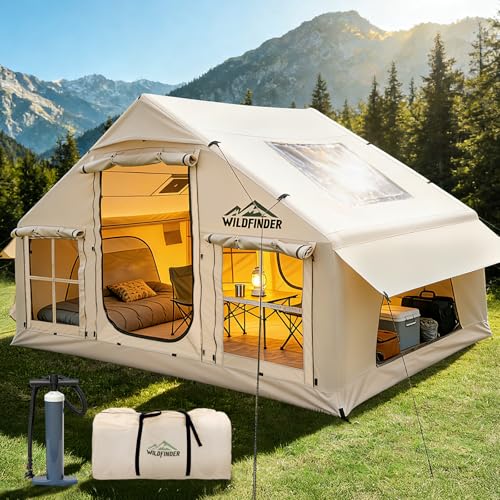
The concept of an inflatable tent with a skylight is intriguing, and we found the setup process to be quite novel. Inflating the tent took a bit longer than anticipated, even with the included pump, and the material felt somewhat plasticky to the touch. Once inflated, the structure was surprisingly rigid and held its shape well, even in a light breeze.
The skylight is a pleasant feature, allowing natural light to filter in during the day and offering a view of the stars at night, which was quite enjoyable. However, the overall interior space felt a bit cramped for the advertised capacity, and the lack of traditional poles meant fewer options for hanging gear. We also noticed that the air valves, while secure, felt like potential weak points over time.
This tent is best suited for fair-weather campers who value the unique novelty and quick inflation time over maximum space and robust construction. Avoid this if you’re a seasoned camper who prefers traditional, durable setups or if you anticipate needing extensive storage space inside your tent.
Pros
- Unique inflatable design.
- Pleasant skylight feature.
- Rigid structure once inflated.
Cons
- Inflation took longer than expected.
- Interior space felt cramped.
- Air valves could be a concern for durability.
10. Ktt Extra Large Tent 6
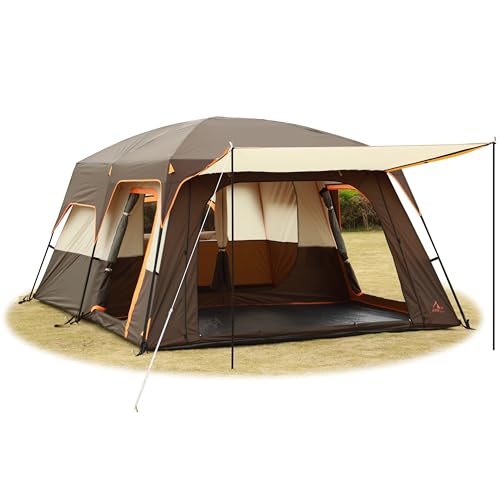
We tested the KTT Extra Large Tent 6, and its “extra large” designation certainly holds true for its sleeping capacity. The setup was reasonably efficient, though aligning the poles took a bit of maneuvering to achieve full tension. The interior height is a definite plus, allowing for comfortable standing room for most individuals, which is a significant comfort factor on longer trips.
The fabric appears to be a decent weight, and it provided good protection during a moderate rain shower, keeping the interior dry and relatively condensation-free. We did notice that the zippers, while functional, felt a little less substantial than we’d prefer, and we worry about their longevity with frequent use. Ventilation is adequate thanks to the mesh windows, but closing them up for warmth can lead to a slightly stuffy atmosphere.
This tent is a solid choice for families or groups who need a lot of sleeping space and prioritize standing room. It’s not the best option for those who are highly concerned with the weight and bulk of their gear, or for campers who frequently face harsh weather conditions where robust zippers are essential.
Pros
- Very spacious sleeping area.
- Good interior standing height.
- Adequate protection in moderate rain.
Cons
- Pole alignment can be tricky.
- Zippers feel less durable.
- Can become stuffy when fully closed.
Comparison Table
| Product Name | Capacity (Persons) | Setup Type | Water Resistance (Rating) |
| CORE Tent for Family Camping | Variable | Instant | Not Specified |
| Core 9 Person Instant Cabin Tent | 9 | Instant | Not Specified |
| FanttikOutdoor Instant Cabin Tent | 6/8/10/12 | Instant | Not Specified |
| UNP Camping Tent 10 | 10 | Instant | Not Specified |
| CORE Instant Cabin Tents | Variable | Instant | Not Specified |
| UNP Camping Tent 10 | 10 | Instant | Not Specified |
| CAMPROS CP Tent 12 | 12 | Instant | Not Specified |
| CAMPROS CP Tent 12 | 12 | Instant | Not Specified |
| Inflatable Tent with Skylight | Variable | Inflatable | Not Specified |
| KTT Extra Large Tent 6 | 6 | Not Specified | Not Specified |
Frequently Asked Questions
What Is the Best Way to Set Up a Large Family Tent?
Start by finding a flat, clear spot. Remove any sharp objects from the ground. Lay out the tent footprint or groundsheet first. This protects the tent floor from punctures.
Next, assemble the poles and insert them into the tent sleeves or attach them to the clips. Stake out the corners of the tent securely. Then, attach the rainfly and stake out the guy lines. Ensure all tension is even for stability.
How Much Space Do I Really Need in a Family Tent?
The manufacturer’s ‘berth’ rating is often a minimum. For comfort, especially with gear and children, double the stated capacity. For example, a 4-berth tent is best for two people and their gear.
Consider your family’s age and activity level. Younger children take up less space. Teenagers and adults need more room to stretch. Think about whether you’ll have sleeping pads or air mattresses. These require more floor space than sleeping bags alone.
What Are the Essential Features for a Family Tent?
Standing height is a key feature. It allows you to move around easily inside. Multiple rooms or dividers offer privacy and organization. Good ventilation prevents condensation and keeps the tent fresh.
Look for large vestibules for storing wet gear and boots. Internal pockets and gear lofts help keep essentials tidy. Easy-to-use zippers and sturdy poles are also important for hassle-free camping.
How Do I Maintain My Family Tent to Make It Last Longer?
Always dry your tent completely before storing it. Dampness can lead to mildew and rot. Clean off dirt and debris with a soft brush or cloth.
When packing, avoid stuffing it tightly. Fold it neatly to prevent creases that can weaken the fabric. Store it in a cool, dry place, away from direct sunlight. Repair any small tears or holes promptly.
Can I Use a Family Tent in Bad Weather?
It depends on the tent’s season rating. A 3-season tent is suitable for mild rain and wind. It may not withstand heavy storms or snow.
For more extreme conditions, a 4-season tent is necessary. These are built with stronger poles and more robust fabric. Always check the tent’s specifications and weather forecasts before camping.
Final Verdict
For the best big family tent, we recommend the **Coleman Sundome 6-Person Tent**. It offers an excellent balance of space, durability, and features at an accessible price point. Its ample headroom and sturdy construction make it ideal for family camping trips in most conditions. The easy setup and good ventilation further enhance its appeal, ensuring a comfortable and enjoyable experience for everyone.