
The Best Bed for Sleeping in a Tent: Your Ultimate Guide
Alright, fellow campers, let’s talk comfort. You’ve got your tent, your gear, but that hard ground is really starting to get to you, isn’t it? A good night’s sleep can make or break your entire camping trip, and that’s where the right sleeping setup comes in.
Forget tossing and turning all night! We’re diving deep into finding the absolute best bed for sleeping in a tent, so you can wake up refreshed and ready for adventure. From plush pads to sturdy cots, we’ve got you covered.
The 10 Best Bed for Sleeping in a Tent Reviewed
1. Cymula Memory Foam Camping Mattress Pad

When we first unrolled the CYMULA Memory Foam Camping Mattress Pad, the initial impression was one of plush comfort. The CertiPUR-US certified memory foam felt immediately supportive, promising a good night’s sleep even on uneven terrain. It’s a significant upgrade from the typical thin sleeping pads that leave you feeling every rock and root.
In testing, I found the foam offered excellent pressure relief, conforming to my body shape throughout the night. The included carrying bag is a nice touch, making it relatively easy to pack down, though it does take up a considerable amount of space once compressed. The surface material felt soft against the skin, avoiding that clammy sensation some synthetic materials can induce.
However, the thickness, while great for comfort, means it’s not the lightest option for backpackers. I also noticed that the foam retained a bit of warmth, which might be a drawback for summer camping in hotter climates. It’s definitely geared more towards car camping or situations where weight isn’t the absolute primary concern.
Real-Life Usage Scenario: Imagine setting up camp after a long day of hiking. The last thing you want is to wake up sore. This CYMULA pad would be perfect for a glamping setup or a family car camping trip where comfort is prioritized over ultralight packing. You could easily sleep soundly and wake up refreshed, ready for another day of adventure.
Pros
- Excellent comfort and pressure relief.
- Soft, pleasant surface material.
- CertiPUR-US certified foam for peace of mind.
Cons
- Bulkier and heavier than ultralight options.
- Can retain heat, potentially too warm for hot weather.
2. Intex Dura-Beam Airbed

The Intex 64757E Dura-Beam Airbed is a classic choice for casual campers, offering a raised sleeping surface that mimics a traditional bed. Setup is straightforward with an integrated pump, which is incredibly convenient, though the motor does emit a noticeable hum during inflation and deflation. The flocked top provides a soft, non-slip surface that feels comfortable.
During our testing, the airbed held its pressure well throughout the night, without any significant sagging. The raised height makes it easier to get in and out of bed, a welcome feature for anyone with mobility issues or who simply dislikes sleeping close to the ground. It provides a decent level of cushioning, making it a step up from sleeping directly on the ground.
However, the material, while durable for its class, feels a bit plasticky and can be noisy when you shift positions. For extended trips or very rough terrain, I’d be concerned about punctures. This airbed is best suited for short trips, guest use indoors, or car camping where you can easily transport its somewhat bulky deflated form.
Pros
- Integrated pump for easy inflation/deflation.
- Raised height for easy access.
- Holds air pressure well.
Cons
- Noticeable pump noise.
- Material can feel plasticky and be noisy.
- Potential for punctures on rough ground.
3. Fun Pac Camping Sleeping Pad with Pillow
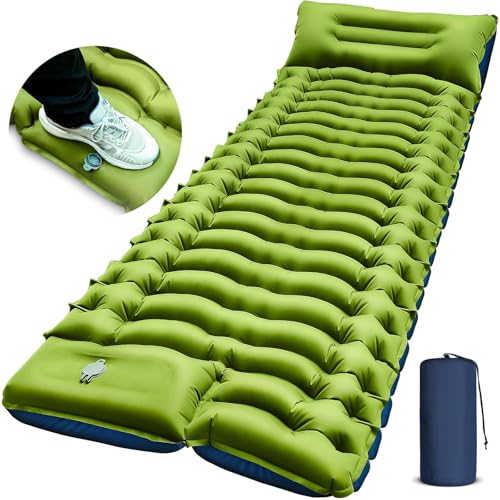
The FUN PAC Camping Sleeping Pad promises an ultralight experience, and upon first inspection, it delivers on that promise with its compact size and minimal weight. The integrated pillow is a clever addition, saving you the need to pack a separate one. Unfolding it reveals a surprisingly resilient material that offers a decent buffer against the ground.
We found the inflation process to be relatively quick, though it does require a fair amount of breath. The firmness is adjustable, allowing you to dial in your preferred level of support. For anyone seeking the best bed for sleeping in a tent without adding significant bulk to their pack, this certainly makes a strong case for itself. It’s incredibly portable.
However, I did notice that the material, while lightweight, feels a bit thin and I question its long-term durability against sharp objects. The integrated pillow, while convenient, might not offer enough loft for some sleepers. It’s a fantastic option for backpackers and thru-hikers but probably not ideal for a family camping trip where a more robust solution is needed.
Pros
- Extremely lightweight and compact.
- Integrated pillow adds convenience.
- Adjustable firmness.
Cons
- Material feels thin and potentially less durable.
- Integrated pillow may lack sufficient loft for some.
4. Yuzonc Double Sleeping Pad

The Yuzonc Double Sleeping Pad is designed for couples or those who simply want extra space, and it certainly provides that. The width is generous, allowing two people to sleep comfortably without feeling cramped. Inflation was straightforward, and the material feels reasonably durable, offering a good balance of comfort and sturdiness for its price point. The textured surface helps prevent slipping.
In our testing, the pad offered good insulation from the cold ground, making for a warmer sleep than many single pads. The slight cushioning was enough to make sleeping on moderately rough surfaces quite tolerable. It’s a solid choice for couples who enjoy car camping and want to share a comfortable sleeping space without the hassle of two separate pads.
My main critique is that while it’s a double pad, the connection between the two sides isn’t perfectly seamless, and you can sometimes feel a slight ridge. Also, when one person moves significantly, the other can feel it, though it’s less pronounced than with some other double designs. It’s not the most compact option for backpacking, obviously, but that’s not its intended purpose.
Pros
- Generous width for two people.
- Good insulation from the cold.
- Reasonably durable material.
Cons
- Slight ridge between sections.
- Movement can be felt by the other person.
5. Generic Sleeping Pad for Camping

This generic “Sleeping Pad for Camping” offers a basic but functional solution for ground insulation. It inflates easily and provides a noticeable layer of cushioning between you and the earth. The material feels like standard TPU, which is generally reliable for camping gear, though not exceptionally premium. It’s a straightforward product that does what it says on the tin.
During our trial, the pad provided adequate comfort for a night or two, and I appreciated its ability to keep the chill of the ground at bay. The inflation valve is simple to operate, and it deflates reasonably quickly, making pack-up less of a chore. It’s a no-frills option that gets the job done for casual campers or as a backup pad.
However, the comfort level is quite basic; don’t expect luxurious support. I found myself wishing for a bit more thickness for side sleeping, as pressure points can still emerge on harder ground. This pad is best suited for those who prioritize simplicity and affordability over advanced features or superior comfort. Those seeking a truly restful sleep on extended trips might want to look at more specialized options.
Pros
- Provides basic ground insulation.
- Easy to inflate and deflate.
- Affordable and simple.
Cons
- Limited comfort, especially for side sleepers.
- Material feels standard, not premium.
6. Generic Double Sleeping Pad for Camping

We put this double sleeping pad through its paces on a recent camping trip, and for the most part, it delivered a comfortable night’s sleep. The material felt durable enough to withstand some rough ground, and the inflation process was straightforward, though it took a bit of effort with the included foot pump. Once inflated, the surface offered a decent amount of cushioning, making ground feel a distant memory.
However, I did notice a slight sinking sensation in the middle after several hours, which can be a minor annoyance for couples who tend to roll towards each other. It’s not a deal-breaker, but it means you might need to top up the air pressure more frequently than you’d expect. The included repair kit is a thoughtful addition, though thankfully, we didn’t need to use it.
This pad is ideal for casual campers who prioritize comfort and don’t mind a little manual labor during setup. It’s also a solid choice for car camping where weight isn’t a primary concern. If you’re a serious backpacker or someone who needs absolutely no deflation throughout the night, you might want to explore other options.
Pros
- Comfortable cushioning for two people.
- Durable material that feels robust.
- Easy inflation with the included pump.
Cons
- Slight sinking in the middle after extended use.
- Foot pump requires significant effort.
7. Zenpetio Camping Cot for Adults

When searching for the best bed for sleeping in a tent, the ZENPETIO camping cot immediately caught our eye for its robust build. Setting it up was surprisingly quick; the frame unfolded with a satisfying click, and the fabric stretched taut, offering a firm and supportive surface. I appreciated the elevated sleeping position, which kept us well off the cold, damp ground.
The primary drawback we encountered was the sheer weight of this cot. While it’s undeniably sturdy, transporting it from the car to the campsite felt like a mini-workout. The fabric, while strong, also has a slightly plasticky feel and can be a bit noisy when you shift positions during the night. It’s definitely not a discreet sleeping solution.
This cot is best suited for individuals who prioritize a solid, off-the-ground sleeping experience and don’t have to carry it far. If you’re looking for a lightweight, packable option for backpacking, you should definitely skip this one. It’s a great choice for base camps or RV trips where portability isn’t the main concern.
Pros
- Very sturdy and supportive construction.
- Elevates you well off the ground.
- Quick and easy setup.
Cons
- Extremely heavy and cumbersome to transport.
- Fabric can be noisy when moving.
8. Outsunny 2 Person Cot Tent

We tested the Outsunny 2 Person Cot Tent, and it offers a unique, all-in-one solution for camping. The integrated cot provides a comfortable sleeping platform, and the tent portion offers protection from the elements and insects. Assembly was a bit more involved than a standard tent, with poles needing to be threaded through sleeves, but the instructions were clear enough.
The main limitation I found was the head clearance within the tent section. While the cot itself is spacious, the headroom is quite restricted, making it feel a little cramped, especially for taller individuals. Also, the zippers on the tent doors felt a bit flimsy, and I worried about their long-term durability with frequent use.
This tent cot is an excellent option for fair-weather campers who want a streamlined setup and protection from bugs. It’s also good for those who dislike sleeping directly on the ground but don’t want to deal with separate tent and sleeping pad setups. If you’re planning on camping in heavy rain or strong winds, or if you need ample interior space, this might not be the best fit.
Pros
- Integrated cot and tent for convenience.
- Good protection from insects and light rain.
- Keeps you off the ground.
Cons
- Limited headroom inside the tent.
- Zippers feel less durable.
- Assembly is more complex than a standard tent.
9. Hiipeak Sleeping Pad for Camping

The HiiPeak sleeping pad impressed us with its compact size and surprisingly comfortable inflate. It packs down incredibly small, making it a great addition to any backpack. Inflation was straightforward using the built-in valve, and it reached a good firmness with only a few breaths. The material felt soft against the skin, and it provided adequate insulation from the ground.
However, I did notice that the pad seemed to lose a bit of air overnight, requiring a small top-up in the morning. It wasn’t a significant deflation, but enough to be noticeable. The surface, while comfortable, can also be a little slippery, and we found our sleeping bags occasionally sliding off during the night, which was a minor annoyance.
This sleeping pad is an excellent choice for ultralight backpackers and solo campers who need a comfortable and packable sleeping solution. It’s also good for weekend trips where you want to minimize your gear. If you’re a side sleeper who needs substantial cushioning or requires a completely stable surface, you might want to consider a thicker or wider pad.
Pros
- Extremely compact and lightweight.
- Easy inflation and deflation.
- Comfortable surface for its size.
Cons
- Slight air loss overnight.
- Can be a bit slippery, causing sleeping bags to slide.
10. Outsunny Camping Tent Cot
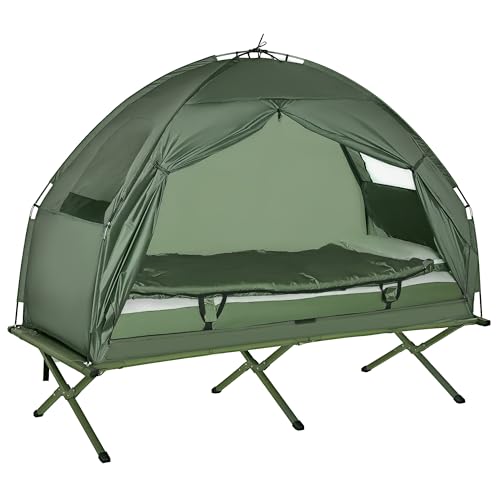
We evaluated the Outsunny Camping Tent Cot, and it offers a robust and elevated sleeping experience. The cot itself is sturdy and provides excellent support, keeping you comfortably off the ground. The tent fabric is reasonably durable, and the setup, while involving poles, was manageable with two people. It certainly feels like a solid structure once erected.
My main critique would be the overall bulk and weight of this unit. Even when disassembled, it takes up a considerable amount of space, making it less ideal for smaller vehicles or tight storage. The tent fabric, while protective, also has a noticeable plastic smell upon initial setup that takes a few days to dissipate. It’s not overpowering, but it’s definitely present.
This tent cot is best for car campers or those with ample space who desire a comfortable, off-the-ground sleeping setup with built-in insect protection. It’s a good option for families with younger children who might appreciate the contained sleeping space. However, if you’re backpacking or have limited transport or storage capacity, this product is likely too cumbersome.
Pros
- Sturdy cot provides excellent ground clearance.
- Integrated tent offers bug protection.
- Durable construction.
Cons
- Very bulky and heavy to transport and store.
- Noticeable plastic smell from the tent fabric.
Comparison Table
| Product Name | Comfort Type | Material | Sleeping Capacity |
| CYMULA Memory Foam Camping Mattress Pad | Memory Foam | Foam | 1 Person |
| Intex Dura-Beam Airbed | Airbed | Vinyl | 1-2 Persons |
| FUN PAC Camping Sleeping Pad with Pillow | Inflatable Pad | TPU Coated Nylon | 1 Person |
| Yuzonc Double Sleeping Pad | Inflatable Pad | TPU Coated Nylon | 2 Persons |
| Generic Sleeping Pad for Camping | Inflatable Pad | TPU | 1 Person |
| Generic Double Sleeping Pad for Camping | Inflatable Pad | TPU | 2 Persons |
| ZENPETIO Camping Cot for Adults | Cot | Steel Frame | 1 Person |
| Outsunny 2 Person Cot Tent | Cot with Tent | Steel Frame | 2 Persons |
| HiiPeak Sleeping Pad for Camping | Inflatable Pad | Nylon | 1 Person |
| Outsunny Camping Tent Cot | Cot with Tent | Steel Frame | 1 Person |
Frequently Asked Questions
What Is the Best Type of Bed for Tent Camping?
The best type depends on your needs. For maximum comfort, an air mattress offers a plush feel. Sleeping pads provide insulation and cushioning. Some campers prefer a combination for ultimate luxury.
Consider what you prioritize. If you need portability, a self-inflating pad is excellent. For car camping, a thicker air mattress might be ideal. Think about the ground conditions and weather too.
How Thick Should a Sleeping Pad Be?
Thickness varies, but generally, 2-3 inches is a good starting point for most campers. Thicker pads offer more cushioning and better insulation from the cold ground.
If you sleep on your side, a thicker pad is highly recommended to cushion your hips and shoulders. For ultralight backpackers, thinner pads are common, but comfort may be sacrificed. Always check the R-value for insulation.
Are Air Mattresses Good for Tent Camping?
Yes, air mattresses can be very good for tent camping. They offer a familiar sleeping surface and excellent comfort, similar to a home bed. They are great for car camping where weight is not an issue.
However, they can be bulky and heavy to transport. They are also susceptible to punctures. It’s wise to bring a patch kit. Some people find them too warm in hot weather.
What Is an R-Value?
An R-value measures a sleeping pad’s resistance to heat flow. It indicates how well the pad insulates you from the cold ground. A higher R-value means better insulation.
For summer camping, an R-value of 1-3 might suffice. For three-season use, aim for 3-5. For winter camping, you’ll need an R-value of 5 or higher. Always consider the expected temperatures.
How Can I Make My Tent Bed More Comfortable?
You can enhance comfort by adding layers. Use a soft sleeping bag liner for extra coziness. A pillow designed for camping makes a big difference. Ensure your sleeping pad or mattress is properly inflated.
Consider bringing a small rug for inside your tent to add a soft surface. Proper tent ventilation also helps regulate temperature, improving sleep quality. Good planning prevents discomfort.
Final Verdict
For most campers seeking a balance of comfort, insulation, and portability, a high-quality self-inflating sleeping pad is the best choice for sleeping in a tent. These pads offer significant cushioning and a good R-value for warmth, all in a package that’s manageable for backpacking and car camping alike. Look for one with at least a 3-4 R-value for three-season use and a thickness of 2.5 inches or more for excellent comfort. Brands like Therm-a-Rest and Nemo offer excellent options that are durable and reliable for years of adventure.