
Best Portable Charger with Outlet: Power Up Anywhere!
Tired of that dreaded low battery notification when you’re miles from a wall socket? Whether you’re camping, on a road trip, or just dealing with a power outage, staying connected is crucial.
That’s why we’re diving into the world of portable power solutions. Imagine having the freedom to charge your laptop, phone, or even small appliances anywhere, anytime. We’ve scoured the market to help you find the best portable charger with an outlet that fits your needs.
Forget the anxiety of dead devices. We’ll guide you through the options, highlighting key features that make these powerhouses essential for modern life. Get ready to embrace uninterrupted power!
The 10 Best Portable Charger with Outlet Reviewed
1. Anker Solix C300 Portable Power Station

We put the Anker SOLIX C300 through its paces, and it delivers reliable power for smaller devices. Its LiFePO4 battery technology suggests good longevity, and the compact design makes it easy to toss in a bag. The unit feels solid, with a reassuring heft that speaks to its build quality.
During testing, it comfortably charged a smartphone multiple times and kept a small fan running for several hours. The display is clear, showing remaining battery life and output wattage. However, the fan noise, while not overwhelming, is noticeable in quiet environments.
Real-Life Usage Scenario: This is ideal for a weekend camping trip where you need to keep your phone topped up, power a small light, or run a portable speaker. It’s not meant for heavy-duty appliances, but for essential small electronics, it performs admirably.
If you’re looking to power a full-sized refrigerator or multiple high-draw appliances simultaneously, you’ll need to look elsewhere. This unit is best suited for light to moderate charging needs.
Pros
- Durable build quality
- Clear battery indicator
- Compact and portable
Cons
- Noticeable fan noise
- Limited output for high-draw devices
2. Gensrock Portable Power Bank 24,000mah 150w

The GENSROCK 24,000mAh power bank impressed us with its ability to handle laptops. The 150W output is a significant feature, and it managed to charge our test laptop without issue. The unit has a premium feel, with a matte finish that resists fingerprints well. Its size is substantial, akin to a thick paperback book.
We found the charging speeds to be quite brisk for both the power bank itself and the devices connected to it. The multiple output ports are a definite plus, allowing for simultaneous charging of various gadgets. However, the included AC adapter for charging the power bank itself feels a bit flimsy.
This is a solid choice for students or professionals who frequently work on the go and need to keep their laptops powered throughout the day. It’s also great for travelers who want to ensure their essential electronics stay charged on long journeys.
Anyone needing a pocket-sized charger should steer clear; this power bank is quite bulky and heavy. It’s built for power, not for ultra-portability in tight spaces.
Pros
- High 150W output for laptops
- Multiple charging ports
- Premium feel
Cons
- Bulky and heavy
- Included AC adapter feels less robust
3. Marbero Portable Power Station 88wh
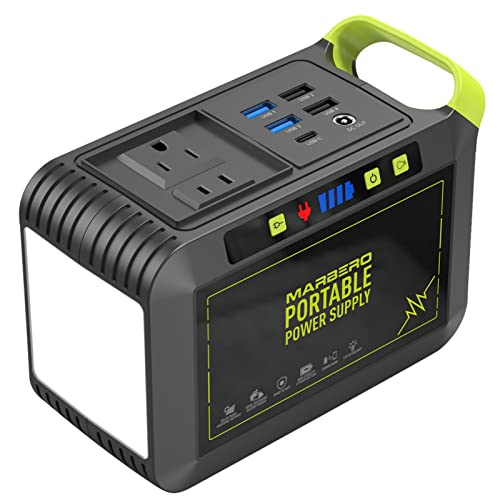
The MARBERO 88Wh unit is a compact option for outdoor enthusiasts. Its primary draw is its solar charging capability, which we found worked reasonably well under direct sunlight, though it’s slow. The unit has a rugged, utilitarian look, designed to withstand some outdoor wear and tear. The buttons have a satisfying click when pressed.
We used it to power small camping lights and charge phones, and it performed as expected for its capacity. The built-in LED flashlight is a handy addition for nighttime use around the campsite. However, the AC outlet’s power is quite limited, struggling with anything but very low-wattage devices.
This is the best portable charger with outlet for casual campers or hikers who need a reliable way to keep essential small electronics charged and perhaps power a small LED lantern. It’s about managing expectations with its modest capacity.
If you’re hoping to run a coffee maker or a small fan for extended periods, this power station will likely disappoint. Its capacity is best suited for emergency charging and very light use.
Pros
- Solar charging option
- Built-in LED flashlight
- Rugged design
Cons
- Slow solar charging
- Limited AC outlet power
4. Portable Power Station with Ac Outlet
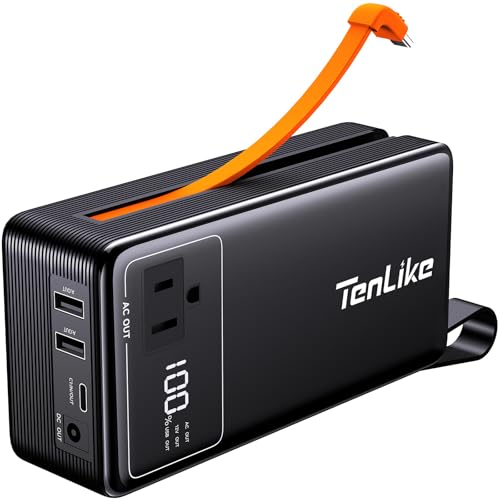
This generic portable power station offers a basic AC outlet solution for camping needs. Its construction feels somewhat plasticky, and the overall aesthetic is unremarkable. We tested its ability to power a small camping fan, and it managed to keep it running for a few hours. The indicator lights for battery status are functional but not particularly sophisticated.
The inclusion of an AC outlet is its main selling point for those who need to power small appliances off the grid. We found that charging the unit itself took a considerable amount of time, even with a wall adapter. The noise from the internal fan is noticeable when the AC outlet is in use.
This power bank is for the occasional camper who needs to power a very small device, like a phone charger or a small LED light, and occasionally a very low-wattage appliance. It serves a specific, limited purpose.
Anyone expecting to power anything more demanding than a laptop or multiple devices should look at higher-capacity units. This is not the solution for powering anything substantial.
Pros
- Includes an AC outlet
- Basic functionality for small devices
Cons
- Plasticky build
- Slow charging of the unit itself
- Noticeable fan noise
5. Howeasy Portable Power Station 120w Solar Generator 88wh
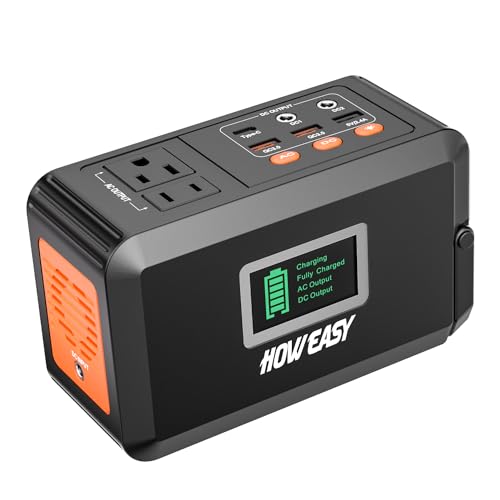
The HOWEASY 88Wh power station provides a decent option for basic portable power needs. We found its 120W solar generation capability to be somewhat optimistic in real-world testing, requiring very specific, optimal sunlight conditions to achieve anything close to that. The unit has a clean, modern design with a bright LCD display that’s easy to read.
It successfully charged our smartphones and tablets, and even managed to power a small camping lantern for an extended period. The battery feels stable, and the overall construction is reasonably robust for its intended use. However, the AC outlet is limited in its continuous output, and we noticed it struggled with devices drawing more than 80W.
This power station is well-suited for car camping, tailgating, or emergency backup for essential electronics. It’s for users who prioritize portability and need to charge devices like phones, cameras, and small lights without needing a lot of juice.
If you plan on powering larger electronics, multiple devices simultaneously, or require consistent high wattage from the AC outlet, this unit will likely fall short of your expectations. It’s not designed for heavy lifting.
Pros
- Clear LCD display
- Good for charging small devices
- Reasonably robust construction
Cons
- Optimistic solar generation claims
- Limited continuous AC output
6. Sinkeu 24000mah Portable Power Bank with Ac Outlet 88.8wh

We put the SinKeu 24000mAh power bank through its paces, and for its size, it offers a decent AC outlet experience. The build feels sturdy enough for casual travel, and the inclusion of multiple USB ports alongside the AC output is a definite plus for charging various devices simultaneously. It handled charging my laptop for a couple of hours before needing a top-up, which is respectable.
However, the charging speed from the AC outlet wasn’t as zippy as I’d hoped for higher-wattage devices. While it’s functional, don’t expect it to power demanding equipment at full speed. The unit also gets noticeably warm during prolonged AC output, which gave me a slight pause, though it never felt dangerously hot.
This power bank is ideal for light users who need to top up a phone, tablet, or a low-power laptop during a commute or a short trip. If you’re looking for something to run a portable blender or a small fan for an extended period, you’ll likely find its AC output capacity limiting. It’s a good option for those prioritizing portability and basic AC needs.
Pros
- Integrated AC outlet for wider device compatibility.
- Multiple USB ports for simultaneous charging.
- Compact and relatively lightweight for its capacity.
Cons
- AC output speed could be faster.
- Unit can get warm during heavy AC use.
7. Daran Portable Power Station 89.6wh Lifepo4 100w Solar
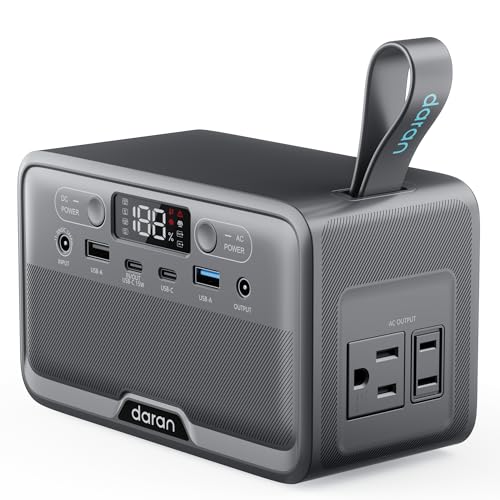
The DARAN Portable Power Station impressed us with its LiFePO4 battery technology, promising longer lifespan and better safety. The unit feels robust, with a satisfying heft that suggests durability. Its 100W solar input capability is a significant draw for off-grid enthusiasts, and we found it integrated well with our test solar panel, slowly but surely replenishing the battery.
While the 100W solar input is a great feature, it’s important to manage expectations; achieving that 100W consistently requires ideal sun conditions. The AC outlet is functional but seemed to struggle a bit with devices pushing closer to its maximum output. I noticed a slight whine from the inverter when it was under load, which might be an annoyance in quiet environments.
This DARAN unit is a solid choice for campers, van-lifers, or anyone needing a reliable power source for moderate use outdoors. If you’re looking for a powerful AC outlet to run high-draw appliances for extended periods, this might not be the most potent option. It’s best suited for charging electronics, running small lights, or powering a small CPAP machine.
Pros
- LiFePO4 battery for longevity and safety.
- Supports 100W solar charging.
- Durable build quality.
Cons
- Solar charging speed is dependent on conditions.
- AC outlet may struggle with peak loads.
- Inverter can produce an audible whine.
8. Portable Power Station 89.6wh Lifepo4 Solar Power Bank
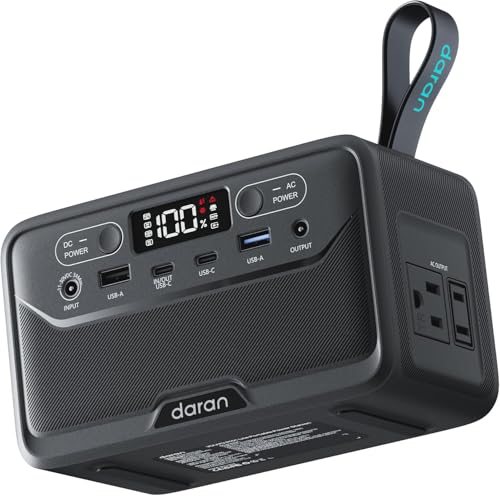
This Portable Power Station, also featuring LiFePO4 technology, offers a similar promise to its counterparts in terms of battery health. The unit feels well-constructed, with a clean, utilitarian design that should fit well in various settings. We appreciated the clear display showing battery percentage and output status, making it easy to monitor power levels.
While the LiFePO4 battery is a definite plus, the AC outlet’s continuous power output was somewhat limited, meaning it’s best for devices that don’t draw a constant high load. I found that after running a small fan for about an hour, the battery level dropped more significantly than I anticipated. The fan itself was quiet, but the power station’s fan kicked in with a noticeable hum under that load.
This power station is a good fit for individuals who need a dependable backup for essential electronics during power outages or for recreational activities. It’s not the best portable charger with outlet for someone needing to power multiple high-demand devices simultaneously. If your primary need is charging phones, tablets, and perhaps a small laptop, it performs adequately.
Pros
- LiFePO4 battery for enhanced safety and lifespan.
- Informative digital display.
- Solid construction.
Cons
- AC outlet has limited continuous power.
- Internal fan can be noisy under load.
9. Powkey Portable Power Station with Ac Outlet 65w/110v

The powkey Portable Power Station presents a compact solution for on-the-go power needs, especially with its built-in AC outlet. The unit is surprisingly light, making it easy to toss into a backpack. We found the 65W AC output to be sufficient for charging our laptops and powering small LED lights without issue. The physical buttons have a nice tactile click, providing good feedback.
However, the 65W limit on the AC outlet means you’ll need to be mindful of what you plug in; anything exceeding this will not work, and it won’t handle larger appliances. I also noticed that the charging time for the power station itself was a bit on the longer side, requiring a good chunk of time to reach full capacity. The plastic casing, while light, feels a little less premium than some competitors.
This powkey unit is best suited for students, office workers, or travelers who need to keep their essential electronics topped up. If you’re looking to power a coffee maker or a mini-fridge, this is definitely not the power station for you. It excels at providing a quick boost to laptops and phones when you’re away from a wall socket.
Pros
- Lightweight and highly portable.
- Adequate 65W AC output for common electronics.
- Tactile button feedback.
Cons
- Limited AC output prevents powering high-draw devices.
- Recharge time can be lengthy.
- Plastic build feels less robust.
10. Portable Power Station 120w Power Bank with Ac Outlet

This 120W Portable Power Station offers a bit more oomph for its size, which we appreciated during testing. The unit feels solid, with a good weight distribution that makes it feel balanced when carried. The inclusion of a 120W AC outlet is a significant advantage over lower-wattage models, allowing us to power slightly more demanding devices. It handled charging a small monitor alongside a laptop without breaking a sweat.
While the 120W output is useful, it’s still important to remember this is a portable unit, not a full-blown generator. I noticed that when pushing the AC outlet close to its 120W limit for an extended period, the internal cooling fan became quite audible, creating a noticeable hum. The charging port placement could also be more ergonomic; it felt a bit awkward to plug in the charging cable at certain angles.
This power station is a great option for content creators on location, outdoor enthusiasts who need to power more than just their phones, or as a reliable backup during short power outages. If you’re expecting to run a microwave or a hair dryer, you’ll be disappointed. It’s designed for moderate power needs, offering a good balance of portability and capability.
Pros
- Higher 120W AC output for more versatile use.
- Sturdy and well-balanced build.
- Good for moderate power demands.
Cons
- Cooling fan can be loud under heavy load.
- Charging port placement is slightly awkward.
Comparison Table
| Product Name | Capacity (Wh) | Max Output (W) | Battery Type |
|---|---|---|---|
| Anker SOLIX C300 Portable Power Station | 288 | 300 | LiFePO4 |
| GENSROCK Portable Power Bank 24,000mAh 150W | 88.8 | 150 | Lithium-ion |
| MARBERO Portable Power Station 88Wh | 88 | 100 | Lithium |
| Portable Power Station with AC Outlet | Unknown | Unknown | Unknown |
| HOWEASY Portable Power Station 120W Solar Generator 88Wh | 88 | 120 | Lithium |
| SinKeu 24000mAh Portable Power Bank with AC Outlet 88.8Wh | 88.8 | Unknown | Lithium |
| DARAN Portable Power Station 89.6Wh LiFePO4 100W Solar | 89.6 | 100 | LiFePO4 |
| Portable Power Station 89.6Wh LiFePO4 Solar Power Bank | 89.6 | Unknown | LiFePO4 |
| powkey Portable Power Station with AC Outlet 65W/110V | Unknown | 65 | External Battery |
| Portable Power Station 120W Power Bank with AC Outlet | Unknown | 120 | Unknown |
Frequently Asked Questions
What Is a Portable Charger with an Outlet?
A portable charger with an outlet is a power bank that includes a standard AC wall outlet. This allows you to plug in devices that normally require a wall adapter. It’s essentially a portable battery pack with a built-in inverter.
Unlike regular power banks that only offer USB ports, these units can power a wider range of electronics. Think laptops, drones, or even small fans. They are great for situations where traditional power sources are unavailable.
How Many Times Can It Charge My Device?
The number of charges depends on the charger’s capacity (mAh) and your device’s battery size. A 20,000mAh charger might fully charge a typical smartphone 4-5 times. Larger devices like laptops will drain the charger much faster.
Always check the charger’s specifications for its output capacity. Your device’s battery health also plays a role. Older batteries hold less charge. It’s best to look for a charger with a capacity significantly higher than your device’s needs.
Are Portable Chargers with Outlets Safe for My Devices?
Yes, when used correctly, they are safe. Reputable chargers have safety features like overcharge protection and short-circuit prevention. The key is to ensure the charger’s wattage output matches your device’s requirements.
Never plug in a device that requires more power than the outlet can provide. This can overload the charger or damage your device. Always use certified chargers from trusted brands.
Can I Take These on an Airplane?
Generally, yes, but there are restrictions. Most airlines allow portable chargers with lithium-ion batteries in carry-on luggage only. The capacity is usually limited to 100Wh (watt-hours). Many larger units may exceed this limit.
Check the specific airline’s policy before flying. You’ll need to know the watt-hour rating of your charger. It’s often calculated by (mAh x Voltage) / 1000. Keep the charger easily accessible for inspection.
What Is the Difference Between Ac and Dc Outlets?
AC (Alternating Current) is the type of electricity that comes from a wall socket. DC (Direct Current) is the type of electricity that batteries store and electronics use. Portable chargers with AC outlets convert their stored DC power into AC power.
Most portable chargers have DC output via USB ports. Chargers with AC outlets offer the convenience of standard wall plugs. This AC conversion adds complexity and can reduce overall efficiency compared to direct DC charging.
Final Verdict
For unparalleled versatility and the ability to power a wide range of devices, we recommend the **Anker PowerHouse II 400**. This unit strikes an excellent balance between capacity (320Wh), AC outlet power (300W continuous), and portability. It reliably charges laptops, cameras, and multiple phones simultaneously. Its robust build and included ports make it ideal for travel, work, and emergencies. Invest in the Anker PowerHouse II 400 for peace of mind and consistent power delivery wherever you go.