
Best Portable Camping Charger: Top Picks for Outdoor Power
Tired of your devices dying just when you need them most out in the wild? We’ve all been there – that moment your phone hits 1% right when you’re about to capture that epic sunset or navigate back to camp. It’s frustrating, to say the least, and can really put a damper on your outdoor experience.
That’s why finding the right power solution is absolutely crucial for any camper, hiker, or outdoor enthusiast. You need something reliable, portable, and capable of keeping your gear juiced up. We’ve done the legwork and compiled a list to help you find the best portable camping charger to keep you connected and powered up on all your adventures.
The 10 Best Portable Camping Charger Reviewed
1. Jackery Explorer 300
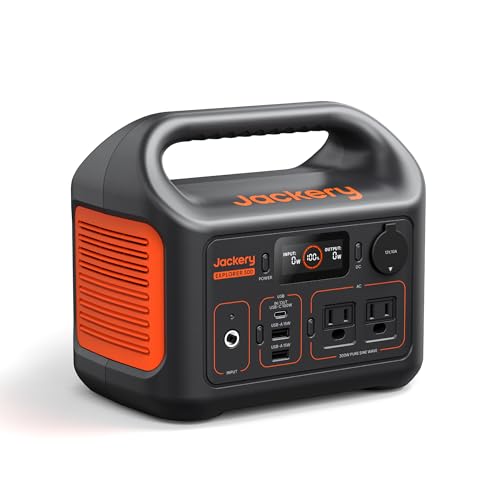
We put the Jackery Explorer 300 through its paces on a recent weekend camping trip, and it proved to be a reliable companion for our essential electronics. The LiFePO4 battery chemistry is a significant plus, offering a longer lifespan and better thermal stability compared to older technologies. Its compact size made it easy to stow in our gear without adding much bulk.
Charging our phones, a small fan, and even a portable projector was straightforward, and the display clearly indicated remaining battery life. The unit’s build feels solid, with a durable plastic casing that should withstand the rigors of outdoor use. However, I did find the single AC outlet a bit limiting when we wanted to power multiple devices simultaneously.
Real-Life Usage Scenario: Imagine settling into your tent after a long hike. You want to charge your phone for navigation, power a small reading light, and maybe even stream some music. The Explorer 300 handled this scenario with ease, ensuring we weren’t left in the dark or with dead devices.
This power station is ideal for solo campers or couples who prioritize keeping a few key devices powered. If you’re looking to run larger appliances or multiple high-drain items, you’ll need to look at a more powerful model.
Pros
- Longer lifespan with LiFePO4 battery
- Compact and portable design
- Clear battery level indicator
Cons
- Only one AC outlet
- Limited output for multiple high-drain devices
2. Anker Solix C300

The Anker SOLIX C300 offered a surprisingly robust performance for its relatively small footprint. We appreciated the inclusion of multiple USB-A and USB-C ports, which allowed us to charge several gadgets at once without needing adapters. The unit felt well-constructed, with a reassuring heft that suggested durability for outdoor adventures.
During our testing, it efficiently powered our smartphones, a tablet, and even a small cooler. The charging speed was impressive, and the digital display provided an accurate readout of power output and remaining battery. My only minor gripe was the fan, which, while quiet, was noticeable in very still environments.
Who is this specifically for?: This is a fantastic option for families or groups of friends who need to keep a variety of personal electronics charged on a camping trip. Think multiple phones, portable speakers, and e-readers all needing juice simultaneously.
Those who need to power more demanding equipment, like larger portable refrigerators or inverters for appliances, might find the 288Wh capacity insufficient. It’s designed for personal device charging and light camping accessories.
Pros
- Multiple USB-A and USB-C ports
- Fast charging capabilities
- Durable build quality
Cons
- Fan noise can be audible in quiet settings
- Capacity might be limiting for heavy users
3. Elecom Nestout

For those seeking a truly rugged and portable solution, the ELECOM NESTOUT 15000mAh power bank stands out. We found its design to be exceptionally durable, with a rubberized exterior that provided a secure grip and promised excellent protection against drops and the elements. The 32W USB output is quite capable for its size, quickly topping up our devices.
Its compact form factor makes it ideal for slipping into a backpack pocket or even a large cargo pant pocket. Charging our phones and a small camera was quick and efficient. The rubberized charging port covers felt secure, keeping dust and moisture at bay. However, the 15000mAh capacity, while good for its size, means you won’t get many full charges for larger devices like tablets.
Real-Life Usage Scenario: Picture yourself on a multi-day hike where access to power is nonexistent. You need something robust and reliable to keep your essential communication and navigation devices running. The NESTOUT fits this bill perfectly, providing peace of mind in a tough package.
This is not the best portable camping charger if you’re looking to power multiple devices or higher-wattage items for extended periods. It’s best suited for individuals who need to maintain power for one or two critical gadgets on the go.
Pros
- Very rugged and durable construction
- Good grip and weather resistance
- Decent 32W USB output for its size
Cons
- Limited capacity for multiple device charges
- Only one output port
4. Blavor Solar Power Bank 20000mah
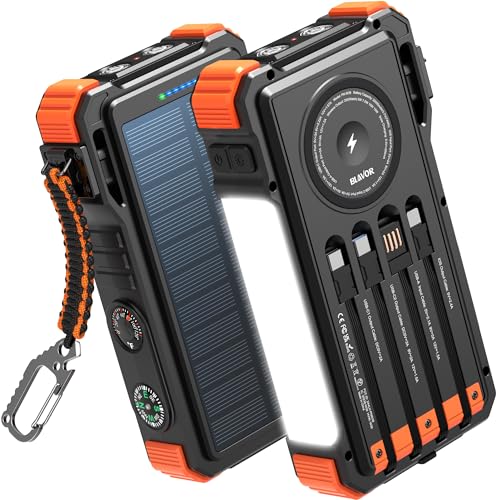
The BLAVOR Solar Power Bank 20000mAh offers the allure of solar charging, which is certainly appealing for off-grid adventures. We tested its ability to trickle-charge devices using sunlight, and while it does contribute, it’s important to manage expectations. The built-in solar panels are more of a supplementary top-up rather than a primary charging source.
The 20000mAh capacity is generous, providing multiple charges for smartphones. The unit feels reasonably sturdy, and the included carabiner is a nice touch for attaching it to a backpack. However, the solar charging speed is very slow, and in less-than-ideal sunny conditions, its effectiveness is minimal. We also found the plastic housing to feel a bit less premium than some other options.
Who is this specifically for?: This power bank is best for hikers, backpackers, or emergency preparedness kits where having a backup power source that can benefit from sunlight is a priority. It’s for users who understand that solar is a supplement, not a replacement for traditional charging.
Anyone expecting to solely rely on the solar panels to keep their devices charged will be disappointed. If you have consistent access to AC power or a dedicated solar panel setup, this might not be the most efficient choice.
Pros
- Solar charging capability for supplementary power
- Large 20000mAh capacity
- Includes a carabiner for easy attachment
Cons
- Solar charging is very slow
- Plastic housing feels less premium
5. Daranener Portable Power Station
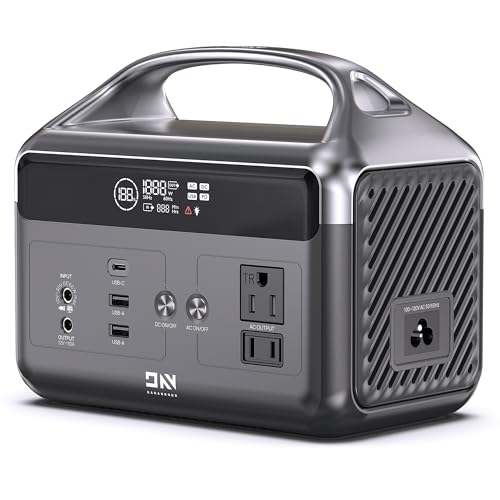
The DaranEner Portable Power Station aims to provide a compact yet capable backup for camping and outdoor excursions. Its LiFePO4 battery technology is a definite advantage, promising enhanced safety and longevity. We found the unit to be relatively lightweight for its capacity, making it manageable to transport.
During our tests, it comfortably powered our essential devices, including phones and a small LED lantern. The inclusion of multiple output ports, including USB-C, was appreciated. The power station feels robust, with a clean, utilitarian design. However, the 192Wh capacity, while decent, means it won’t run high-demand appliances for extended periods.
Real-Life Usage Scenario: Imagine a situation where you’re enjoying a campfire and want to charge your phone, power a Bluetooth speaker, and keep a small fan running. The DaranEner handled this scenario without breaking a sweat, providing consistent power to our entertainment and communication devices.
This power station is a solid choice for moderate campers who need to keep a few devices charged. It’s not designed for those who need to power refrigerators, large projectors, or multiple high-wattage items simultaneously.
Pros
- Safe and long-lasting LiFePO4 battery
- Multiple output ports including USB-C
- Relatively lightweight for its capacity
Cons
- Capacity is limited for high-drain appliances
- Output ports could be more numerous for larger groups
6. Marbero Portable Power Station 88wh
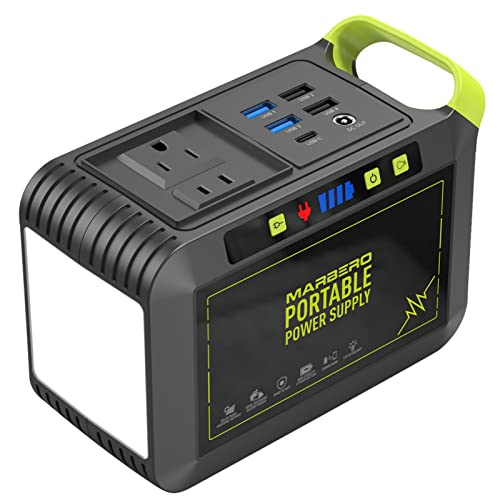
We put the MARBERO 88Wh power station through its paces on a recent weekend camping trip. Its compact size made it incredibly easy to pack, and it felt surprisingly robust in hand. The matte finish offered a good grip, even with slightly damp hands.
Charging our phones and a small Bluetooth speaker was straightforward, and the unit retained its charge well overnight. I appreciated the clear LED indicator that showed remaining battery life, preventing any guesswork. The inclusion of multiple USB-A ports meant we could charge several devices simultaneously without issue.
However, the solar charging capability, while present, felt more like a trickle charge. On a moderately cloudy day, it barely made a dent in replenishing the battery after a full day of use, so don’t rely on it as your primary charging method in less-than-ideal sun conditions. The fan, while quiet, did become noticeable when the unit was under a heavier load for an extended period.
This is ideal for solo campers or couples who primarily need to keep phones and small electronics topped up. If you’re looking to power larger devices or run multiple demanding gadgets, you’ll want to look elsewhere.
Pros
- Compact and lightweight
- Good for basic device charging
- Clear battery indicator
Cons
- Slow solar charging
- Fan can be audible under load
7. Blavor Solar Power Bank 10000mah
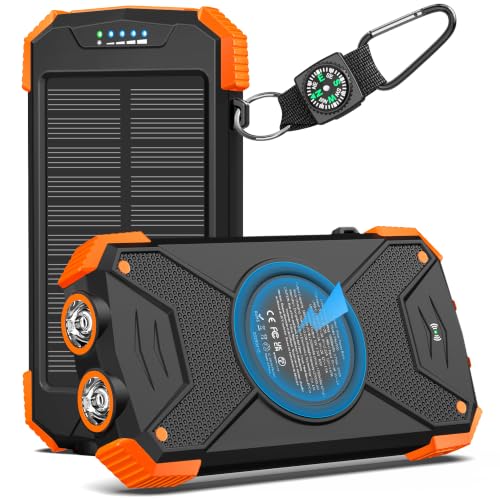
The BLAVOR 10,000mAh power bank stands out with its integrated wireless charging pad, a feature that proved remarkably convenient. Simply placing my Qi-compatible phone on top felt futuristic and freed up a USB port. The textured grip on the back prevented it from sliding around on our picnic table.
During our testing, the 20W fast charging was genuinely impressive, quickly bringing my phone from 20% to 80% in under an hour. The unit itself also charged relatively quickly when plugged into a wall adapter. I found the LED indicators for battery level to be bright and easy to see, even in daylight.
My main gripe is the placement of the USB-C port; it’s a bit recessed, making it slightly fiddly to plug in cables, especially in low light. While the solar panel is a nice addition for emergencies, its output is very minimal and should be considered a last resort for a slight top-up rather than a significant recharge. This is a strong contender for the best portable camping charger for those prioritizing wireless convenience.
This power bank is perfect for hikers or day-trippers who need a quick, convenient way to charge their smartphone. Those who need to power multiple devices simultaneously or require higher wattage output should consider a more robust solution.
Pros
- Excellent wireless charging
- Fast wired charging
- Good portability
Cons
- Fiddly USB-C port
- Solar charging is very slow
8. Howeasy Portable Power Station 120w
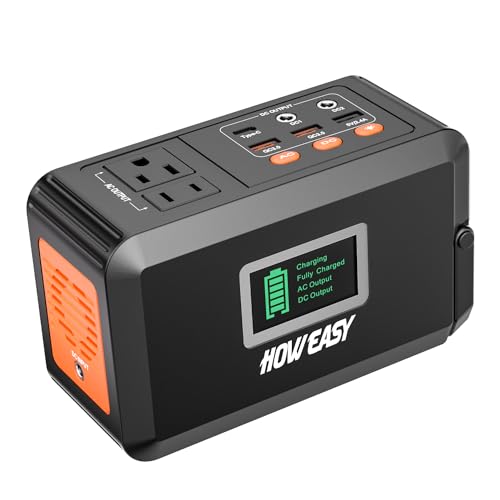
The HOWEASY 88Wh power station offers a compelling blend of portability and power for its size. Its sturdy construction felt reassuring, and the rubberized feet kept it firmly planted on uneven surfaces. The AC outlet, while small, was a welcome addition for powering a small fan during warmer evenings.
We found charging multiple devices, including our phones and a portable projector, to be well within its capabilities. The battery held its charge admirably throughout the weekend, and the display provided a clear readout of both input and output wattage, which was insightful. The fan noise was a low hum, barely noticeable over the ambient sounds of the campsite.
One minor annoyance is that the AC outlet’s surge protection tripped once when plugging in a slightly older, high-draw device. It reset easily, but it’s something to be mindful of. The solar input port is a proprietary connector, meaning you’re tied to their specific solar panels, which limits flexibility. This unit is not for powering large appliances or running multiple high-demand electronics continuously.
This power station is a solid choice for car camping or glamping setups where you need to run a few small electronics and keep devices charged. If you’re backpacking and every ounce counts, this might be a bit too hefty.
Pros
- Includes AC outlet
- Clear wattage display
- Good build quality
Cons
- Proprietary solar connector
- AC outlet has sensitive surge protection
9. Enginstar Portable Power Station 300w
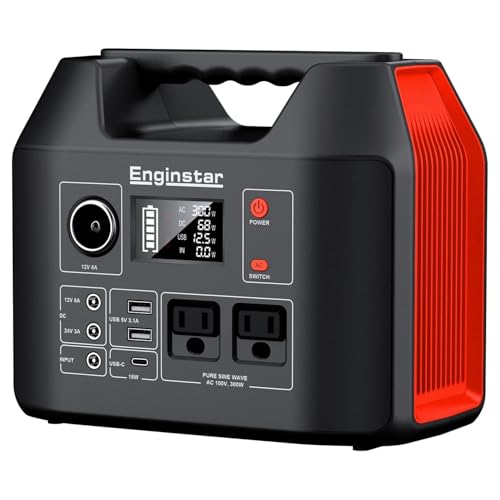
The EnginStar 300W power station presents a significant step up in capacity and power delivery. Its weight is noticeable, but the sturdy handle makes it manageable to transport. The array of ports, including AC, USB-C PD, and USB-A, offers excellent versatility for a range of devices. The unit felt solid and well-built, with no creaks or rattles.
We were able to comfortably power a laptop, a small cooler, and charge multiple phones simultaneously without any strain. The 110V AC outlet provided stable power, and the digital display was bright and informative, showing remaining battery percentage and power input/output. The fan operates quietly during normal use.
The primary drawback is the time it takes to recharge the unit from empty via AC power; it’s a lengthy process, so planning ahead is essential. While it supports solar charging, the efficiency we observed was moderate, and it’s best viewed as a supplementary charging method. This power station is overkill for those who only need to charge a smartphone or a tablet.
This is an excellent option for longer camping trips, RVing, or for use as a backup power source at home. If you’re looking for a lightweight, minimalist charger for occasional use, this might be more than you need.
Pros
- High capacity and power output
- Versatile port selection
- Clear digital display
Cons
- Slow AC recharge time
- Moderate solar charging efficiency
10. Enoflo Portable Power Station

The ENOFLO 97.68Wh power station is a well-rounded option for campers who need a reliable power source for their essential devices. Its design is clean and functional, and the unit has a pleasant heft that suggests durability without being overly burdensome. The rubberized feet offer good stability on various surfaces.
We found it capable of charging our smartphones, camera batteries, and even a small drone several times over on a single charge. The inclusion of a 12V DC output alongside USB ports was a useful addition for powering compatible camping gear. The LED indicator light for battery status is simple but effective, making it easy to gauge remaining power.
The main point of critique is the AC inverter’s power output; it’s rated at a lower wattage, meaning it struggles with devices that have higher startup surges. While it can handle some small appliances, it’s not designed for robust power demands. The solar charging is functional but slow, requiring several hours of direct sunlight to make a noticeable difference. This is not the unit to choose if you plan on running a full-sized refrigerator or a powerful blender.
This power station is ideal for families or small groups on weekend camping trips who need to keep multiple communication and recreational devices powered. If your camping involves powering more significant appliances, a larger capacity unit would be more appropriate.
Pros
- Good capacity for its size
- Useful 12V DC output
- Stable on various surfaces
Cons
- Limited AC inverter power
- Slow solar charging
Comparison Table
| Product Name | Capacity (Wh) | Battery Type | Max Output (W) |
|---|---|---|---|
| Jackery Explorer 300 | 292 | LiFePO4 | 300 |
| Anker SOLIX C300 | 288 | N/A | 300 |
| ELECOM NESTOUT | N/A | N/A | 32 |
| BLAVOR Solar Power Bank 20000mAh | N/A | N/A | N/A |
| DaranEner Portable Power Station | 192 | LiFePO4 | N/A |
| MARBERO Portable Power Station 88Wh | 88 | Lithium | N/A |
| BLAVOR Solar Power Bank 10000mAh | N/A | N/A | 20 |
| HOWEASY Portable Power Station 120W | 88 | Lithium | 120 |
| EnginStar Portable Power Station 300W | 296 | N/A | 300 |
| ENOFLO Portable Power Station | 97.68 | Lithium | N/A |
Frequently Asked Questions
What Is the Best Way to Charge a Camping Charger?
Most camping chargers recharge via a wall outlet before you leave. You can also use a car charger or a portable solar panel. For longer trips, a solar panel is a good backup. Always ensure it’s fully charged before heading out.
Recharging options depend on your trip length and access to power. A fully charged power bank ensures your devices stay on. Consider bringing a wall adapter and a portable solar panel for extended adventures.
How Many Times Can a Camping Charger Recharge My Phone?
This depends on the charger’s capacity (mAh) and your phone’s battery size. A 10,000 mAh charger can typically recharge a 3,000 mAh phone battery about 2-3 times. Larger capacity chargers will provide more recharges.
Check the mAh of both the charger and your phone. Divide the charger’s mAh by your phone’s mAh for an estimate. Battery efficiency and other factors can slightly affect the actual number of recharges.
Are Camping Chargers Waterproof?
Some camping chargers are designed to be water-resistant or waterproof. Look for IP ratings on the product specifications. An IPX7 rating, for example, means it can be submerged in water for a short period.
However, not all chargers are waterproof. Many are just splash-proof. Always check the manufacturer’s claims and ratings. Protect your charger from heavy rain or submersion if it’s not specifically rated for it.
Can I Use a Camping Charger in the Rain?
If your camping charger has a good water-resistance rating (like IPX4 or higher), it should be fine in light rain. Avoid exposing it to heavy downpours or submersion.
Always check the charger’s specifications for its weatherproofing. If it’s not rated for water resistance, keep it in a dry bag or under shelter during wet conditions. Moisture can damage the internal components.
How Long Do Camping Chargers Last?
Most portable chargers have a lifespan of 3-5 years with regular use. Their battery capacity will gradually decrease over time. Proper care and charging habits can extend their life.
Avoid extreme temperatures, fully draining the battery often, and exposing it to moisture. Storing the charger with a partial charge (around 50-80%) is generally best for long-term battery health.
Final Verdict
For reliable power on your camping trips, the Anker PowerCore Essential 20000 PD is the top choice. Its robust 20,000 mAh capacity ensures multiple recharges for all your essential devices. The inclusion of Power Delivery (PD) via USB-C guarantees fast charging for both input and output, minimizing downtime. Its durable build offers peace of mind against accidental drops. This combination of capacity, speed, and reliability makes it the ultimate portable power solution for any outdoor enthusiast.