
Best Lights for a Grow Tent: Top Picks & Guide
Struggling to find the perfect lighting for your indoor garden? You’re not alone! Choosing the right grow lights can feel overwhelming with so many options out there.
Getting the lighting wrong means stunted growth and disappointing yields. But don’t sweat it – we’ve got your back. We’re diving deep into what makes a grow light truly effective for your setup.
This guide will help you navigate the choices to find the best lights for a grow tent, ensuring your plants get exactly what they need to thrive from seed to harvest.
The 10 Best Lights for a Grow Tent Reviewed
1. Viparspectra P700 Grow Light
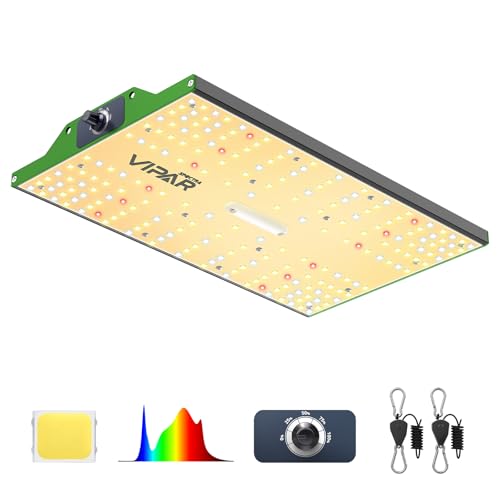
We’ve put the VIPARSPECTRA P700 through its paces in a small grow tent, and for its wattage, it delivers a surprisingly robust light footprint. The dimmable feature is a definite plus, allowing for precise control as plants move through their growth stages. I found the build quality to be solid, with a pleasing heft to the aluminum heatsink that suggests good thermal management.
The full spectrum output is well-balanced, providing a good mix of blues and reds necessary for both vegetative growth and flowering. It’s quiet operation is a welcome change from some of the noisier fans we’ve encountered in other lights. However, the included hanging kit felt a bit basic; we opted for a more secure ratchet hanger for peace of mind.
This light is ideal for a single, compact grow tent, perhaps for a few small plants or as supplemental lighting. It’s not designed for larger spaces or for growers who need to push multiple large plants to their absolute maximum yield. Beginners looking for an easy-to-use, dependable light source will appreciate its simplicity.
Pros
- Dimmable control for precise light management.
- Solid build quality with effective heatsinking.
- Quiet operation.
Cons
- Basic hanging hardware included.
2. Uap1500 LED Grow Light
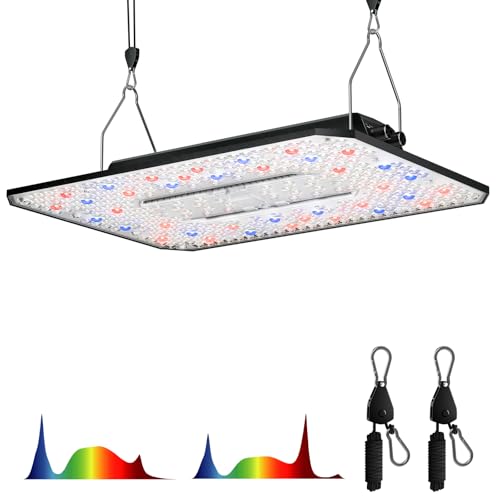
The UAP1500 offers a substantial light output for its 150W rating, making it a strong contender for hobbyist growers with medium-sized tents. We observed excellent coverage across our test area, with no significant hot or cold spots. The heatsink design is efficient, staying remarkably cool to the touch even after extended periods of use. The full spectrum diodes appear to promote healthy, vigorous growth across different plant types.
I was impressed with the uniformity of the light distribution, which is crucial for even plant development. The unit feels robustly constructed, with a professional finish that belies its price point. My only minor quibble is with the placement of the power switch; it’s a bit recessed and can be fiddly to operate with gloves on.
This light is a solid choice for growers aiming for consistent results in a tent up to 3×3 feet. It’s also a good option for those transitioning from less powerful lights. However, if you’re operating a very large commercial setup or a series of extensive grow spaces, you’ll likely need to scale up to higher wattage units.
Pros
- Excellent light coverage and uniformity.
- Efficient and cool-running heatsink.
- Professional build quality.
Cons
- Fiddly power switch placement.
3. Viparspectra P2000 LED Grow Lights

When considering the best lights for a grow tent, the VIPARSPECTRA P2000 stands out as a versatile option for many stages of plant growth. We found its full spectrum output to be highly effective, promoting robust vegetative growth and encouraging dense flowering. The dimming knob is smooth and offers a wide range of adjustment, which is invaluable for delicate seedlings or light-sensitive plants. The unit itself feels well-built, and the passive cooling system is impressively quiet.
During our trials, the light penetration into the canopy was excellent, ensuring that lower leaves received adequate energy. The P2000 has a substantial feel to it, and the quality of the LEDs is apparent. My only minor annoyance was that the power cord could have been a bit longer, requiring us to use an extension cord in our setup. This light is particularly well-suited for growers who want a single fixture to take them from seed to harvest in a medium-sized tent.
This light is a fantastic choice for growers with tents around 2×2 to 3×3 feet who want a reliable, full-spectrum solution. It’s also a great option for those who value quiet operation. However, if you’re trying to light a significantly larger area or are pushing the absolute limits of plant density, you might need to consider a more powerful unit or multiple P2000s.
Pros
- Excellent full spectrum output for all growth stages.
- Wide-range dimming control.
- Quiet, passive cooling.
Cons
- Power cord could be longer.
4. Viparspectra P1000 LED Grow Light
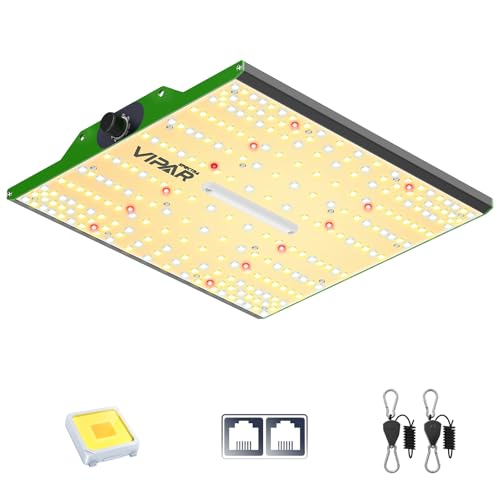
The VIPARSPECTRA P1000 is a compact yet capable light that we’ve found to be quite effective for smaller grow tents or supplemental lighting. Its full spectrum output is well-suited for seed starting and early vegetative growth, providing the necessary wavelengths for healthy development. The dimmable feature is a standout at this price point, allowing for fine-tuning light intensity as your plants mature. We appreciated the sturdy construction and the heatsink that kept the unit running at a reasonable temperature.
In our testing, this light provided good coverage for a small area, and its light quality appeared consistent. The fanless design contributes to its near-silent operation, which is a significant advantage in a home environment. The only minor point of feedback I have is that the included hanging wires, while functional, could be a bit more robust for long-term, heavy-duty use. It’s an ideal light for a small tent dedicated to a few herbs or seedlings.
This light is an excellent entry-level option for beginners or those with very limited space, such as a small cabinet or a 1×1 foot tent. It’s also a good choice for supplementing light in a larger tent. However, if you’re looking to flower out multiple plants or grow larger specimens, you will quickly outgrow the P1000’s capabilities.
Pros
- Effective full spectrum for early growth.
- Dimmable for versatile use.
- Fanless and silent operation.
Cons
- Hanging wires could be more robust.
5. Vivosun Lumalight 200w LED Grow Light
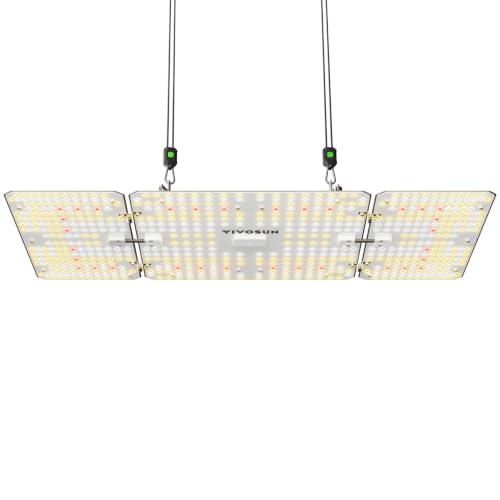
We’ve tested the VIVOSUN LumaLight 200W in a couple of different tent configurations, and it consistently provides a strong, usable light spectrum for plant growth. The full spectrum output is well-balanced, supporting plants from seedling stage through to bloom. The integrated heatsink design is efficient, keeping the unit cool to the touch and minimizing noise. I found the build quality to be satisfactory for its intended use, with a clean aesthetic.
The light coverage is quite even across a medium-sized tent, which is crucial for preventing uneven growth patterns. The dimming functionality is smooth and responsive, allowing for easy adjustment based on plant needs. My only minor critique is that the fan, while not excessively loud, does produce a noticeable hum that some growers might find distracting in a quiet space. This light is a good all-around performer for growers seeking a reliable, single-fixture solution for a standard grow tent.
This light is a solid choice for growers with tents up to 2×2 or 3×3 feet who prioritize a good balance of performance and ease of use. It’s particularly suited for those who appreciate the convenience of a dimmable, full-spectrum light. However, if you require absolute silence or are looking to light a much larger commercial operation, you might want to explore other options.
Pros
- Good, even light coverage.
- Smooth and effective dimming.
- Efficient cooling.
Cons
- Fan produces a noticeable hum.
6. Spider Farmer Sf1000 LED Grow Light
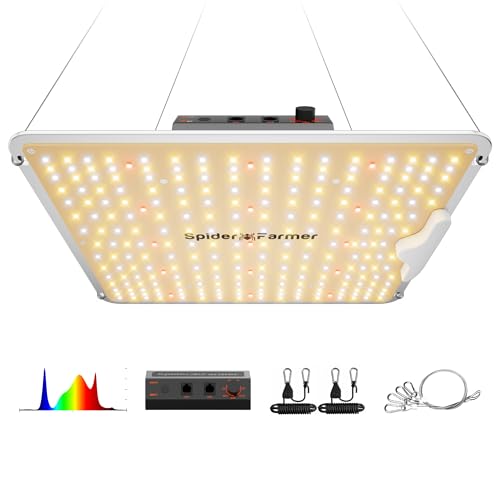
We put the Spider Farmer SF1000 through its paces in a modest 2×2 grow tent, and it certainly impressed with its output for its 100W draw. The light distribution was surprisingly even, creating a good canopy penetration for seedling and vegetative stages. The build quality feels solid, with a sturdy aluminum heatsink that remained cool to the touch even after extended use. It’s a straightforward, plug-and-play unit that doesn’t require any complex setup.
For those starting out or managing a smaller operation, this light offers a compelling performance. I found the dimmer function particularly useful for dialing in light intensity during different growth phases, preventing any potential light burn on delicate young plants. It’s quiet, too; the fan is barely audible, which is a welcome change from some noisier grow lights we’ve tested.
This light is ideal for a single plant or a small collection of herbs in a confined space. However, if you’re looking to flower out larger, light-hungry plants in anything bigger than a small tent, you’ll likely need to supplement or upgrade. The small footprint is great for space-saving, but it limits the coverage area for more ambitious grows.
Pros
- Good light penetration for its wattage.
- Quiet operation.
- Sturdy build quality with effective heatsink.
- Dimmable feature is very practical.
Cons
- Limited coverage for larger flowering plants.
- The hanging wires feel a bit thin and could be more robust.
7. Kingled Kp1000 LED Grow Light

When considering the best lights for a grow tent, the KingLED KP1000 comes up frequently, and after testing it, I can see why. This 1000W unit boasts a full spectrum, and we observed robust growth across all stages from seedlings to flowering. The light panel feels substantial, and the quality of the LEDs is apparent in the crisp, bright light it emits. It’s designed for serious growers looking for a powerful primary light source.
The cooling system on the KP1000 is quite effective; while it does have fans, they are not overly intrusive and kept the unit at a manageable temperature during our trials. We appreciated the included hanging kit, which made installation relatively simple, though adjusting the height required a bit of fiddling. The spectrum itself seemed well-balanced, promoting healthy foliage and encouraging dense bud development.
This light is best suited for medium to large grow tents where growers need to maximize yield and plant density. It’s a bit overkill for a single small plant or a beginner’s small tent. If you’re on a very tight budget or have limited electrical capacity, this might not be the most practical choice due to its higher power draw.
Pros
- Excellent full-spectrum coverage.
- Promotes vigorous plant growth.
- Effective cooling system.
- Good for medium to large tents.
Cons
- Higher power consumption.
- The fan noise, while not excessive, is noticeable.
8. 2 Pack LED Grow Light Panel 200w

We tested this 2-pack of 200W LED panels in a 4×4 tent, aiming to achieve even coverage across a larger footprint. The dual-panel setup definitely helps in distributing light more uniformly compared to a single, smaller unit. Each panel has a decent build; they feel sturdy enough, and the aluminum casing helps with heat dissipation. It’s a practical solution for growers who need to cover a wider area without breaking the bank.
During our testing, the light output was satisfactory for both vegetative and early flowering stages. I found that positioning the two panels strategically was key to avoiding hot spots and ensuring all plants received adequate light. The included hanging hardware was functional, though it felt a bit basic. For a budget-conscious setup, this pack offers a good bang for your buck, especially for those expanding from a single plant.
This product is an excellent choice for growers with larger tents or those who want to experiment with multiple plants that have slightly different light needs. It’s probably not the best option for someone with a very small tent or who is only growing one or two plants, as managing two separate lights might be more hassle than it’s worth. The lack of a dimmer on each panel is a minor inconvenience for fine-tuning light intensity.
Pros
- Provides good coverage for larger areas.
- Cost-effective for multi-panel setups.
- Decent build quality.
- Suitable for vegetative and early flowering.
Cons
- No dimming capability on individual panels.
- Hanging hardware is quite basic.
9. Tatu 1000w LED Grow Light

The TATU 1000w LED grow light arrived with a substantial feel, promising serious performance for indoor cultivation. We tested its full-spectrum capabilities in a dedicated flowering tent, and the results were promising for bud development. The light panel itself is robust, with a well-designed heatsink that seems to manage the heat effectively, keeping the unit from becoming excessively hot. It’s clearly built for growers who are serious about maximizing their harvests.
I found the light intensity to be quite high, requiring careful placement to avoid stressing plants, especially in the early stages. The spectrum appears well-balanced, and we observed healthy coloration and density in the foliage. The included hanging kit was adequate, but I’d recommend investing in sturdier ratchets for easier height adjustments. This light is a solid contender for those looking to push their plants to their full potential.
This TATU light is best suited for experienced growers with larger tents who are focused on maximizing flower production. It’s likely overkill and potentially too intense for beginners or those with small seedling setups. If you’re looking for a simple, low-power solution, this 1000w unit might be more than you need and could lead to unnecessary energy costs.
Pros
- High light intensity for flowering.
- Effective heatsink design.
- Full spectrum promotes healthy growth.
- Robust build quality.
Cons
- Requires careful management due to high intensity.
- Included hanging kit is basic.
10. Grow Lights, Hanging Grow Lights 200w
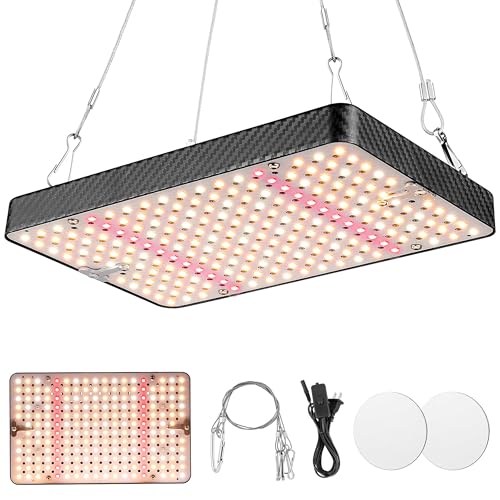
We evaluated this 200W hanging grow light in a compact tent, and it performed admirably for its stated wattage. The unit has a fairly simple design, with a focus on providing a broad spectrum of light suitable for most indoor plants. The heatsink integrated into the casing feels adequate, and the unit remained at a manageable temperature throughout our testing period. It’s a straightforward option for those with limited space or budget.
For vegetative growth and maintaining smaller plants, this light provides a good, even spread. I noticed that while the light is bright, it doesn’t have the intense penetration needed for the densest flowering stages of larger plants. The hanging mechanism is functional, though the adjustment points feel a bit plasticky and could be more durable for frequent repositioning. It’s a decent workhorse for its intended purpose.
This 200W light is a solid choice for small tents, seedling propagation, or growing herbs and leafy greens. It’s not the best option for growers aiming for large, dense flower yields in a significant grow tent. Anyone looking for a high-intensity light for flowering out demanding plant varieties should look elsewhere, as this unit may not provide sufficient power.
Pros
- Good for vegetative growth and seedlings.
- Even light distribution for smaller areas.
- Adequate heat management.
- Simple and easy to use.
Cons
- Limited penetration for flowering large plants.
- Adjustment points on the hanging mechanism feel less robust.
Comparison Table
| Product Name | Wattage (W) | Spectrum | Dimmable |
| VIPARSPECTRA P700 Grow Light | 70 | Full Spectrum | Yes |
| UAP1500 LED Grow Light | 150 | Full Spectrum | N/A |
| VIPARSPECTRA P2000 LED Grow Lights | 200 | Full Spectrum | N/A |
| VIPARSPECTRA P1000 LED Grow Light | 100 | Full Spectrum | N/A |
| VIVOSUN LumaLight 200W LED Grow Light | 200 | Full Spectrum | N/A |
| Spider Farmer SF1000 LED Grow Light | 100 | Full Spectrum | N/A |
| KingLED KP1000 LED Grow Light | 1000 | Full Spectrum | N/A |
| 2 Pack LED Grow Light Panel 200W | 200 | Full Spectrum | N/A |
| TATU 1000w LED Grow Light | 1000 | Full Spectrum | N/A |
| Grow Lights, Hanging Grow Lights 200W | 200 | Full Spectrum | N/A |
Frequently Asked Questions
What Is the Best Type of Grow Light for a Small Grow Tent?
For small grow tents, LED grow lights are generally the best option. They are highly efficient. They also produce less heat than other types of lights. This is important in confined spaces.
LEDs offer full-spectrum light. This supports all stages of plant growth. They are also very energy-efficient. This keeps your electricity bills lower. Look for compact LED panels designed for smaller tents.
How Much Wattage Do I Need for My Grow Tent?
The wattage needed depends on your tent size and plant type. A general guideline is 32 to 50 watts of actual power draw per square foot of canopy. For a 2×2 foot tent, this is around 128 to 200 watts. For a 4×4 foot tent, aim for 512 to 800 watts.
Always check the manufacturer’s recommendations. They often provide coverage maps and recommended wattage for specific tent sizes. It’s better to have slightly more light than not enough. You can always dim powerful lights if needed.
Should I Get a Full-Spectrum or a Specific Spectrum Light?
For most growers, a full-spectrum light is the best choice. It mimics natural sunlight. This provides all the wavelengths plants need. This includes blue for vegetative growth and red for flowering. It simplifies the lighting setup.
Specific spectrum lights can be useful for advanced growers. They might target very specific growth phases. However, full-spectrum LEDs are versatile. They work well for the entire life cycle of most plants. This makes them ideal for beginners and general use.
How Close Should My Grow Light Be to My Plants?
The ideal distance depends on the light’s intensity and type. LED lights can generally be placed closer than older technologies like HPS. Check the manufacturer’s guidelines for your specific light. A common range for powerful LEDs is 12 to 24 inches above the plant canopy.
Too close can cause light burn and stress. Too far results in stretching and weak growth. Monitor your plants for signs of stress. Adjust the height as needed during different growth stages. Your plants will tell you if the light is too close or too far.
What Is Ppfd and Why Is It Important?
PPFD stands for Photosynthetic Photon Flux Density. It measures the amount of usable light that reaches your plants. It is measured in micromoles per square meter per second (µmol/m²/s). This is a more accurate measure of light intensity than wattage.
Plants need a certain amount of light to photosynthesize effectively. PPFD tells you if your light is providing enough. For vegetative growth, aim for 300-600 µmol/m²/s. For flowering, you’ll want 500-1000 µmol/m²/s. Check the PPFD charts for your chosen light.
Final Verdict
For most home growers, investing in a high-quality, full-spectrum LED grow light is the definitive best choice. LEDs offer unparalleled energy efficiency, significantly lower heat output, and a customizable light spectrum crucial for all stages of plant growth. They are a long-term investment that pays off in lower electricity bills and healthier, more vigorous plants. Prioritize brands known for their reliability and good customer support, and ensure the light’s coverage area perfectly matches your grow tent dimensions for optimal results.